Clinical efficacy analysis of acupuncture combined with anti-tumor necrosis factor treatment for spleen and kidney yang deficiency type ulcerative colitis - Report - MDSpire
Advertisement
Clinical efficacy analysis of acupuncture combined with anti-tumor necrosis factor treatment for spleen and kidney yang deficiency type ulcerative colitis
Clinical Report: Evaluation of Acupuncture with Anti-TNF Therapy for UC
Overview
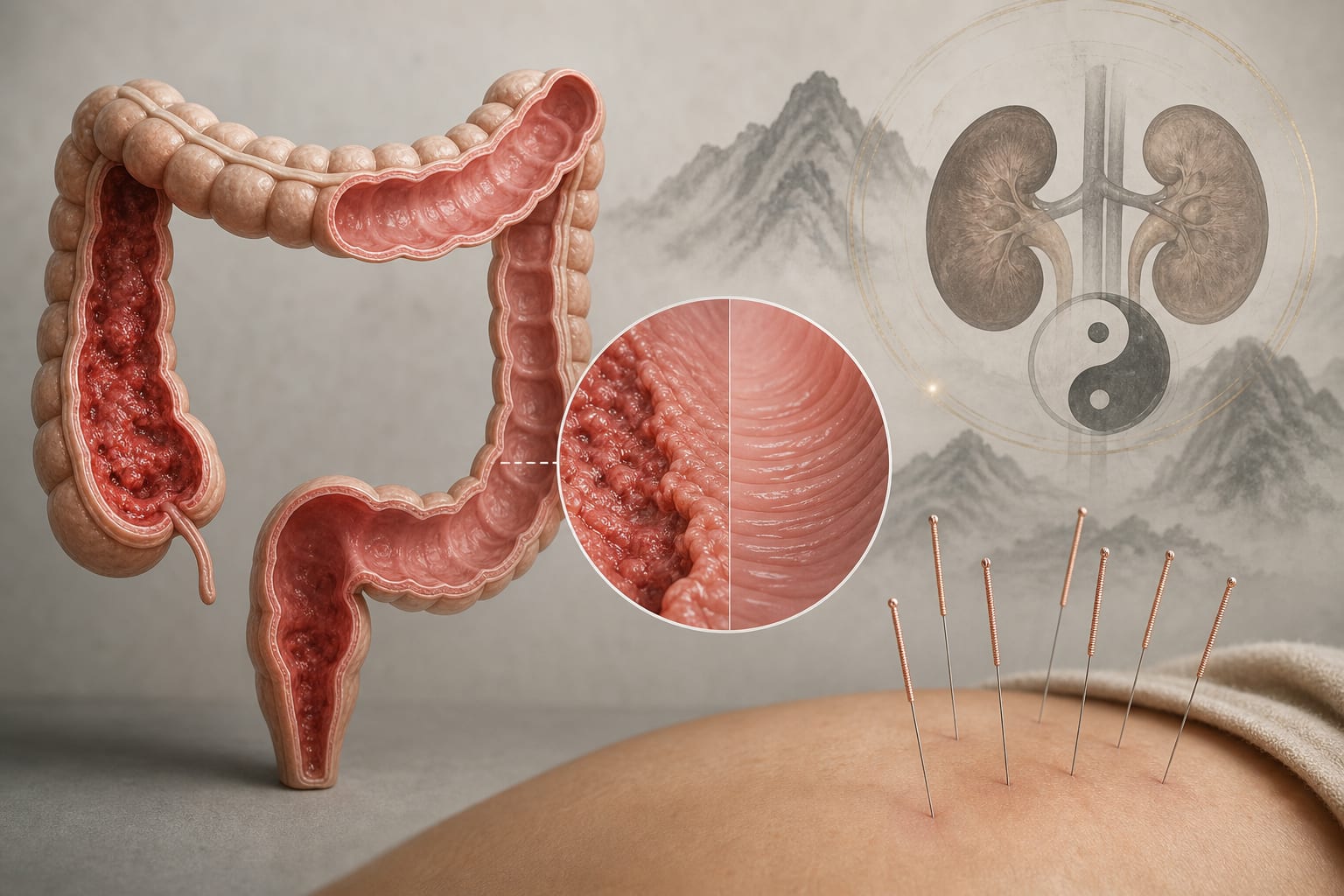
This study evaluates the effectiveness of acupuncture combined with anti-TNF therapy in patients with ulcerative colitis (UC) associated with spleen and kidney yang deficiency. Results indicate improvements in clinical symptoms and mucosal healing rates, alongside reduced colectomy rates.
Background
Ulcerative colitis (UC) is a chronic inflammatory bowel disease with increasing incidence globally, posing significant health burdens. Anti-TNF therapies are standard treatments for moderate to severe UC, yet many patients experience inadequate responses or adverse effects. Exploring adjunctive therapies like acupuncture may provide additional benefits in managing UC.
Data Highlights
Outcome
Study Group
Control Group
P-value
Colectomy Rate
7.14%
20.8%
0.042
Clinical Remission Rate
19.1%
8.3%
0.038
Mucosal Healing Rate
38.1%
20.8%
0.041
Adverse Events Incidence
30.9%
29.2%
0.835
Key Findings
Acupuncture combined with TNF-α inhibitors significantly reduced Mayo scores and TCM syndrome scores after 12 weeks (P < 0.05).
The colectomy rate was lower in the study group (7.14%) compared to the control group (20.8%), with a relative risk of 0.34 (P = 0.042).
The clinical remission rate was higher in the study group (19.1%) than in the control group (8.3%), with a relative risk of 2.30 (P = 0.038).
The mucosal healing rate was significantly higher in the study group (38.1%) compared to the control group (20.8%), with a relative risk of 1.83 (P = 0.041).
No severe adverse reactions occurred in either group, and the incidence of adverse events was similar (30.9% vs. 29.2%, P = 0.835).
Clinical Implications
Clinicians should monitor for adverse events when managing patients with spleen-kidney yang deficiency type UC.
Conclusion
Acupuncture, when used alongside TNF-α inhibitors, appears to improve clinical outcomes in ulcerative colitis without increasing adverse events.