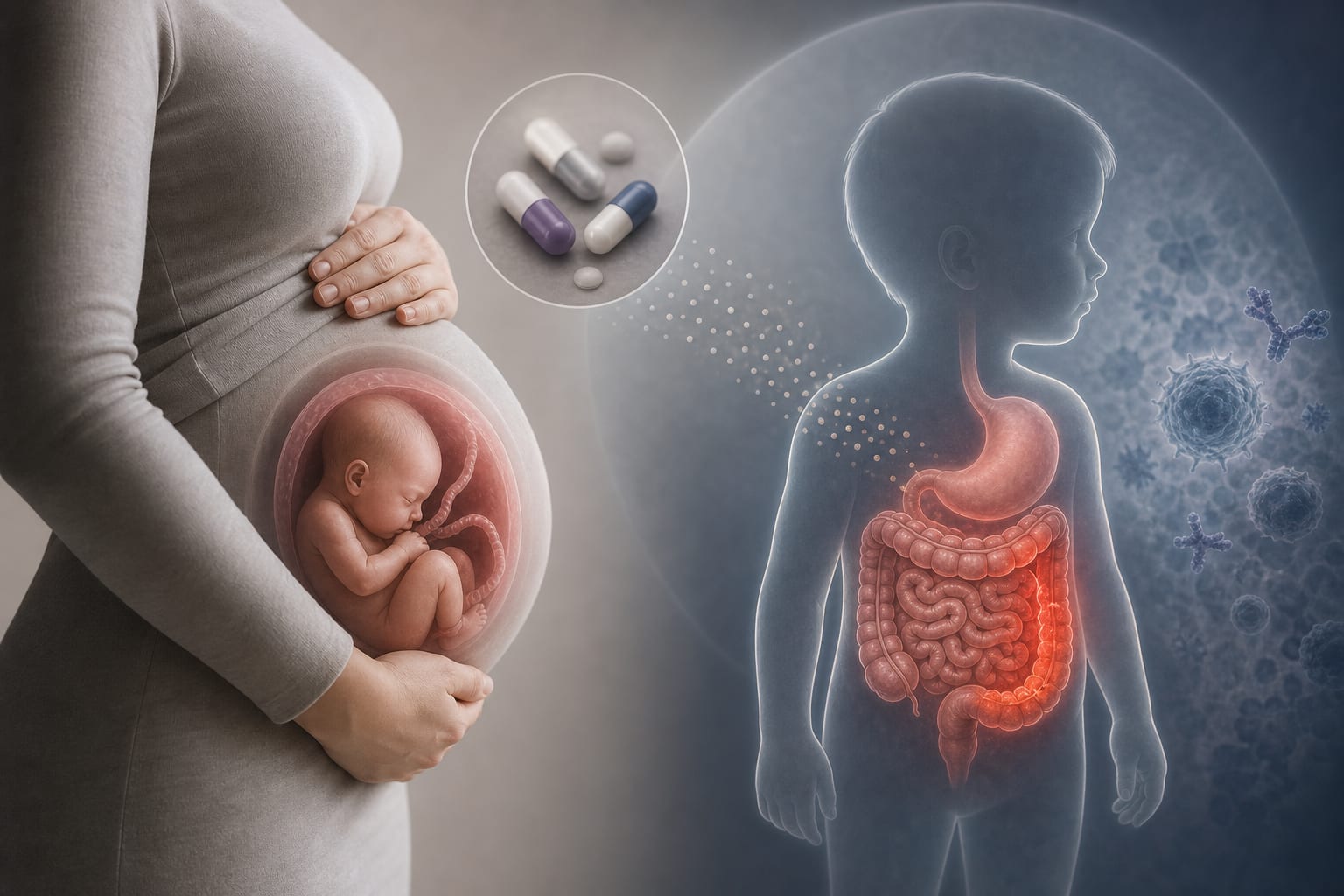
Clinical Report: Impact of Prenatal Use of Acid-Suppressive Drugs on IBD
Overview
This study investigates the association between prenatal exposure to acid-suppressive medications and the risk of pediatric-onset inflammatory bowel disease (IBD) in offspring. Utilizing a large nationwide cohort, the findings indicate an association between these medications and increased IBD incidence.
Background
Inflammatory bowel disease (IBD) is a chronic condition affecting the gastrointestinal tract, with rising incidence rates among children. Prenatal exposure to medications such as proton pump inhibitors (PPIs) and histamine-2 receptor antagonists (H2RAs) is common. Understanding these associations is crucial for managing maternal health and child development.
Data Highlights
This study utilized a nationwide birth cohort in South Korea, including nearly 3 million mother-child pairs, to assess the impact of prenatal acid-suppressive medication exposure on pediatric IBD risk.
Key Findings
Acid-suppressive medications are frequently prescribed during pregnancy for gastroesophageal reflux symptoms.
Pediatric-onset IBD incidence is increasing globally, particularly among younger children.
Gut microbial dysbiosis is a hallmark of IBD, potentially influenced by prenatal exposures.
Alterations in gut microbiome due to acid-suppressive medications may represent a risk factor for IBD.
The study was conducted using a comprehensive dataset from the National Health Insurance Service of South Korea.
Clinical Implications
Further research is warranted to clarify the relationship between these medications and pediatric IBD development.
Conclusion
The findings indicate an association between prenatal acid-suppressive medication exposure and increased risk of pediatric IBD.
by Jiyeon Oh, Jaeyu Park, Hyunjee Kim, Hyesu Jo, Kyeongmin Lee, Yeona Jo, Seohyun Hong, Sooji Lee, Selin Woo, Yerin Hwang, Jinseok Lee, Tae Hyeong Kim, Hayeon Lee