Risk Factors for Adjacent Vertebral Fractures After Percutaneous Vertebroplasty
Overview
This retrospective study of 429 osteoporotic vertebral compression fracture patients identified advanced age and low bone mineral density (BMD) as independent risk factors for adjacent vertebral fractures (AVF) following percutaneous vertebroplasty (PVP). A combined predictive model incorporating these factors achieved moderate accuracy (AUC = 0.706) for preliminary risk stratification.
Background
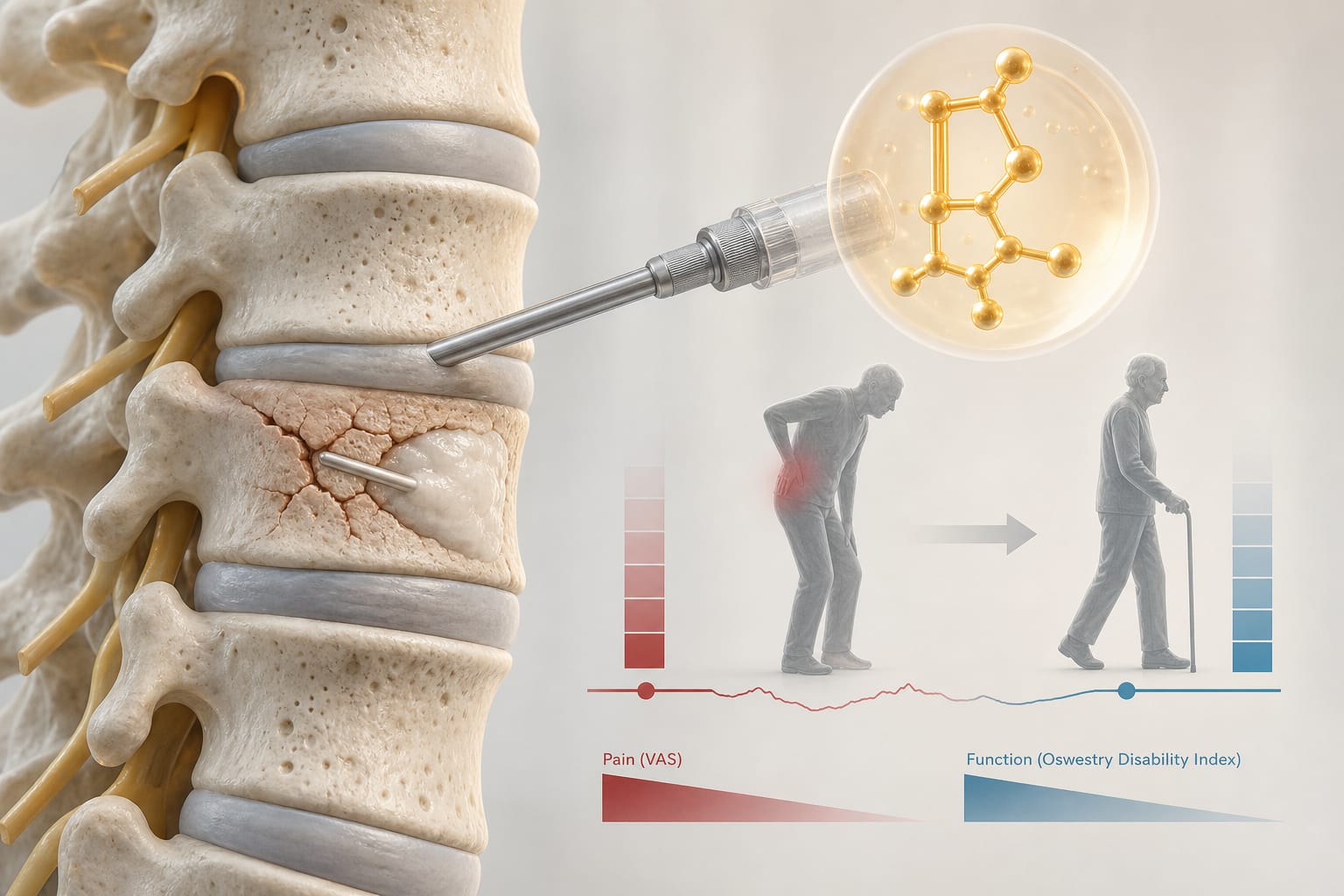
Osteoporotic vertebral compression fractures (OVCF) are common complications of osteoporosis, affecting a significant proportion of older adults worldwide. Percutaneous vertebroplasty (PVP) is an effective treatment to relieve pain and restore vertebral height but is associated with a high incidence of adjacent vertebral fractures (AVF), ranging from 12% to 38%. Identifying risk factors for AVF is critical to improve patient outcomes and guide preventive strategies. Previous studies have suggested age, bone mineral density, and bone cement leakage as potential factors, but comprehensive predictive models remain limited.
Data Highlights
Variable
AVF Group (n=143)
Non-AVF Group (n=286)
P-value
Age (years)
76.36 ± 7.70
72.61 ± 9.02
<0.001
BMD T-score
−3.1 ± 0.6
−2.4 ± 0.8
<0.001
BMI (kg/m²)
22.18 ± 3.28
24.75 ± 3.52
<0.001
Key Findings
Advanced age is an independent risk factor for AVF with an odds ratio (OR) of 1.045 per year increase (95% CI: 1.018–1.074, P = 0.001).
Lower lumbar spine BMD T-score independently increases AVF risk with OR = 2.85 per standard deviation decrease (95% CI: 2.12–3.82, P < 0.001).
Body mass index was lower in the AVF group but was not confirmed as an independent risk factor in multivariate analysis.
Age alone had a moderate predictive value for AVF (AUC = 0.623), and BMD alone had an AUC of 0.629.
A combined predictive model using age and BMD improved accuracy with an AUC of 0.706 (95% CI: 0.565–0.976), suitable for preliminary risk stratification.
Bone cement leakage was not identified as a significant independent risk factor in this study.
Clinical Implications
Clinicians should prioritize systemic osteoporosis management, particularly targeting patients of advanced age and those with low lumbar spine BMD, to reduce the risk of adjacent vertebral fractures after PVP. While individual risk factors have limited predictive power, combining age and BMD assessments can aid in identifying high-risk patients for closer monitoring and preventive interventions. Surgical technique modifications may be less impactful than optimizing bone health in preventing AVF.
Conclusion
Advanced age and low bone mineral density are key independent risk factors for adjacent vertebral fractures following percutaneous vertebroplasty. A combined predictive model offers moderate accuracy for risk stratification, underscoring the importance of systemic osteoporosis management in prevention strategies.
Related Resources & Content
Xinjiang Medical University Fourth Affiliated Hospital Study 2019-2024 -- Identifying Risk Factors for Adjacent Vertebral Fractures Following Percutaneous Vertebroplasty