Electroacupuncture attenuates synovitis in knee osteoarthritis and is associated with modulation of the protein S-TAM (Axl/MerTK)-Rac1 signaling axis - Report - MDSpire
Advertisement
Electroacupuncture attenuates synovitis in knee osteoarthritis and is associated with modulation of the protein S-TAM (Axl/MerTK)-Rac1 signaling axis
Electroacupuncture Reduces Synovitis in Knee Osteoarthritis and Influences the S-TAM (Axl/MerTK)-Rac1 Signaling Pathway
Overview
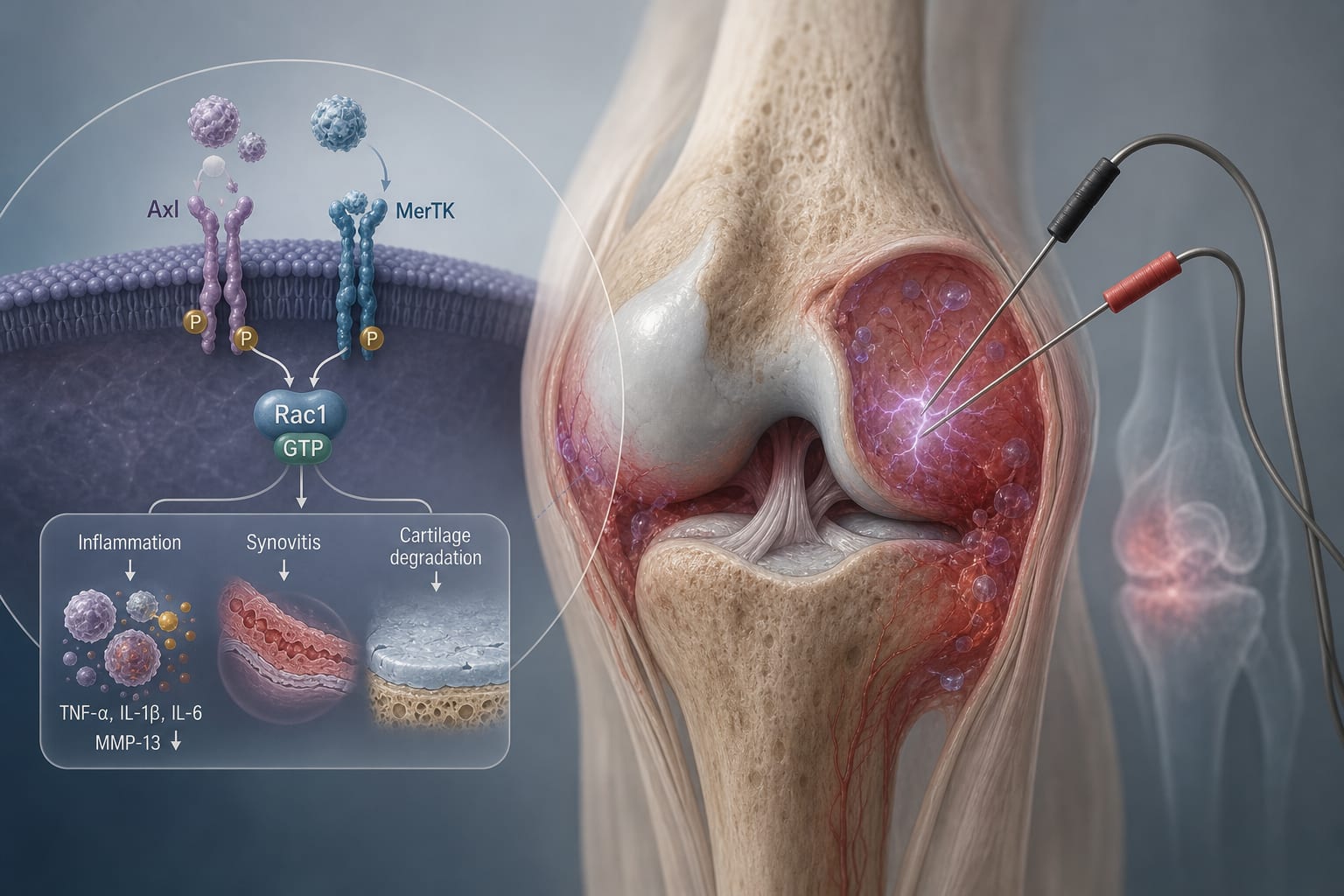
Electroacupuncture (EA) significantly reduces synovitis and cartilage damage in a rat model of knee osteoarthritis (KOA).
Background
Knee osteoarthritis (KOA) is a major cause of disability, characterized by synovial inflammation and cartilage degradation. Current treatments primarily focus on symptom relief without addressing underlying inflammation.
Data Highlights
Outcome
KOA-EA Group
Control
P-value
Mankin’s/OARSI Scores
Reduced
Severe Damage
< 0.01
MMP13 Expression
Decreased
Increased
< 0.05
Krenn Score
Lower
Higher
< 0.01
Synovial Apoptosis
Reduced
Increased
< 0.001
Cytokine Profile
Anti-inflammatory
Pro-inflammatory
< 0.05
Key Findings
EA significantly reduced cartilage damage as measured by Mankin’s/OARSI scores.
There was a decrease in MMP13 expression in the KOA-EA group compared to controls.
EA treatment led to a lower Krenn score, indicating reduced synovitis.
Synovial apoptosis was significantly reduced in the EA group.
EA shifted the cytokine profile towards an anti-inflammatory pattern.
EA was associated with the restoration of the Protein S-TAM-Rac1 signaling pathway.
Clinical Implications
The findings indicate that electroacupuncture may have effects on synovitis in knee osteoarthritis.
Conclusion
Electroacupuncture demonstrates significant anti-inflammatory and chondroprotective effects in a KOA model.