Post-surgical Changes and Developmental Enhancements in Femoral Trochlear Dysplasia
Overview
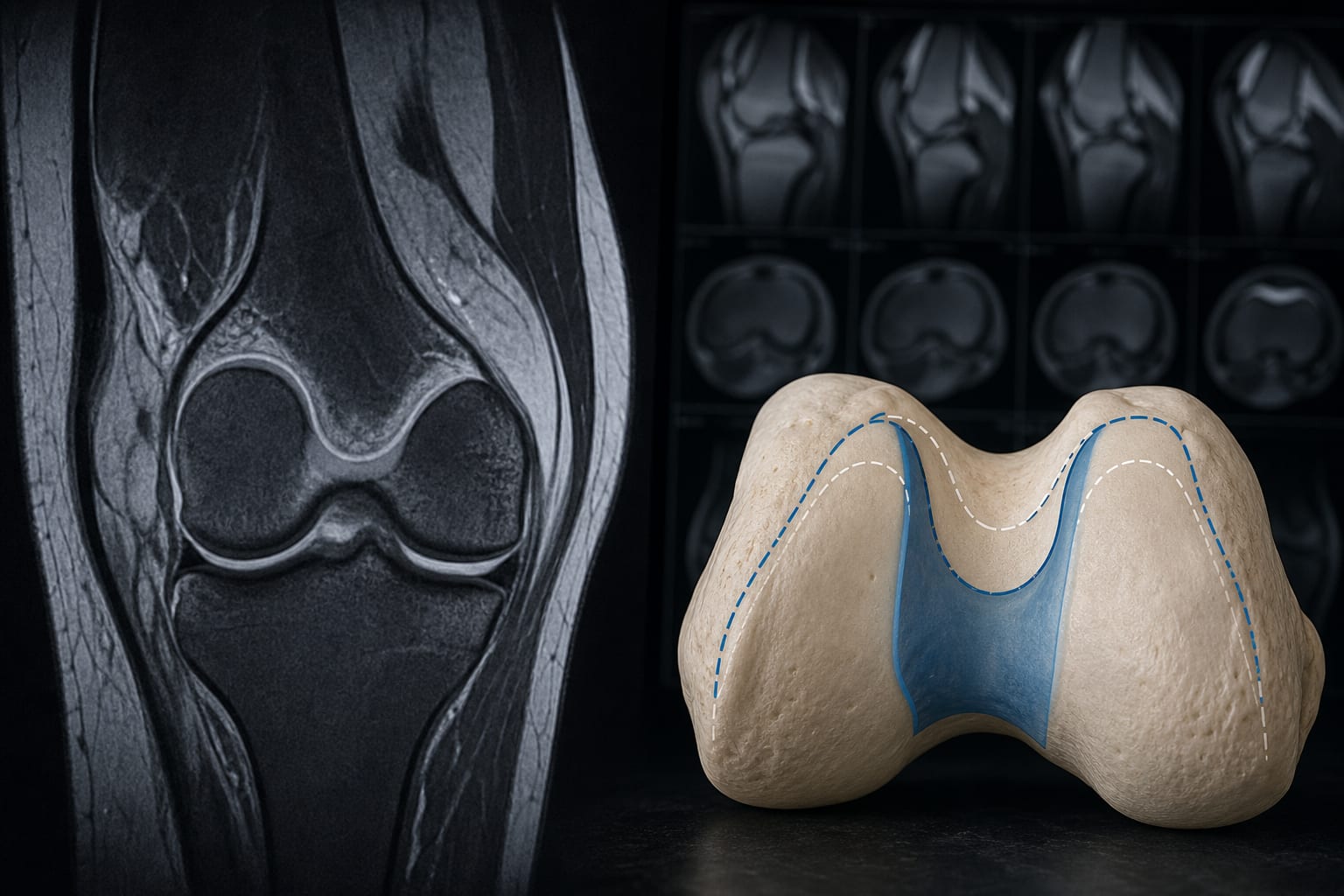
This study evaluates postoperative improvements in trochlear morphology in children under 10 years with habitual patellar dislocation (HPD). Significant correlations were found between preoperative factors and postoperative trochlear development.
Background
Trochlear dysplasia (TD) is a significant contributor to habitual patellar dislocation (HPD) in children. Understanding postoperative changes in trochlear morphology is crucial for predicting outcomes. This study addresses the limited evidence regarding femoral trochlear remodeling after surgery in pediatric patients.
Data Highlights
Measurement
Preoperative
Postoperative
P-value
Sulcus Angle (SA)
Mean SA
Significantly decreased
<0.001
Relative Trochlear Depth (RTD)
Mean RTD
Significantly increased
<0.001
Lateral Trochlear Inclination (LTI)
Mean LTI
Significantly increased
<0.001
Trochlear Facet Angle (TFA)
Mean TFA
Significantly increased
<0.001
Key Findings
Postoperative SA significantly decreased, while RTD, LTI, and TFA significantly increased.
Preoperative Age was an independent risk factor for poor postoperative trochlear development.
10 knees normalized postoperatively, while 14 had persistent TD.
Optimal cut-off for better prognosis was identified as preoperative Age <73.5 months.
Correlations were found between preoperative indicators and postoperative TD outcomes.
Clinical Implications
Clinicians should consider preoperative age and trochlear measurements when assessing prognosis and planning treatment.
Conclusion
The study demonstrates significant improvements in trochlear morphology post-surgery in children with HPD.