Clinical Report: Infectious Complications and CAR-T Cell Therapy in Lymphoid Malignancies
Overview
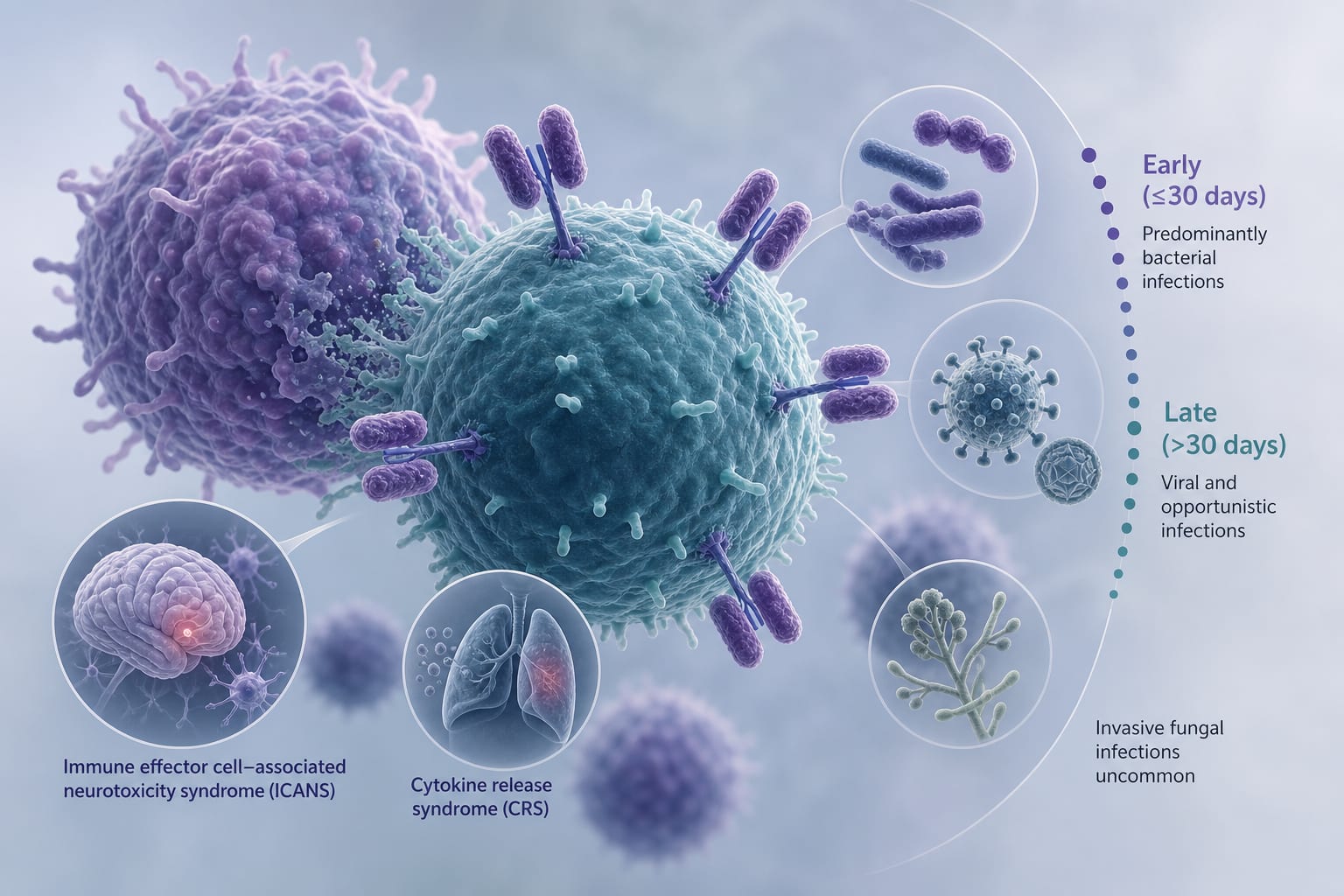
This review highlights the biphasic pattern of infectious complications following CAR-T cell therapy, emphasizing the predominance of bacterial infections in the early phase and a shift to viral or opportunistic infections later. It identifies risk factors and underscores the importance of vigilant infection management to reduce non-relapse mortality.
Background
Chimeric antigen receptor-T (CAR-T) cell therapy has transformed treatment for lymphoid malignancies, yet infectious complications remain a significant challenge. These infections can lead to substantial morbidity and are a leading cause of non-relapse mortality in this patient population. Understanding the timing and nature of these infections is crucial for optimizing patient outcomes.
Data Highlights
The incidence of early infections post-CAR-T therapy ranges from 23% to 77%, while late infections occur in 14% to 61% of patients.
Key Findings
Infectious complications follow a biphasic pattern: early (<30 days) and late (>30 days).
Bacterial infections are most common in the early phase, while viral and opportunistic infections prevail later.
Risk factors for infections include underlying malignancies, previous treatments, and CAR-T cell product characteristics.
Over half of non-relapse mortality in CAR-T patients is attributed to infections.
Adaptive immune defects, such as hypogammaglobulinemia, contribute to infection risk.
Clinical Implications
Healthcare providers should closely monitor patients for signs of infection during the early and late phases following CAR-T therapy. Implementing targeted infection prevention strategies is essential to improve patient management and reduce mortality associated with infections.
Conclusion
Infectious complications are a critical concern in CAR-T cell therapy for lymphoid malignancies, necessitating careful monitoring and management to enhance patient outcomes.