Pre-transplant microRNA serum profiles and association with acute graft-versus-host disease in allogeneic hematopoietic stem cell transplantation - Report - MDSpire
Advertisement
Pre-transplant microRNA serum profiles and association with acute graft-versus-host disease in allogeneic hematopoietic stem cell transplantation
Clinical Report: Serum microRNA Profiles and Acute Graft-Versus-Host Disease
Overview
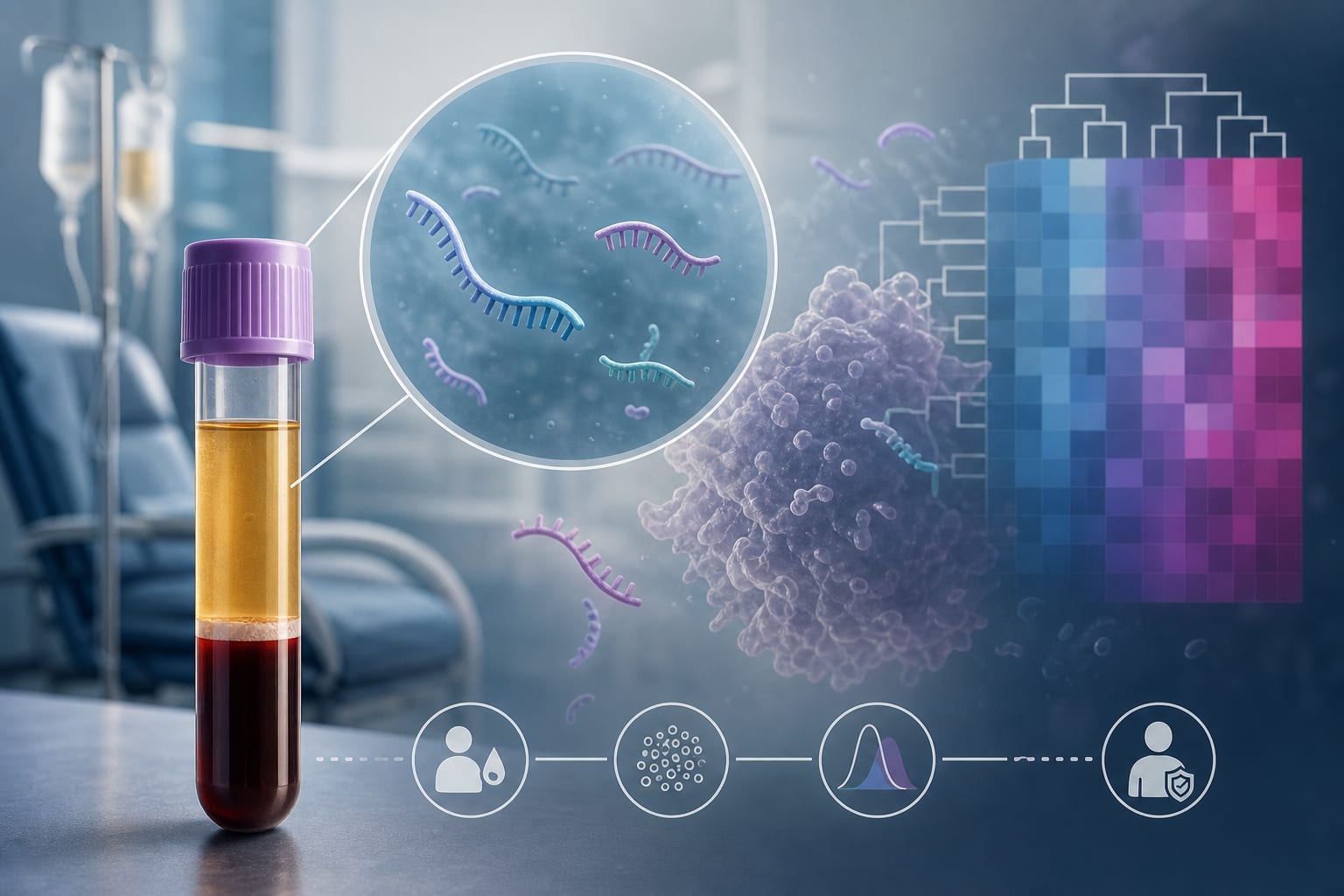
This study evaluates the predictive value of pre-transplant serum microRNA profiles for acute graft-versus-host disease (aGVHD) in allogeneic hematopoietic stem cell transplantation (allo-HSCT) recipients. Eight specific microRNAs were identified as potential biomarkers for early detection of aGVHD, which could enhance patient stratification and management.
Background
Acute graft-versus-host disease (aGVHD) is a significant complication following allogeneic hematopoietic stem cell transplantation (allo-HSCT), contributing to morbidity and mortality. Current diagnostic methods often detect aGVHD only after tissue damage has occurred, highlighting the need for reliable early biomarkers. Circulating microRNAs (miRNAs) present a promising avenue for non-invasive prediction of aGVHD risk prior to clinical manifestation.
Data Highlights
Parameter
Value
Patients studied
78
Patients with aGVHD (grade II–IV)
18 (23%)
Early mortality within 4 months
9 patients
Relapse within 1 year
7 patients
AUC of predictive model
0.855 (decreased to 0.692 after validation)
Key Findings
18 out of 78 allo-HSCT recipients developed aGVHD grade II–IV.
Eight pre-transplant miRNAs were identified as predictive for aGVHD development.
Cluster analysis revealed aGVHD risk stratification, with cluster 1 showing a 42% incidence of aGVHD.
Most miRNAs associated with aGVHD were upregulated in affected patients.
Eight additional miRNAs correlated with the Endothelial Activation and Stress Index (EASIX).
Clinical Implications
The identification of specific serum miRNA profiles prior to transplantation can facilitate early risk stratification for aGVHD, allowing for timely intervention and personalized prophylactic strategies. Incorporating miRNA profiling into pre-transplant assessments may improve overall transplant outcomes.
Conclusion
Pre-transplant serum miRNA signatures hold promise as predictive biomarkers for aGVHD, potentially transforming the approach to patient management in allo-HSCT. Further validation in larger cohorts is necessary to confirm these findings.