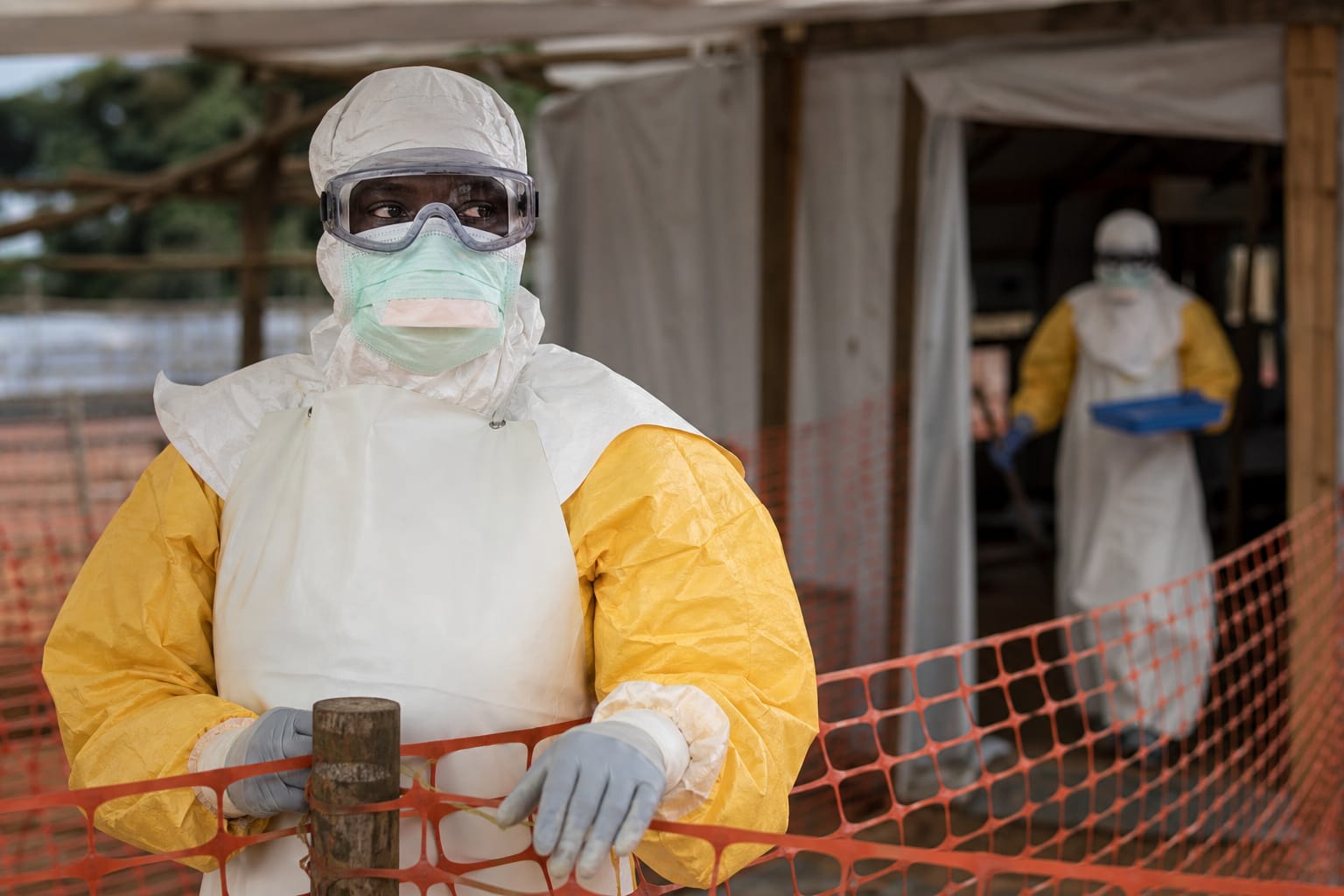
‘The Hot Zone’ led me to work with Ebola patients. Now I have mixed feelings about the book
-
By
-
Krutika Kuppalli
-
June 26, 2026
-
0 min
Reflections on Working with Ebola Patients After Reading 'The Hot Zone'
Overview
The article reflects on the impact of Richard Preston's 'The Hot Zone' on public perception of Ebola and the realities faced by healthcare professionals treating Ebola patients. It discusses the importance of compassionate care and the complexities of managing Ebola outbreaks as presented in the source material.
Background
Ebola virus disease remains a significant public health concern, often eliciting strong emotional reactions from the public and media. Misconceptions about the disease can lead to fear and stigma, complicating outbreak response efforts as noted in the source. Understanding the clinical realities of Ebola is crucial for healthcare professionals and the public.
Data Highlights
No numerical data or trial data is presented in the article.
Key Findings
- The portrayal of Ebola in 'The Hot Zone' has shaped public perception, emphasizing fear and chaos.
- Most Ebola patients do not exhibit overt bleeding; common symptoms include fever, fatigue, vomiting, and diarrhea.
- Ebola is transmitted through direct contact with symptomatic individuals or contaminated materials, not through casual contact.
- Compassionate care is essential in treating Ebola patients, who often experience fear and isolation.
- Effective outbreak response relies on numerous small decisions and actions taken by healthcare workers and community leaders.
Clinical Implications
Healthcare professionals should be aware of misconceptions surrounding Ebola to educate patients and the public effectively. Understanding the clinical presentation of Ebola can improve patient outcomes during outbreaks.
Conclusion
The article highlights the disparity between public perception of Ebola and the clinical realities faced by healthcare workers, emphasizing the need for a nuanced understanding of the disease.
Related Resources & Content
- Stat News, 2026 -- I saw Ebola as both doctor and patient. I wish people cared more about the Africans I worked alongside
- International Journal of Infectious Diseases, 2026 -- Rebuilding community trust after attacks on Ebola treatment facilities in DRC: lessons from previous epidemics
- Stat News, 2026 -- If Americans risk their lives fighting Ebola overseas, they deserve the right to come home
- WHO guidelines for the clinical management of filovirus disease, 2026
- Clinical Guidance for Ebola Disease | Ebola | CDC, 2026
- Optometric Management — CLINICAL: ebola
- Clinical Guidance for Ebola Disease | Ebola | CDC
- WHO makes new recommendations for Ebola treatments, calls for improved access
- WHO guidelines for the clinical management of filovirus disease
- Public Health Guidance for Ebola Disease | Ebola | CDC
- A Randomized, Controlled Trial of Ebola Virus Disease Therapeutics | New England Journal of Medicine
- Clinical factors associated with mortality in ebola virus disease: a systematic review and meta-analysis - PubMed
- Ebola vaccines
- A phase Ib, placebo-controlled randomized clinical trial of the Ebolavirus DNA vaccine candidate INO-4201 followed by electroporation as booster vaccination in healthy, rVSVΔG-ZEBOV-GP-primed volunteers (Boost-EBOV) - PubMed
- Safety and immunogenicity of a bivalent Ebola virus and Sudan virus ChAdOx1 vectored vaccine in adults in the UK: an open-label, non-randomised, first-in-human, phase 1 clinical trial - PubMed
- Long-term safety and immunogenicity of the two-dose heterologous Ad26.ZEBOV, MVA-BN-Filo Ebola vaccine regimen: a cohort study of previously vaccinated adults and children in Sierra Leone (the EBOVAC-Salone extension study) - ScienceDirect
- Sabin Vaccine Institute Completes Enrollment in All Phase 2 Clinical Trials for cAd3-Marburg Vaccine and cAd3-Sudan Ebolavirus Vaccine – Sabin Vaccine Institute
This content is an AI-generated, fully rewritten summary based on a published scholarly article. It does not reproduce the original text and is not a substitute for the original publication. Readers are encouraged to consult the source for full context, data, and methodology.