Clinical Report: Utilizing Artificial Intelligence for Biomarker Identification in Gastric Cancer
Overview
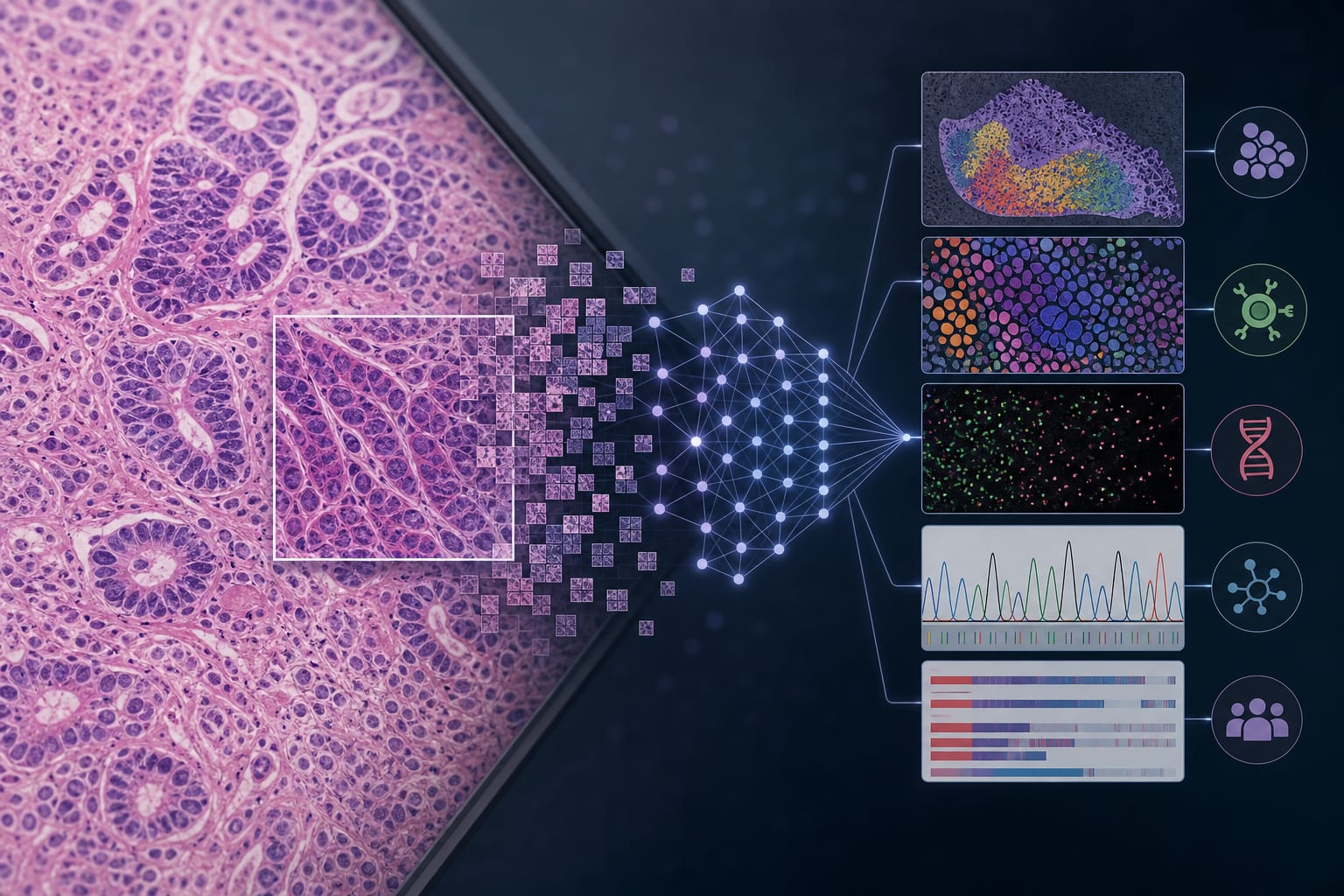
This report discusses the application of artificial intelligence (AI) in enhancing biomarker identification for gastric cancer (GC) through whole-slide imaging (WSI). AI models have shown potential in predicting key molecular features, improving the efficiency and accuracy of biomarker assessments.
Background
Gastric cancer is a major global health concern, characterized by significant molecular heterogeneity that complicates diagnosis and treatment. Traditional biomarker assessment methods are resource-intensive and may not be feasible in all clinical settings. The integration of AI into pathology offers a promising avenue for improving precision oncology by facilitating more efficient and accurate biomarker identification.
Data Highlights
No specific numerical data provided in the article.
Key Findings
AI models can predict microsatellite instability and Epstein–Barr virus status effectively.
Quantitative characterization of the tumor microenvironment is achievable through AI analysis of WSIs.
Multimodal integration of histopathological data with genomic and clinical information enhances predictive performance.
AI-enabled digital pathology could streamline biomarker assessment processes in clinical workflows.
Challenges include model interpretability and variability in performance across datasets.
Clinical Implications
The adoption of AI in pathology could significantly enhance the speed and accuracy of biomarker assessments in gastric cancer, leading to more tailored treatment strategies. Clinicians should consider integrating AI tools into routine practice to improve patient outcomes.
Conclusion
AI-enabled digital pathology represents a transformative approach in the field of gastric cancer, facilitating improved biomarker identification and advancing precision medicine. Continued research and validation are essential for its successful implementation in clinical settings.