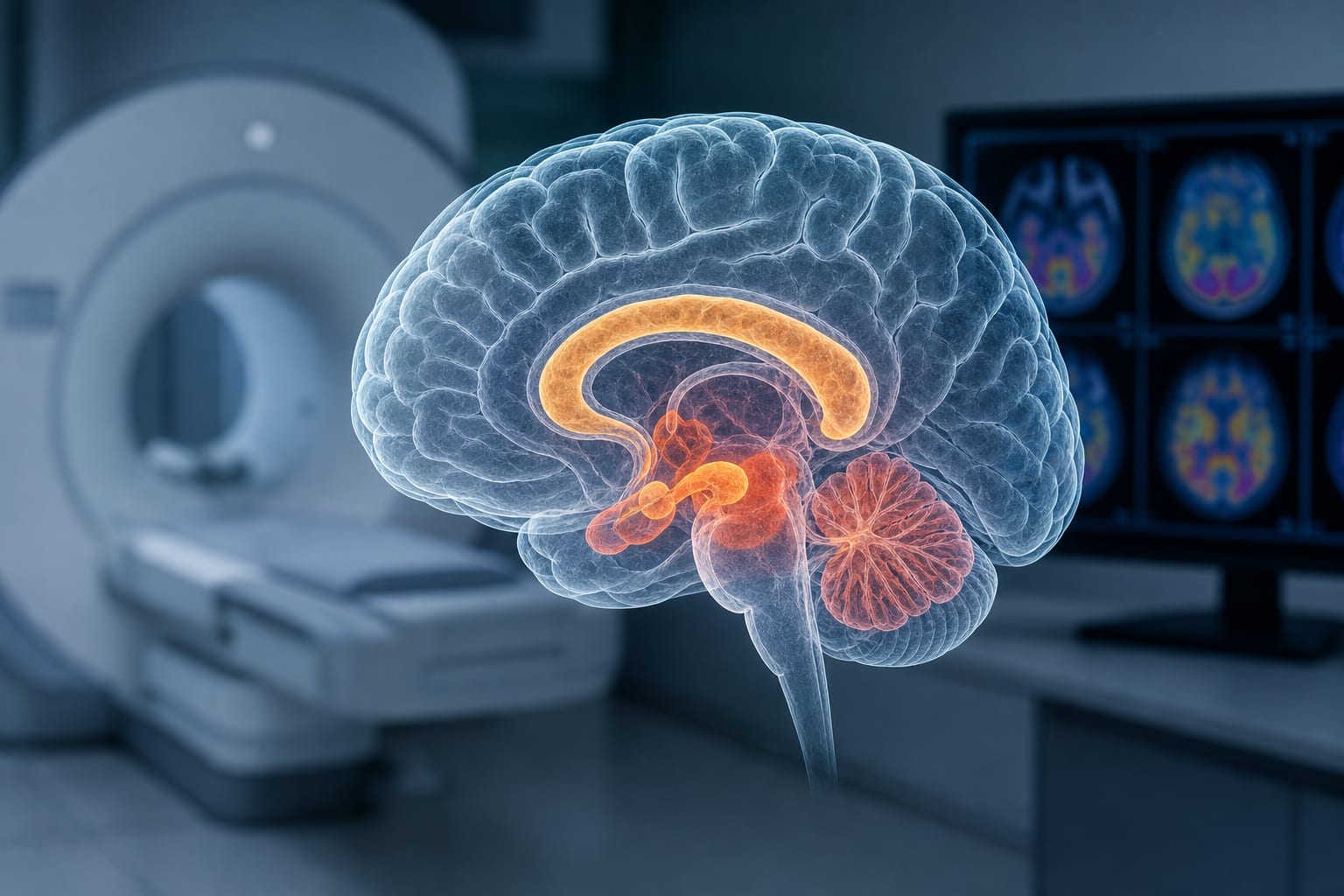
Alzheimer’s disease and related dementia: evaluation, diagnosis and acute care management
-
By
-
Rade B. Vukmir
-
June 15, 2026
-
0 min
Clinical Report: Assessment, Diagnosis, and Immediate Management of Alzheimer’s Disease
Overview
This report highlights the importance of early diagnosis and management of Alzheimer’s disease and related dementias (ADRD), emphasizing the role of multidisciplinary evaluations and emerging biomarker technologies. It underscores the need for healthcare providers to be informed about the latest diagnostic and treatment strategies.
Background
Alzheimer’s disease and related dementias are significant contributors to disability among the elderly, with a growing prevalence that necessitates timely diagnosis and intervention. Understanding the complexities of cognitive decline, including subjective and objective impairments, is crucial for effective management. The integration of advanced imaging and biomarker assessments is transforming the diagnostic landscape, enabling earlier and more accurate identification of ADRD.
Data Highlights
No specific numerical data was provided in the source material.
Key Findings
- Alzheimer’s disease accounts for 60%-70% of dementia cases, with incidence doubling every 5 years in older populations.
- Subjective cognitive impairment (SCI) may precede objective cognitive impairment (CI), highlighting the need for early assessment.
- Emerging blood-based biomarkers, such as p-tau217, show promise in diagnosing Alzheimer’s disease with high accuracy.
- Immediate treatment decisions are increasingly influenced by disease-modifying therapies, including lecanemab and donanemab.
- Age, educational attainment, and socioeconomic factors significantly affect dementia prevalence and diagnosis.
Clinical Implications
Healthcare providers should implement structured, biomarker-informed workflows for diagnosing dementia, ensuring timely and appropriate referrals. Familiarity with the latest treatment options and their potential complications is essential for managing patients with Alzheimer’s disease effectively.
Conclusion
The evolving landscape of Alzheimer’s disease diagnosis and management necessitates continuous education for healthcare professionals. Emphasizing early detection and intervention can significantly improve patient outcomes.
Related Resources & Content
- Alzheimer's Association clinical practice guideline for the Diagnostic Evaluation, Testing, Counseling, and Disclosure of Suspected Alzheimer's Disease and Related Disorders (DETeCD‐ADRD): Executive summary of recommendations for primary care, PMC, 2024
- Long‐term safety and efficacy of lecanemab in early Alzheimer's disease: Results from the clarity AD open‐label extension study, PMC, 2024
- Journal of General Internal Medicine — Associations of Individual- and Neighborhood-Level Factors with Racial and Ethnic Disparities in Timely Dementia Diagnosis, 2026
- Journal of Medical Internet Research (JMIR) — Acceptability of Technologies to Support Early Dementia Detection: Qualitative Study With the Boston University Alzheimer’s Disease Center Cohort, 2026
- Frontiers in Psychiatry — Multimodal non-invasive approaches for early Alzheimer’s disease detection: a review of neuroelectrophysiological and neuroimaging techniques, 2026
- Journal of General Internal Medicine (Springer) — Family Caregivers and the Need to Navigate Healthcare for People with Alzheimer’s Disease and Related Dementias
- Alzheimer's Association clinical practice guideline for the Diagnostic Evaluation, Testing, Counseling, and Disclosure of Suspected Alzheimer's Disease and Related Disorders (DETeCD‐ADRD): Executive summary of recommendations for primary care - PMC
- Long‐term safety and efficacy of lecanemab in early Alzheimer's disease: Results from the clarity AD open‐label extension study - PMC
This content is an AI-generated, fully rewritten summary based on a published scholarly article. It does not reproduce the original text and is not a substitute for the original publication. Readers are encouraged to consult the source for full context, data, and methodology.