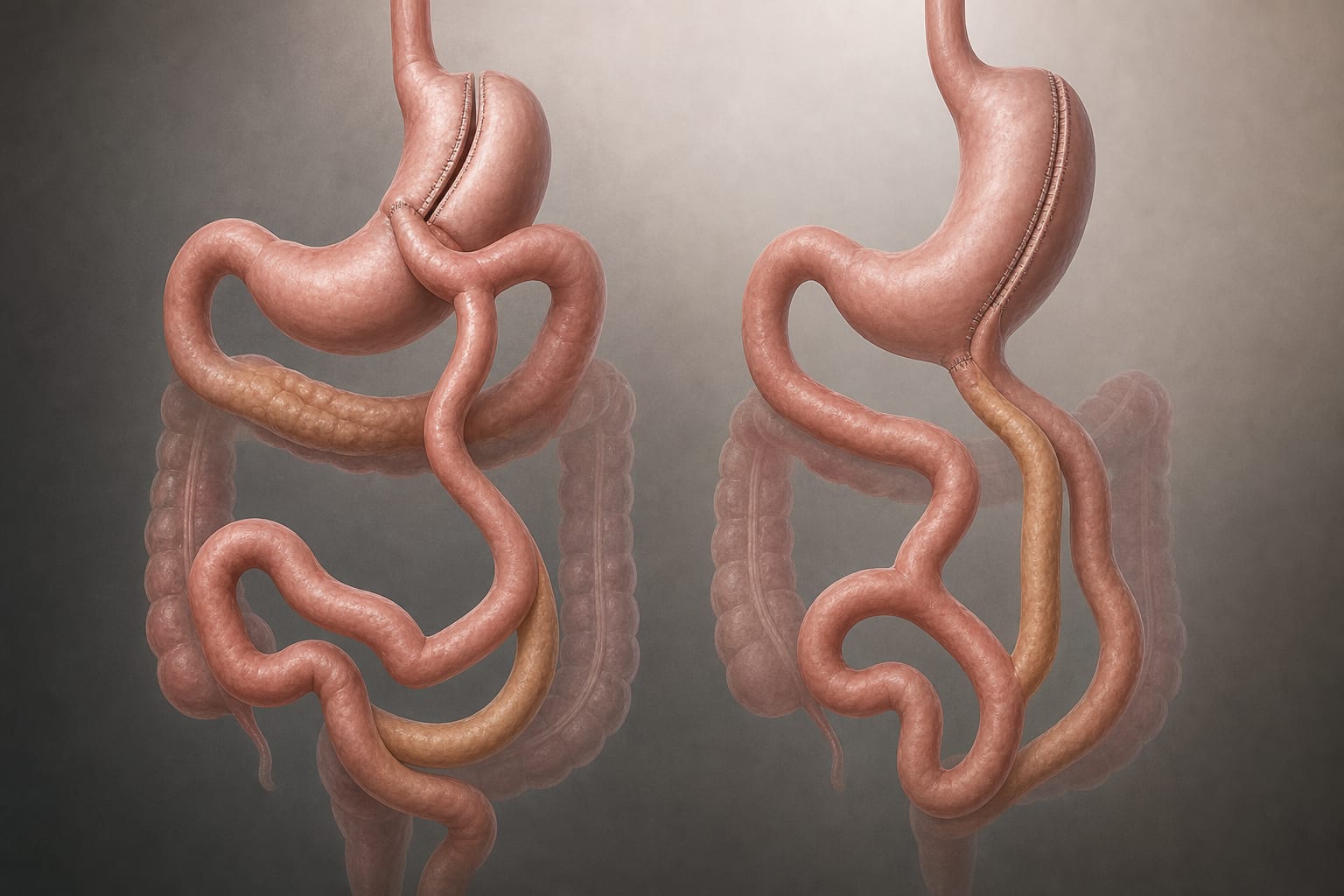
Assessment of Tranexamic Acid's Effectiveness and Safety in Sleeve Gastrectomy
Overview
This double-blind randomized controlled trial evaluated the efficacy and safety of a single preoperative intravenous dose of tranexamic acid (TXA) in patients undergoing sleeve gastrectomy (SG). TXA significantly reduced intraoperative bleeding and hemoglobin decline without increasing thromboembolic complications, supporting its use as a blood-conservation strategy in metabolic and bariatric surgery.
Background
Metabolic and bariatric surgery, particularly sleeve gastrectomy, is the most effective treatment for severe obesity but carries a 2–4% risk of postoperative bleeding. Conventional surgical techniques have variable success in reducing bleeding, prompting investigation into pharmacological agents like tranexamic acid (TXA), a synthetic antifibrinolytic widely used in other surgical specialties. Despite concerns about elevated venous thromboembolism (VTE) risk in obese patients, recent evidence suggests TXA can reduce bleeding without increasing thrombotic events in this population. This study aimed to provide procedure-specific evidence on TXA's effectiveness and safety in SG.
Data Highlights
Parameter
TXA Group
Placebo Group
Significance
Intraoperative bleeding volume (mL)
Reduced
Higher
p < 0.05
Hemoglobin decline (g/dL)
Lower
Higher
p < 0.05
Staple-line interventions
Fewer
More
p < 0.05
Postoperative bleeding rate (%)
~2%
~4%
p < 0.05
Venous thromboembolism events
None reported
None reported
NS
Transfusion requirements
Trend lower
Trend higher
NS
Key Findings
Preoperative intravenous administration of 1 g TXA significantly reduced intraoperative bleeding volume during sleeve gastrectomy.
Patients receiving TXA experienced less hemoglobin decline postoperatively compared to placebo.
TXA use was associated with fewer staple-line interventions, indicating improved surgical hemostasis.
Postoperative bleeding rates were approximately halved in the TXA group without increasing venous thromboembolism events.
No increase in thrombotic complications or mortality was observed with TXA administration.
Although transfusion requirements trended lower with TXA, this did not reach statistical significance due to low baseline transfusion rates.
Clinical Implications
The findings support the incorporation of a single preoperative intravenous dose of tranexamic acid as a safe and effective adjunct to reduce bleeding in sleeve gastrectomy. Given the lack of increased thromboembolic risk, TXA can be considered in metabolic and bariatric surgery protocols to improve perioperative hemostasis and potentially reduce operative time and hospitalization. Clinicians should continue to monitor for VTE but may be reassured by the accumulating evidence of TXA's safety in this high-risk population.
Conclusion
This randomized controlled study confirms that tranexamic acid effectively reduces bleeding and hemoglobin loss in sleeve gastrectomy without increasing thromboembolic complications. TXA represents a valuable pharmacological strategy to enhance surgical safety and outcomes in metabolic and bariatric surgery.
References
ASMBS/IFSO 2022 -- Sleeve Gastrectomy Criteria
Large Multicenter Trials and Meta-Analyses -- TXA Safety in Surgery