Clinical Report: Assessment Instruments for Fibrosis Induced by Radiation in HNC
Overview
This comprehensive review identifies and evaluates assessment tools for radiation-induced fibrosis (RIF) in head and neck cancer (HNC). It highlights the lack of consensus on reliable, non-invasive measurement instruments.
Background
Radiation-induced fibrosis is a common late complication in patients treated for head and neck cancers, affecting up to 50% of patients. The condition can lead to functional and cosmetic impairments. Reliable assessment tools are essential for monitoring RIF in HNC survivors.
Data Highlights
No numerical data available in the source material.
Key Findings
RIF prevalence varies widely based on assessment methods and definitions.
Severe subcutaneous fibrosis incidence exceeds 40% at 10 years in certain patient populations.
RIF is characterized by progressive tissue remodeling and loss of elasticity.
There is no consensus on a valid, reliable, and non-invasive tool for assessing RIF in HNC.
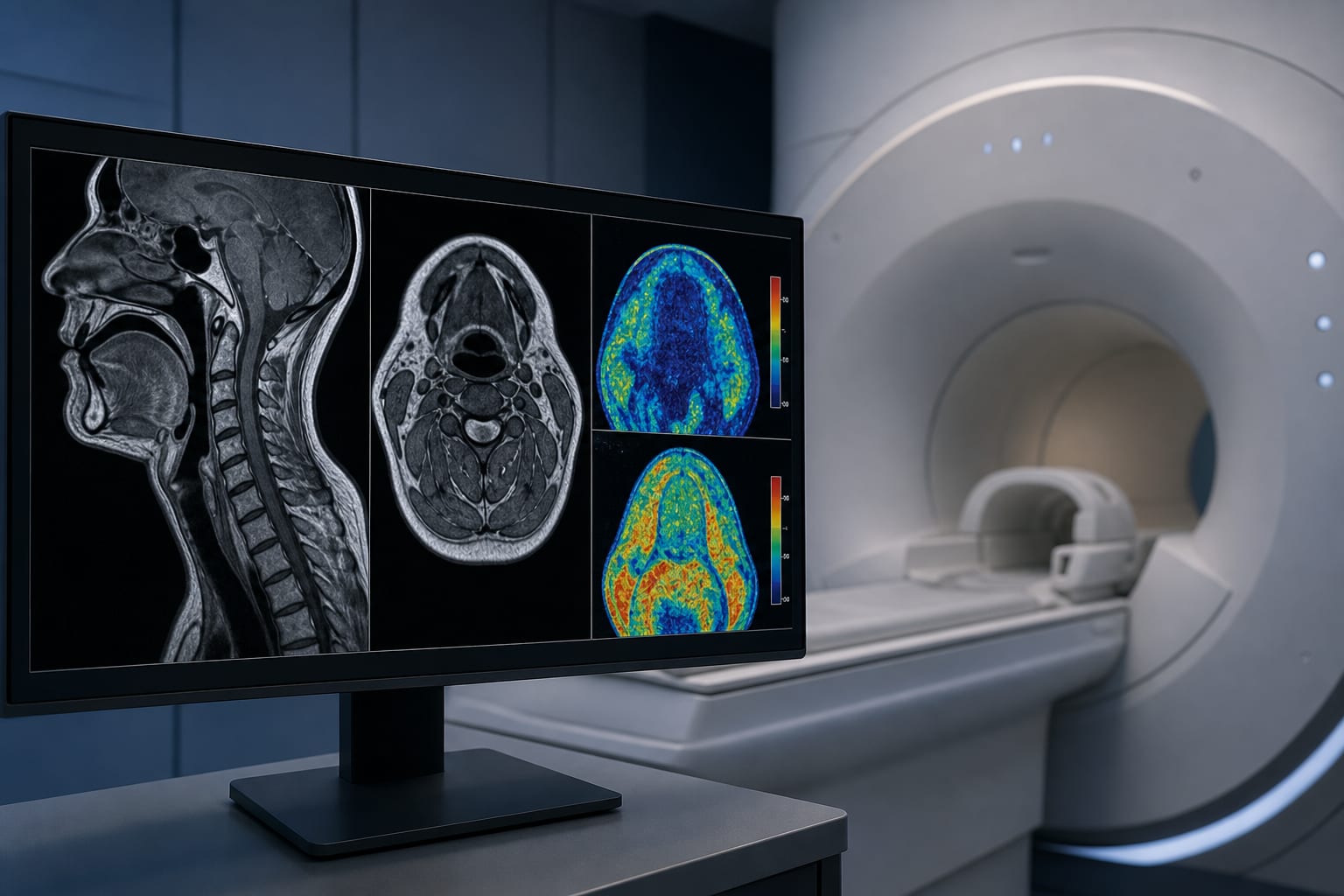
Assessment tools include subjective PROMs and clinician-based palpation scales, as well as objective imaging techniques.
Clinical Implications
Healthcare professionals should be aware of the various assessment tools for RIF. Understanding the limitations of current tools can guide future research.
Conclusion
The review highlights the need for standardized assessment instruments for RIF in head and neck cancer.
by Vanessa Helou, Pooja D. Reddy, Purva H. Rumde, Mary L. Klem, Sagar G. Kansara, Oldrich Virag, Yvonne M. Mowery, Nicole N. Scheff, Matthew E. Spector, Shaum Sridharan, Marci L. Nilsen, Kevin J. Contrera