Clinical Report: Impact of Pulsed Radiofrequency Stimulation on Neuronal Mitochondrial Activity
Overview
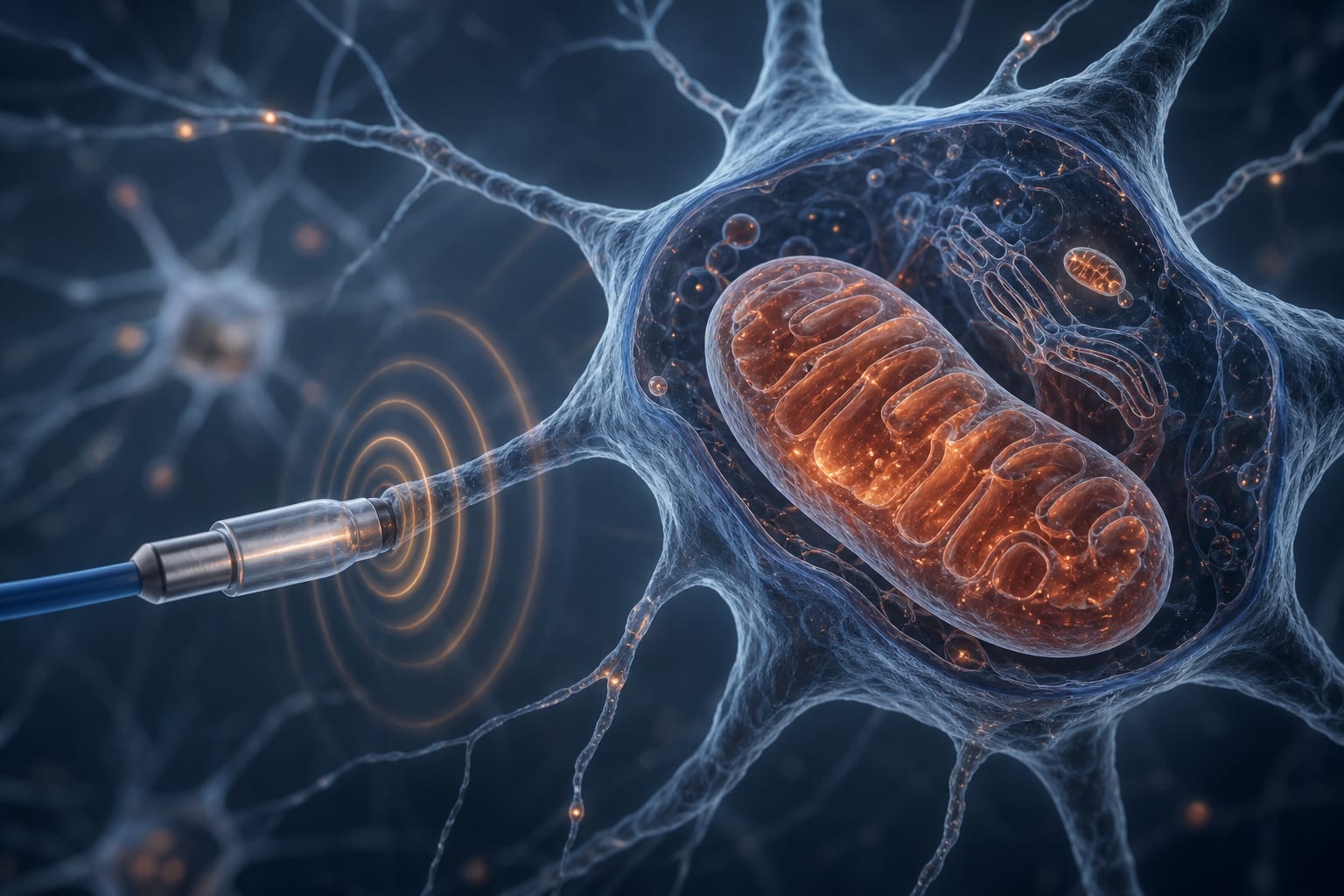
This review synthesizes literature on the effects of pulsed radiofrequency (PRF) stimulation on neuronal mitochondrial function. Key findings indicate that PRF preserves mitochondrial structure while altering bioenergetic profiles.
Background
Pulsed radiofrequency stimulation is a non-destructive intervention for neuropathic pain, contrasting with continuous radiofrequency ablation. Understanding its mechanisms, particularly regarding mitochondrial function, is crucial.
Data Highlights
No numerical data or trial data presented in the article.
Key Findings
PRF preserves mitochondrial ultrastructure compared to CRF, which induces severe mitochondrial pathology.
PRF decreases mitochondrial membrane potential (ΔΨm) while increasing cytosolic ATP levels.
PRF treatment is associated with mitochondrial hyperplasia.
PRF may exert acute effects by depolarizing the mitochondrial membrane and reducing excitotoxic calcium influx.
Further exploration of PRF's impact on mitochondrial health in neuropathies is warranted.
Clinical Implications
Understanding these mechanisms could enhance therapeutic strategies for neuropathic pain management.
Conclusion
Further research is needed to elucidate the mechanisms by which pulsed radiofrequency stimulation influences mitochondrial function.