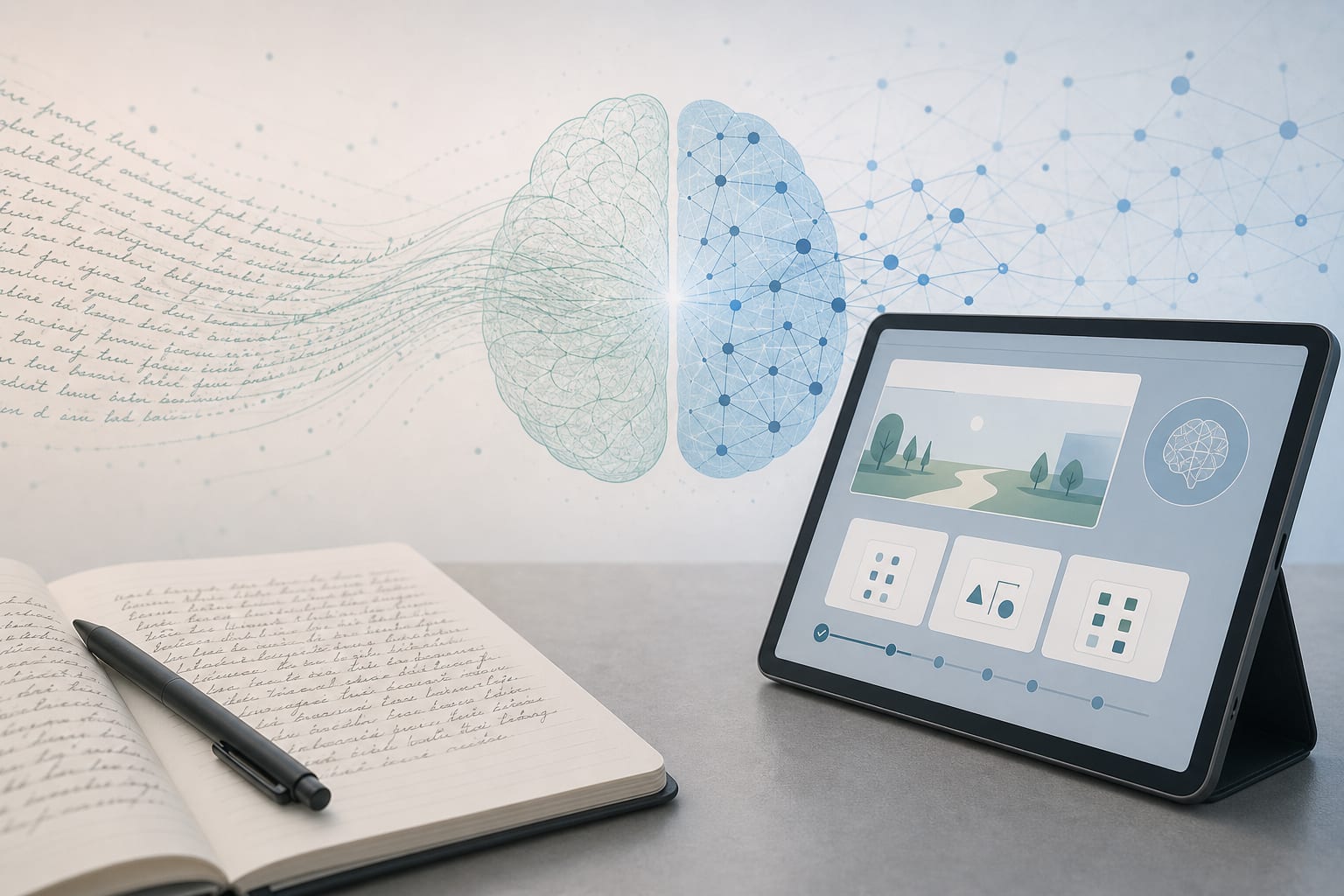
Expressive Writing Combined with Digital Cognitive Therapy in Patients with Schizophrenia: A Narrative Review of Efficacy, Linguistic Phenotypes, and Adherence Modulators - Report - MDSpire
Advertisement
Expressive Writing Combined with Digital Cognitive Therapy in Patients with Schizophrenia: A Narrative Review of Efficacy, Linguistic Phenotypes, and Adherence Modulators
Integration of Expressive Writing and Digital Cognitive Therapy for Schizophrenia
Overview
This narrative review explores the integration of expressive writing (EW) and digital cognitive therapy (DCT) as a dual strategy for improving emotional regulation and cognitive restoration in schizophrenia. The proposed model aims to enhance engagement and self-efficacy, potentially leading to better long-term rehabilitation outcomes.
Background
Schizophrenia often presents with emotional and cognitive deficits that are inadequately addressed by pharmacological treatments alone, necessitating effective psychosocial interventions. The combination of EW and DCT may provide a novel approach to support emotional processing and cognitive function. Understanding the linguistic characteristics of patients through natural language processing could further personalize treatment strategies.
Data Highlights
No numerical data or trial results were provided in the article.
Key Findings
Expressive writing may facilitate emotional processing and motivation in schizophrenia patients.
Digital cognitive therapy can improve attention, memory, and executive function through interactive exercises.
The integration of EW and DCT could enhance patient engagement and self-efficacy.
Linguistic analysis using natural language processing may offer objective measures of cognitive and emotional changes.
Empirical investigation is needed to evaluate the efficacy and scalability of the proposed integration model.
Clinical Implications
Clinicians should consider incorporating expressive writing and digital cognitive therapy into treatment plans for schizophrenia to enhance emotional and cognitive outcomes. The use of linguistic analysis may also help tailor interventions to individual patient needs.
Conclusion
The proposed integration of expressive writing and digital cognitive therapy presents a promising framework for improving rehabilitation in schizophrenia, warranting further empirical research to validate its effectiveness.