Differential Effects of Aerobic, Resistance, and Combined Exercise on Skeletal Muscle Function in High-Fat Diet–Induced Obese Mice: Integration of Gut Microbiota and Metabolomics - Report - MDSpire
Conexiant’s news site is now MDSpire News. Learn more
Advertisement
Comparative Impact of Aerobic, Resistance, and Combined Exercise on Skeletal Muscle Performance in Obese Mice Induced by High-Fat Diet: A Focus on Gut Microbiota and Metabolomic Changes
Comparative Impact of Aerobic, Resistance, and Combined Exercise on Skeletal Muscle Performance
Overview
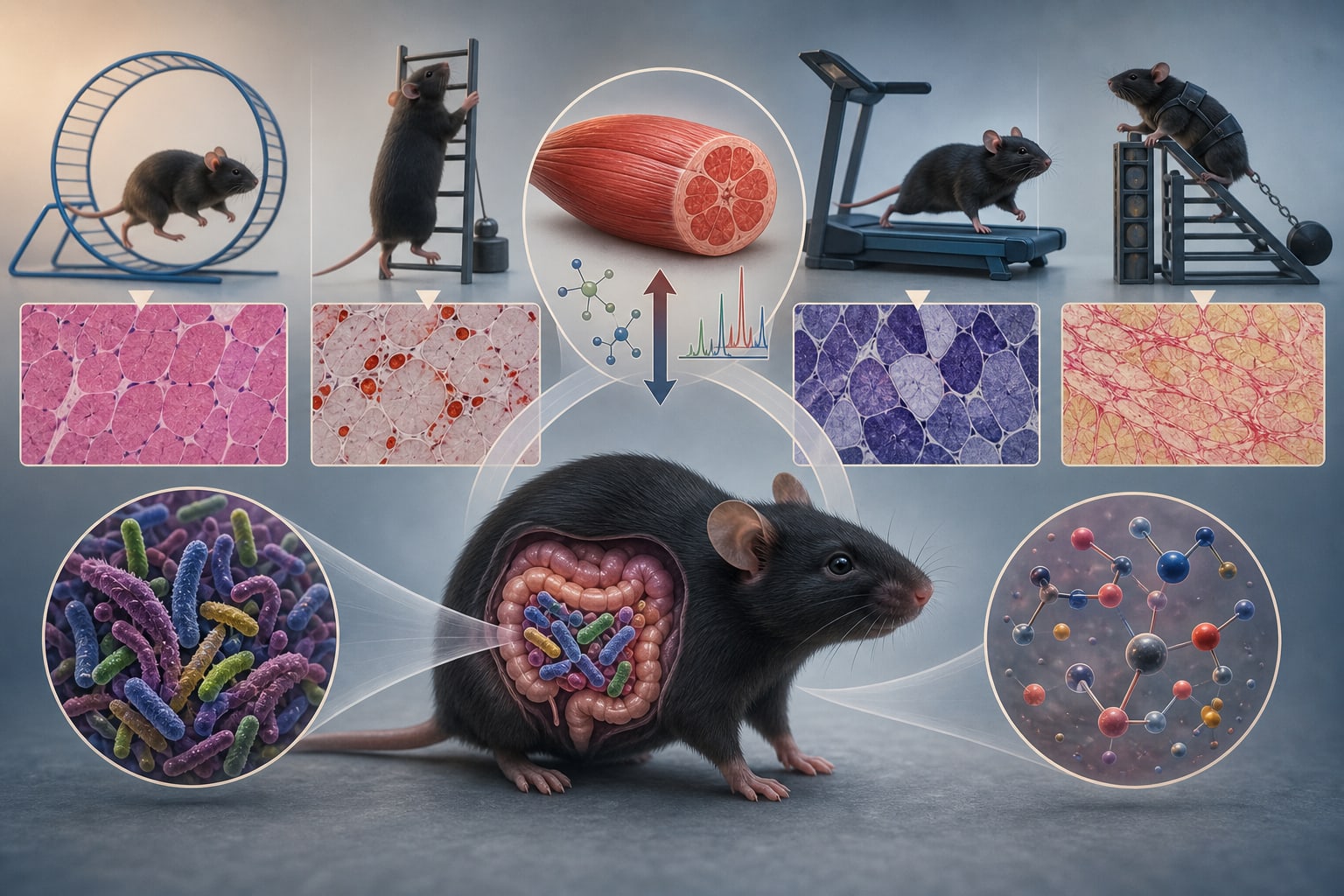
This study investigates how different exercise modalities affect gut microbiota and metabolic profiles in high-fat diet-induced obese mice. Findings indicate that combined exercise yields the most significant improvements in skeletal muscle function and morphology.
Background
Obesity is a major public health concern linked to various metabolic disorders. Understanding the impact of exercise on muscle performance and gut microbiota can provide insights into effective interventions for obesity-related complications. This study explores the differential effects of aerobic, resistance, and combined exercise on these parameters in a controlled animal model.
Data Highlights
Group
Treadmill Endurance
Relative Grip Strength
Muscle Fiber Morphology
HF
Decreased
Decreased
Pathological alterations
HFA
Improved
Improved
Moderate improvement
HFR
Improved
Improved
Significant improvement
HFAR
Most improved
Most improved
Best morphology
Key Findings
All exercise groups improved treadmill endurance and grip strength compared to the high-fat diet group.
The combined exercise group (HFAR) showed the most pronounced effects on muscle fiber morphology and mtDNA content.
Exercise interventions restored gut microbiota diversity, with the HFAR group exhibiting the greatest improvement.
Specific microbial changes were identified, including enrichment of Blautia in the resistance group and Romboutsia in the combined exercise group.
Metabolomic analysis revealed 278 differential metabolites with unique regulatory patterns based on exercise modality.
Clinical Implications
These findings suggest that different exercise modalities can be strategically employed to improve muscle function and metabolic health in obese populations. The modulation of gut microbiota may also play a role in these improvements, warranting further investigation.
Conclusion
Aerobic, resistance, and combined exercise differentially enhance skeletal muscle performance and gut microbiota in obese mice. These results highlight the importance of exercise modality in managing obesity-related muscle dysfunction.