Comparative Effectiveness and Safety of Baricitinib and Ritlecitinib in Severe Alopecia Areata: A Real-World Monocentric Retrospective Study - Report - MDSpire
Advertisement
Comparative Effectiveness and Safety of Baricitinib and Ritlecitinib in Severe Alopecia Areata: A Real-World Monocentric Retrospective Study
Clinical Report: Effectiveness and Safety of Baricitinib vs Ritlecitinib
Overview
This study evaluates the effectiveness and safety of baricitinib and ritlecitinib in patients with severe alopecia areata over one year.
Background
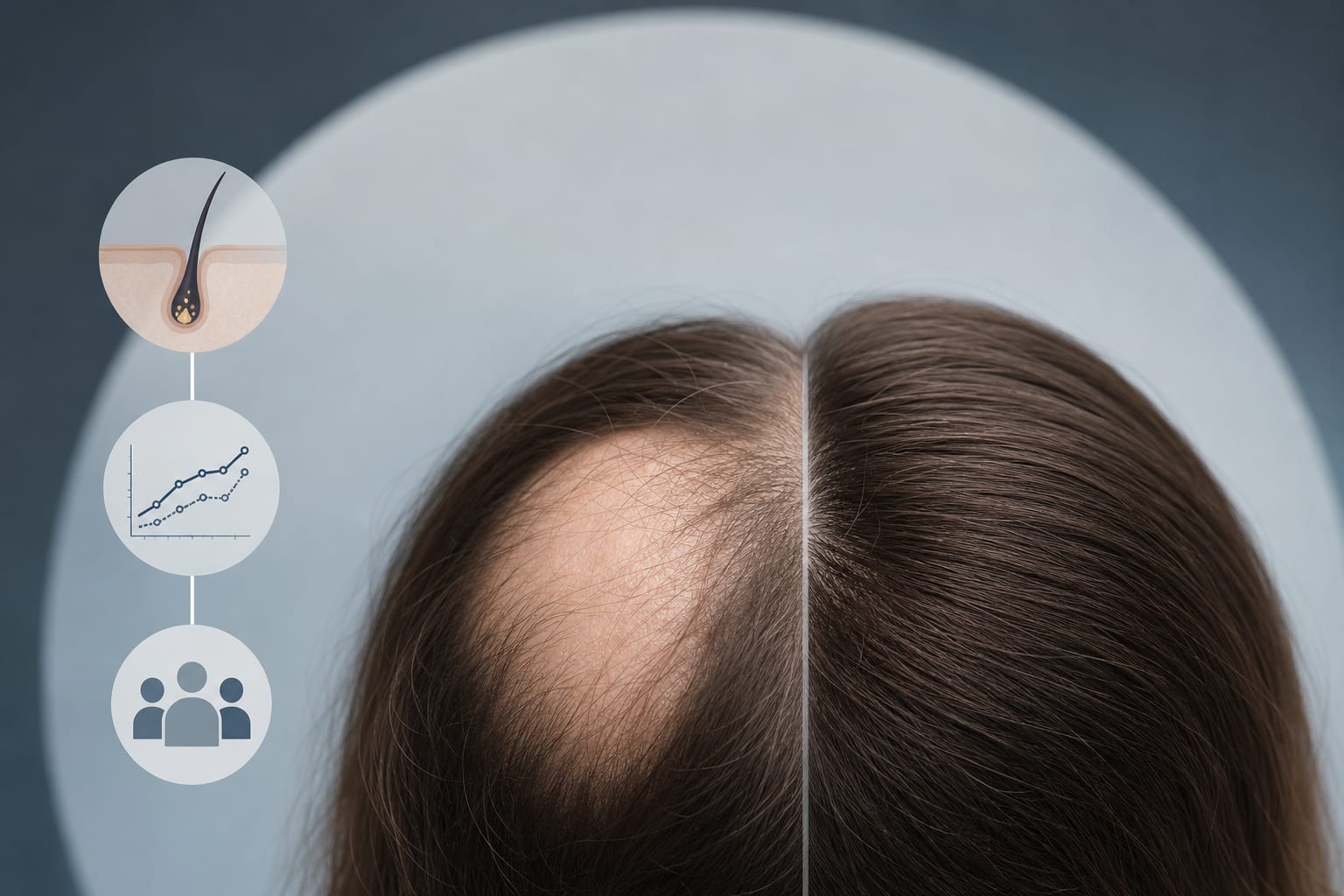
Alopecia areata (AA) is a chronic immune-mediated disorder leading to hair loss, affecting a significant portion of the population. With limited treatment options and variable outcomes from conventional therapies, the introduction of targeted therapies like JAK inhibitors is being explored.
Data Highlights
Treatment
Response Rate (SALT ≤ 20)
Adverse Events
Baricitinib 4 mg
Comparable
More frequent non-severe AEs
Ritlecitinib 50 mg
Comparable
Less frequent non-severe AEs
Key Findings
Both baricitinib and ritlecitinib showed progressive improvement in hair regrowth over 52 weeks.
Response rates for SALT ≤ 20 were comparable at weeks 16 and 52 for both treatments.
Eyebrow and eyelash involvement improved similarly in both groups without significant differences.
Baricitinib was associated with a higher frequency of non-severe adverse events, primarily weight gain.
Treatment discontinuation due to adverse events was infrequent and similar between the two groups.
Clinical Implications
Clinicians should consider both baricitinib and ritlecitinib as effective options for treating severe alopecia areata, noting the comparable safety profiles. Monitoring for non-severe adverse events, particularly with baricitinib, is recommended during treatment.
Conclusion
The study provides valuable real-world evidence on the effectiveness and safety of baricitinib and ritlecitinib, supporting their use in clinical practice for severe alopecia areata.
by Francesco D’Oria, Sara Di Giulio, Luciano Ibba, Costanza Falcidia, Giulio Foggi, Carlo Alberto Vignoli, Paola Facheris, Luigi Gargiulo, Ruggero Cascio Ingurgio, Antonio Costanzo, Alessandra Narcisi, Mario Valenti
Nearly 90% of patients who met algorithmic criteria for postacute sequelae of SARS-CoV-2 infection had at least 1 chronic or potentially chronic condition requiring ongoing clinical management.