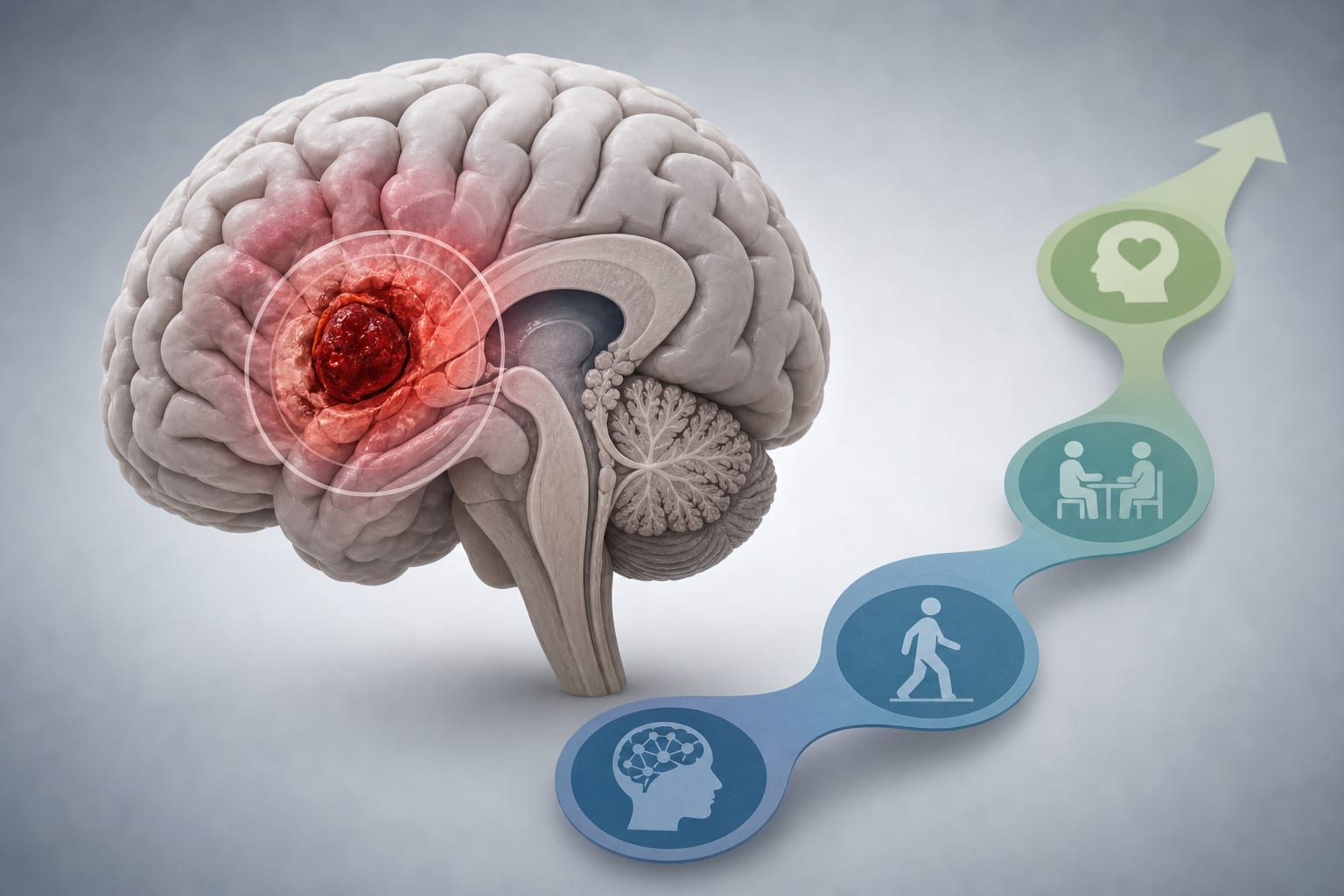
Clinical Report: Effects of Rehabilitation Pathways on Cognitive and Emotional Dysfunction Following Intracerebral Hemorrhage
Overview
This cohort study examines the impact of rehabilitation trajectories on cognitive impairment, depression, and anxiety in patients with spontaneous intracerebral hemorrhage (ICH). Findings indicate that early rehabilitation is associated with better neuropsychiatric outcomes compared to late rehabilitation.
Background
Spontaneous intracerebral hemorrhage (ICH) is a significant cause of long-term disability and cognitive dysfunction. Understanding the effects of rehabilitation timing on cognitive and emotional recovery is crucial for improving patient outcomes. This study focuses on the relationship between rehabilitation pathways and neuropsychiatric impairments in ICH patients.
Data Highlights
Group
Cognitive Impairment Odds Ratio
Depression Odds Ratio
Late Rehabilitation
1.40 (95% CI 1.02–1.93, P = 0.036)
1.96 (95% CI 1.47–2.62, P < 0.001)
Key Findings
1,692 ICH patients were analyzed, with 1,563 included in the final analysis.
75.5% of patients followed an early rehabilitation trajectory, while 24.5% followed a late rehabilitation trajectory.
Late rehabilitation was associated with higher odds of cognitive impairment and depression.
Factors such as male gender, smaller hematoma volume, and higher education were linked to increased risk of impairments in the late rehabilitation group.
Early rehabilitation is crucial for reducing long-term cognitive and affective impairments following ICH.
Clinical Implications
Healthcare providers should prioritize early rehabilitation for ICH patients to mitigate cognitive and emotional dysfunction. Tailoring rehabilitation strategies based on individual patient characteristics may enhance recovery outcomes.
Conclusion
The study highlights the importance of early rehabilitation in improving cognitive and emotional outcomes for ICH patients, suggesting a need for personalized rehabilitation strategies.