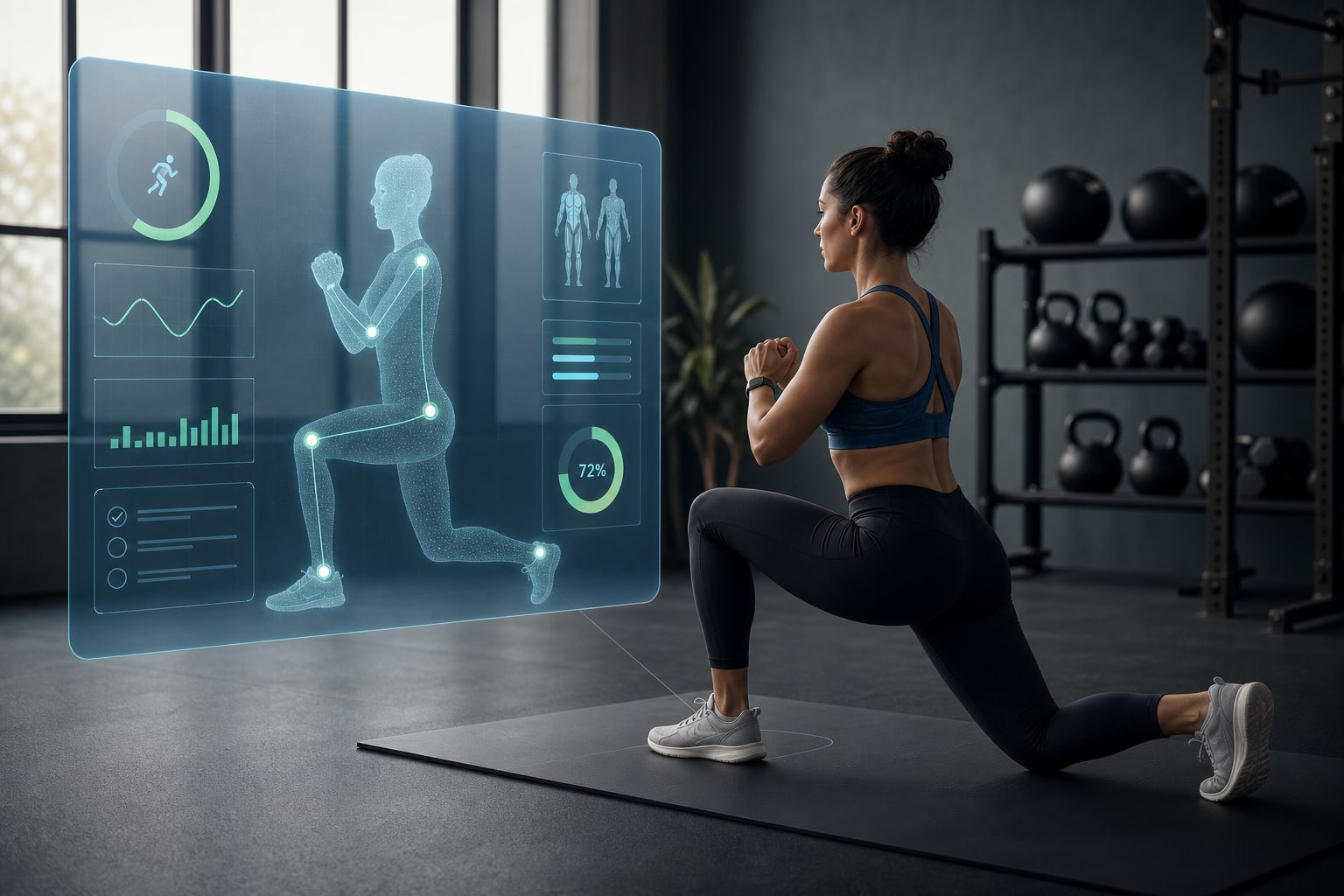
Should AI Be Your Personal Trainer?
-
By
-
Anna Zucker
-
July 8, 2026
-
0 min
Clinical Report: Is Artificial Intelligence a Viable Alternative to Human Personal Trainers?
Overview
AI chatbots can provide exercise guidance and training programs at low cost. However, they lack the personal engagement and accountability that human trainers offer.
Background
Physical inactivity is a significant risk factor for mortality, and personalized fitness instruction can enhance the health benefits of exercise. Access to effective training is often limited, making AI tools a potential resource for individuals seeking fitness guidance.
Data Highlights
No numerical data provided in the source material.
Key Findings
- AI chatbots can generate training programs and answer exercise questions effectively.
- AI lacks the ability to provide hands-on adjustments and real-time judgment that human trainers offer.
- Accountability and personal engagement are critical factors in maintaining exercise consistency.
Clinical Implications
AI can provide fitness knowledge, but it cannot replace the personalized support and accountability provided by human trainers.
Conclusion
The human element remains vital for effective and sustainable training outcomes.
Related Resources & Content
- Zucker A, Frontiers in Digital Health, 2026 -- Is Artificial Intelligence a Viable Alternative to Human Personal Trainers?
- AACE Endocrine AI, 2026 -- Diabetes care: Are automated AI interventions as effective as human coaching?
- Conexiant, 2026 -- What AI Can (and Can’t) Do in Surgery Training
- Obesity and Endocrinology — Revolutionizing Obesity Treatment through Artificial Intelligence: Tailoring Approaches and Future Directions
- An AI-Powered Lifestyle Intervention vs Human Coaching in the Diabetes Prevention Program: A Randomized Clinical Trial
- An adaptive AI-based virtual reality sports system for adolescents with excess body weight: a randomized controlled trial
- Journal of Medical Internet Research - Wearable Activity Tracker–Based Interventions for Physical Activity, Body Composition, and Physical Function Among Community-Dwelling Older Adults: Systematic Review and Meta-Analysis of Randomized Controlled Trials
- JMIR mHealth and uHealth - Natural Language Processing Chatbot–Based Interventions for Improvement of Diet, Physical Activity, and Tobacco Smoking Behaviors: Systematic Review
- Effect of Components and Delivery Modes of Digital Health Interventions Targeting Physical Activity in People With a Chronic Condition or Multimorbidity: A Systematic Review and Component Network Meta-Analysis of Randomized Controlled Trials - PubMed
- Systematic review of deep learning applications in physical rehabilitation for human movement analysis in compliance with PRISMA standards | Discover Artificial Intelligence | Springer Nature Link
- Pragmatic Approaches to the Evaluation and Monitoring of Artificial Intelligence in Health Care - Professional Heart Daily | American Heart Association
- Role of Technology in Promoting Heart Healthy Behavior Change to Increase Equity in Optimal Cardiovascular Health: A Scientific Statement From the American Heart Association - PubMed
- Artificial intelligence and machine learning in sports medicine: mapping clinical tasks and assessing clinical maturity - a scoping review - PMC
This content is an AI-generated, fully rewritten summary based on a published scholarly article. It does not reproduce the original text and is not a substitute for the original publication. Readers are encouraged to consult the source for full context, data, and methodology.