Clinical Report: Enhanced Recovery Protocols for Complex Pediatric Urologic Surgery
Background
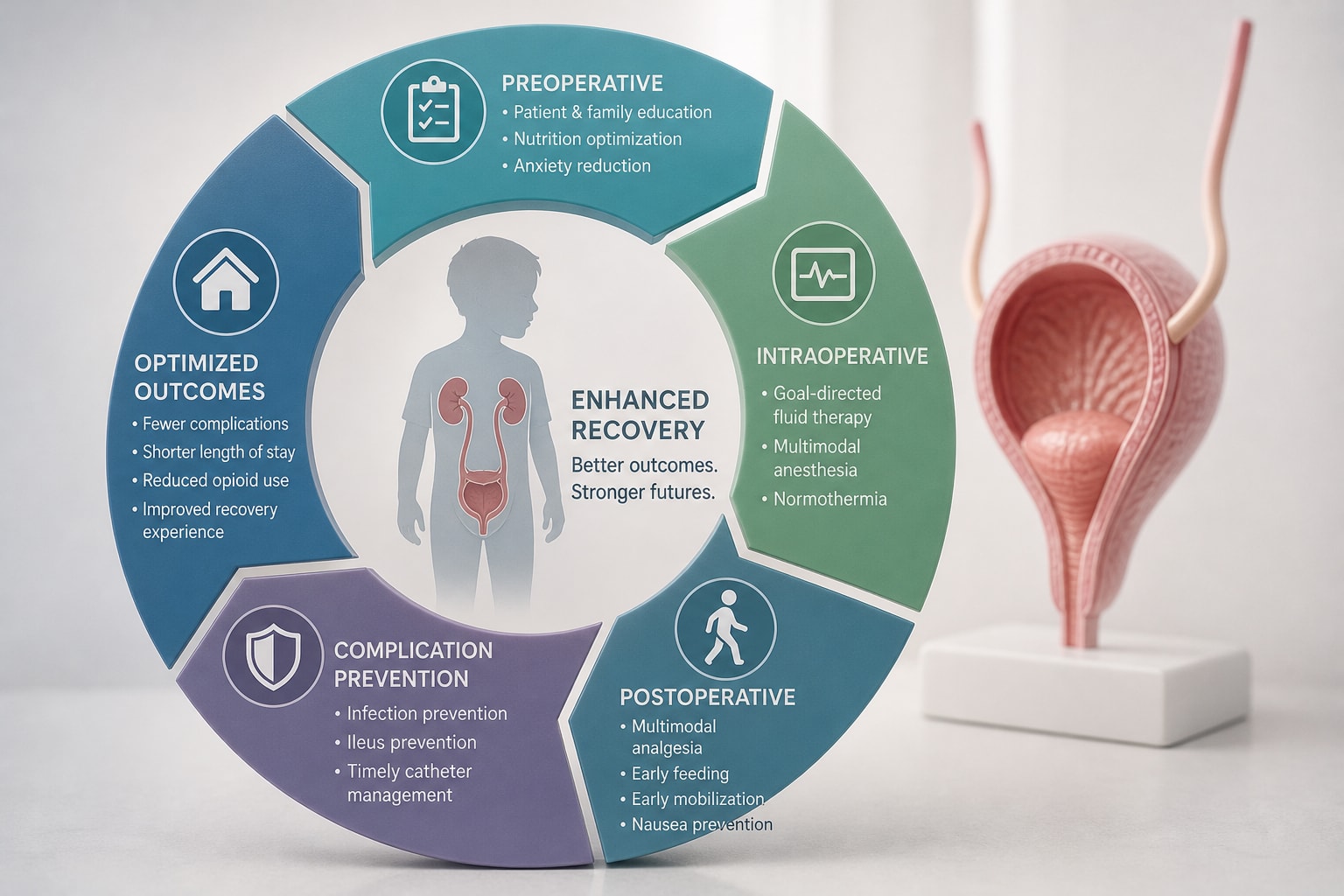
Bladder augmentation, continent urinary diversion, and bladder neck procedures are physiologically demanding operations with potential complications including ileus, infection, and postoperative nausea and vomiting. These procedures are relatively infrequent, limiting center- and surgeon-level experience and making evidence generation difficult. ERAS uses coordinated, evidence-based perioperative practices to standardize care; the source notes that pediatric ERAS research has historically been limited by small cohorts, retrospective designs, poorly defined protocol components, and limited auditing or follow-up. PURSUE was established to address these limitations through a multicenter protocol and prospective evaluation.
Data Highlights
Study or source
Design or scope
Reported details
PURSUE exploratory phase
Prospective cohort; registered as NCT03245242
Patients aged 4–24 years undergoing complex lower urinary tract reconstruction; enrollment occurred from 2017 to 2022. Historical controls were collected retrospectively for the 5 years before local ERAS implementation.
ERAS protocol
Consensus protocol developed in 2016
20 protocol elements; examples included preoperative education, omission of formal bowel preparation, carbohydrate loading, multimodal analgesia, early feeding, discontinuation of intravenous fluids by postoperative day 2, and opioid minimization.
Implementation hypothesis
Study target
At least 70% protocol adherence, with reductions in length of stay, complications, and opioid use and no increase in readmissions, reoperations, or emergency department visits.
Related 2026 multicenter study
Eight-center study, as summarized in the supplied web research context
Reported high-fidelity implementation associated with reduced length of stay, opioid use, and complications, without increased pain or readmissions.
ENRICH-US trial
Stepped-wedge, cluster-randomized trial, as summarized in the supplied web research context
Overall length of stay did not decrease across phases; higher patient-level ERAS implementation fidelity was associated with shorter length of stay and fewer complications.
Key Findings
PURSUE was designed as a collaborative multicenter initiative to develop and evaluate ERAS specifically for complex pediatric lower urinary tract operations.
The study used a hybrid implementation-effectiveness design structured around the IDEAL framework, with a pilot phase followed by an exploratory phase.
The consensus protocol comprised 20 elements, including early oral intake, avoidance of nasogastric tubes and selected drains, multimodal analgesia, and opioid minimization.
Implementation included local multidisciplinary engagement, clinical champions, locally developed tools, measurement of protocol elements, and a centralized audit after the first five enrolled patients at each center.
The study planned propensity matching with historical controls; the ratio was revised from 1:2 to 1:1 after review of available controls, and enrollment was expanded when additional centers joined late.
According to the supplied web research context, a 2026 eight-center study reported high-fidelity ERAS implementation associated with shorter length of stay, lower opioid use, and fewer complications without increased pain or readmissions; ENRICH-US reported that higher patient-level fidelity was associated with shorter stays and fewer complications despite no overall phase-related length-of-stay reduction.
Clinical Implications
The source describes a structured approach to implementing and auditing ERAS across centers for complex pediatric urologic reconstruction, including multidisciplinary planning and measurement of adherence. The supplied 2026 research context reports associations between higher implementation fidelity and improved recovery outcomes, while the provided excerpt does not include the PURSUE exploratory-phase outcome estimates needed to quantify its effects.
Conclusion
PURSUE addresses evidence and implementation gaps in perioperative care for complex pediatric lower urinary tract surgery through a multicenter, audited ERAS protocol. The supplied contemporary research context supports the relevance of implementation fidelity, but the excerpt itself does not report the primary clinical outcomes of the exploratory phase.
by Kyle O. Rove, Andrew C. Strine, David I. Chu, Duncan T. Wilcox, Darren Ha, Gino J. Vricella, Douglas E. Coplen, Erica J. Traxel, Austin R. Acks, Rajeev Chaudhry, Brian VanderBrink, Elizabeth B. Yerkes, Yvonne Y. Chan, Nicholas E. Burjek, Rebecca S. Zee, C.D. Anthony Herndon, Jennifer J. Ahn, Paul A. Merguerian, Bhalaajee Meenakshi-Sundaram, Adam J. Rensing, Dominic Frimberger, Megan A. Brockel
Phoenix Children’s has promoted four division chiefs from within the health system to lead vital areas including pediatric intensive care, cardiovascular intensive care, nephrology and physical medicine and rehabilitation.