Association between remnant cholesterol inflammation Index and in-hospital New-onset atrial fibrillation in patients with ST-segment elevation myocardial infarction - Report - MDSpire
Conexiant’s news site is now MDSpire News. Learn more
Advertisement
Link Between Remnant Cholesterol Inflammatory Index and New-Onset Atrial Fibrillation During Hospitalization in ST-Segment Elevation Myocardial Infarction Patients
Link Between Remnant Cholesterol Inflammatory Index and New-Onset Atrial Fibrillation During Hospitalization in ST-Segment Elevation Myocardial Infarction Patients
Overview
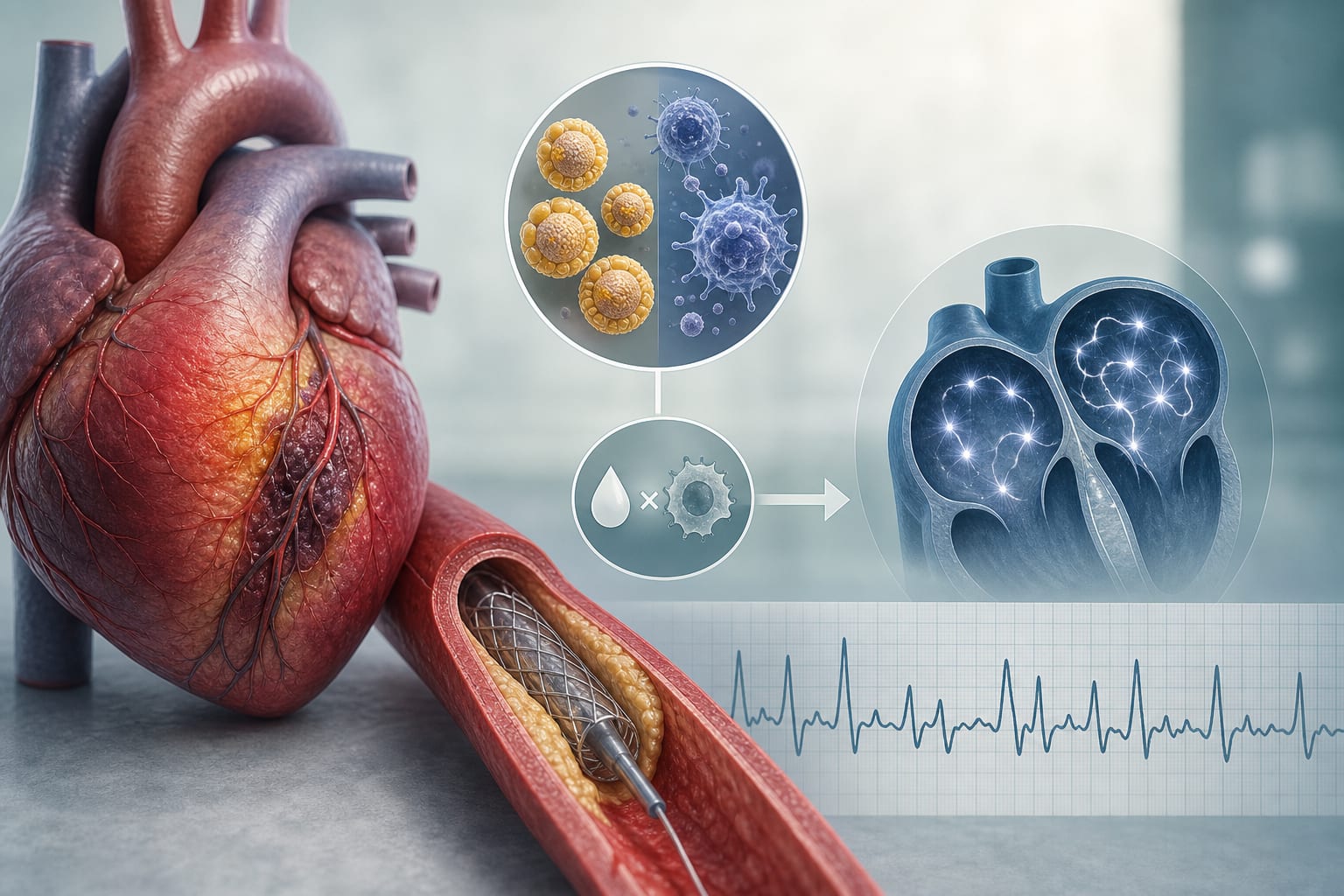
This study investigates the association between the remnant cholesterol inflammatory index (RCII) and new-onset atrial fibrillation (NOAF) in patients with ST-segment elevation myocardial infarction (STEMI).
Background
New-onset atrial fibrillation is a frequent complication in patients hospitalized for STEMI, linked to worse clinical outcomes. Identifying patients at high risk for NOAF is crucial for improving monitoring and treatment strategies. The remnant cholesterol inflammatory index (RCII) combines lipid and inflammatory markers.
Data Highlights
Parameter
Value
Patients with NOAF
79 (8.36%)
RCII AUC
0.756 (95% CI: 0.698–0.814)
hs-CRP OR
2.96 (95% CI: 1.72–5.08, P < 0.001)
RCII OR
4.71 (95% CI: 2.86–7.78, P < 0.001)
RC OR
2.78 (95% CI: 1.88–4.10, P < 0.001)
Key Findings
8.36% of STEMI patients developed new-onset atrial fibrillation during hospitalization.
Patients with NOAF had significantly higher levels of RCII, RC, and hs-CRP compared to those without NOAF.
RCII was independently associated with NOAF, with an odds ratio of 4.71.
hs-CRP and RC were also independently associated with NOAF, with odds ratios of 2.96 and 2.78, respectively.
RCII demonstrated moderate discriminatory ability for identifying NOAF with an AUC of 0.756.
Clinical Implications
The findings suggest that monitoring RCII levels could help healthcare professionals identify patients at risk for NOAF during hospitalization.
Conclusion
The study indicates that RCII is associated with in-hospital NOAF in STEMI patients.