Identification of key genes potentially associated with bladder cancer development by common plasticizers: an integrated transcriptomics and network toxicology study - Report - MDSpire
Advertisement
Identification of key genes potentially associated with bladder cancer development by common plasticizers: an integrated transcriptomics and network toxicology study
Clinical Report: Exploration of Critical Genes Linked to Bladder Cancer Progression
Overview
This study identifies five critical genes associated with bladder cancer (BCa) progression potentially linked to plasticizer exposure.
Background
Bladder cancer is a significant global health concern, with high incidence and mortality rates. Understanding the molecular mechanisms underlying BCa is crucial for developing effective treatments. Recent studies have raised concerns about environmental factors, such as plasticizers, in BCa pathogenesis.
Data Highlights
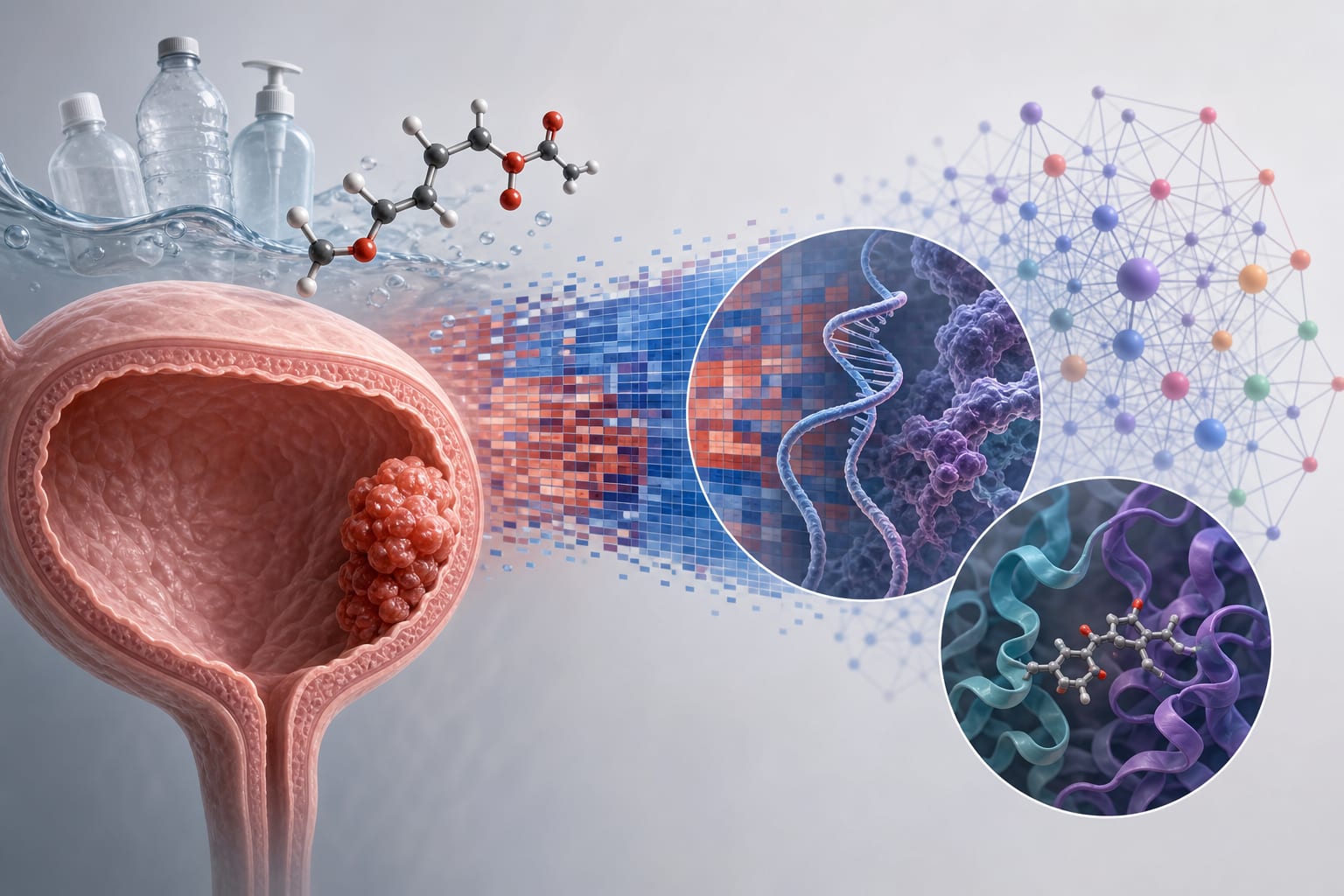
The study identified 4,642 differentially expressed genes, 225 plasticizer-related genes (PRGs), and 196 bladder cancer-related target genes (BCRTGs). Five key genes were highlighted: CCNE1, KIT, BCL2, TGFBR2, and FASN, with varying expression levels in BCa cells compared to normal cells.
Key Findings
Identification of 4,642 differentially expressed genes related to BCa.
Seven candidate genes were identified from 225 PRGs and 196 BCRTGs.
Key genes CCNE1 and FASN showed elevated expression, while KIT, BCL2, and TGFBR2 were reduced in BCa cells.
Gene set enrichment analysis revealed co-enrichment in cell cycle regulation pathways.
Molecular docking indicated favorable binding affinities between key genes and plasticizers.
Dysregulated immune cell infiltration levels were observed in BCa.
Clinical Implications
Further research is needed to explore the implications of plasticizer exposure in BCa management.
Conclusion
This study identifies key genes that may play a role in tumorigenesis related to plasticizers.