Efficacy and Safety of Neoadjuvant Therapies for High-Risk and Locally Advanced Prostate Cancer in Older Adults: A Systematic Review and Network Meta-Analysis - Report - MDSpire
Advertisement
Efficacy and Safety of Neoadjuvant Therapies for High-Risk and Locally Advanced Prostate Cancer in Older Adults: A Systematic Review and Network Meta-Analysis
Clinical Report: Effectiveness and Safety of Neoadjuvant Treatments in Prostate Cancer
Overview
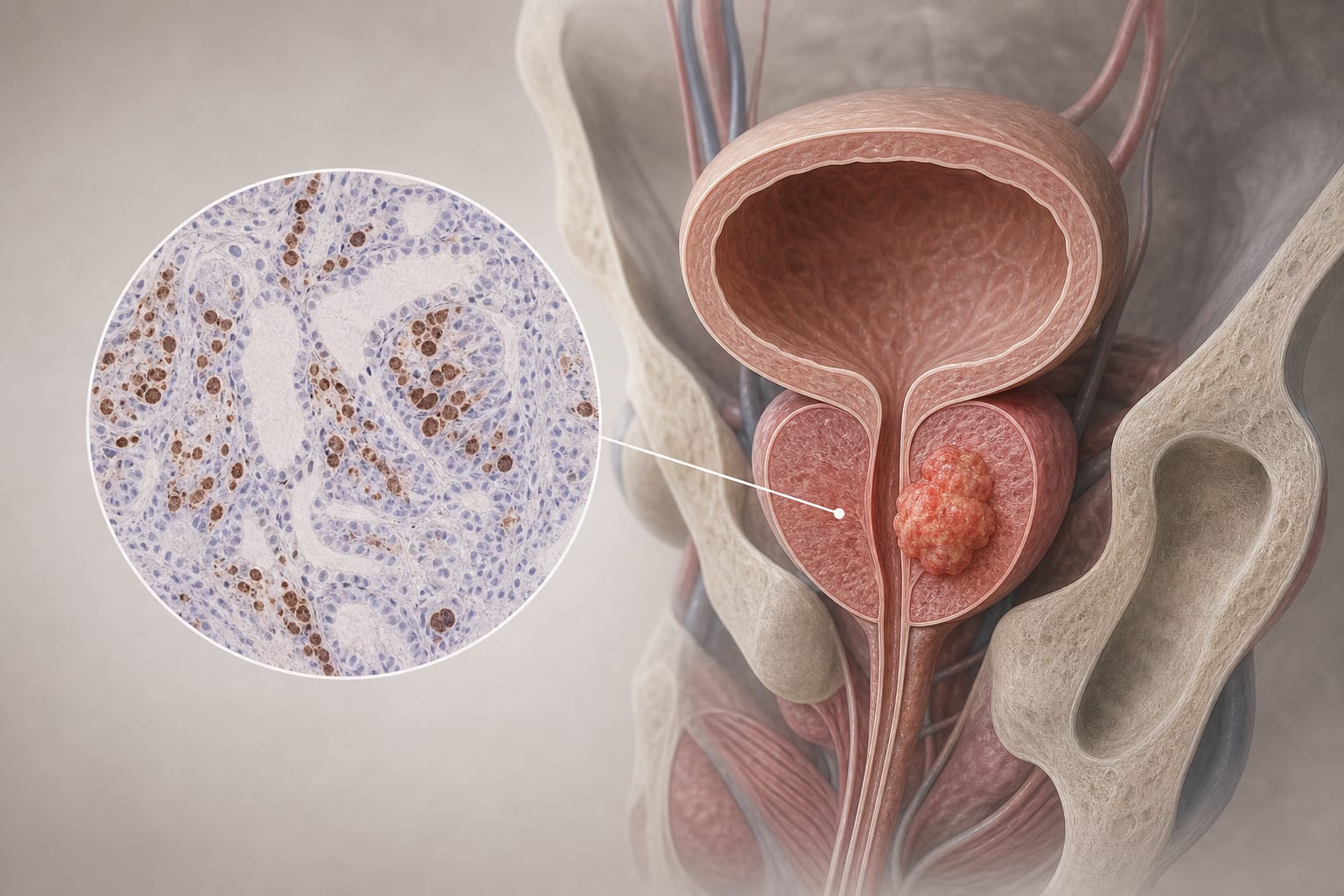
This systematic review and network meta-analysis evaluates the efficacy and safety of neoadjuvant treatments for high-risk and locally advanced prostate cancer in elderly patients. Novel neoadjuvant hormonal therapy (NNHT) was found to be the most effective in improving pathological outcomes, despite a higher incidence of adverse events.
Background
High-risk and locally advanced prostate cancer presents significant treatment challenges, particularly in older adults. Neoadjuvant therapies are being explored to improve surgical outcomes, but their comparative efficacy and safety remain uncertain. Understanding the effectiveness of these treatments is crucial for optimizing patient care and guiding clinical decision-making.
Data Highlights
Neoadjuvant Treatment
Pathological Outcomes
Adverse Events
Novel Neoadjuvant Hormonal Therapy (NNHT)
Highest improvement in PSM and PSA response
Most frequent and severe
Key Findings
NNHT ranked highest for improving positive surgical margin (PSM) rates.
NNHT also showed significant post-treatment prostate-specific antigen (PSA) reduction.
Despite its efficacy, NNHT was associated with the highest toxicity burden among treatments.
Clinical downstaging was a notable secondary outcome of NNHT.
The study included a network meta-analysis of 15 relevant trials.
Clinical Implications
Clinicians should consider the efficacy-toxicity trade-off when selecting neoadjuvant treatments for elderly patients with high-risk prostate cancer. NNHT may be prioritized in clinical trials aimed at evaluating long-term survival and safety outcomes.
Conclusion
NNHT emerges as the most effective neoadjuvant treatment for improving pathological outcomes in high-risk prostate cancer, though its associated toxicity necessitates careful patient selection and monitoring.