Clinical Report: Development of a Machine Learning Model for Early Risk Prediction of Acute Kidney Injury in Critically Ill Pediatric Patients
Overview
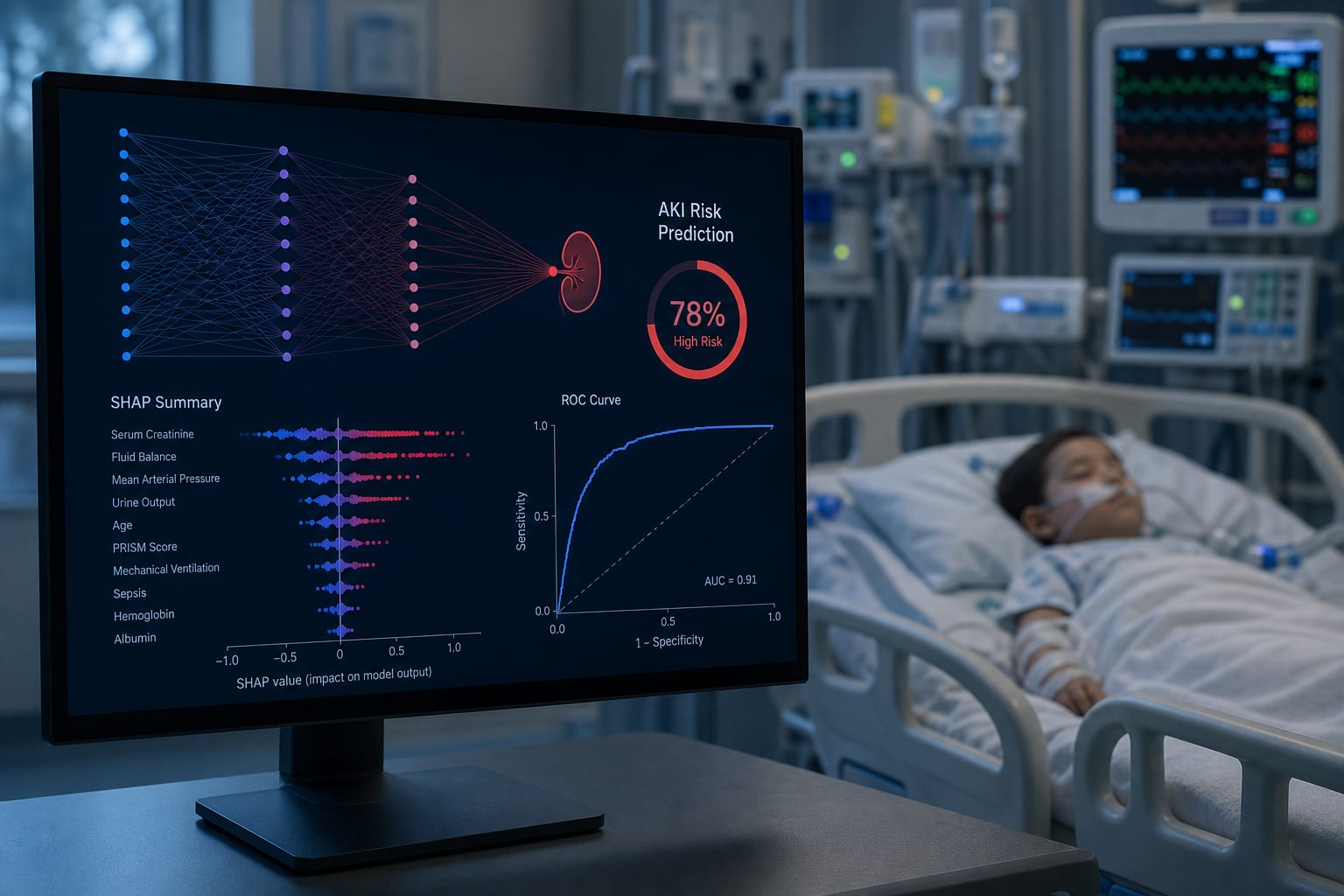
This study developed a machine learning model for early risk prediction of acute kidney injury (AKI) in critically ill pediatric patients. The XGBoost model showed the best performance in risk stratification, utilizing early clinical data to identify key predictive features.
Background
Acute kidney injury (AKI) is a prevalent and serious complication in critically ill children, with an incidence of 30% to 50% in intensive care units. Early identification and intervention for AKI are crucial, as delayed diagnosis can lead to severe consequences, including multiple organ dysfunction and increased mortality.
Data Highlights
This study analyzed a cohort of 3,799 children from the Pediatric Intensive Care database, employing various machine learning models to predict AKI risk.
Key Findings
The XGBoost model outperformed other machine learning algorithms in risk stratification for AKI.
Key predictive features identified included bicarbonate, magnesium, activated partial thromboplastin time, lymphocyte count, and thrombin time.
The model demonstrated acceptable discriminative ability and clinical interpretability.
SHAP analysis was utilized to visualize the contribution of each feature to the model's predictions.
Clinical Implications
The developed machine learning model can aid clinicians in early identification of AKI risk in critically ill children, potentially guiding timely interventions. Understanding the key predictive features may enhance clinical decision-making and improve patient management.
Conclusion
The study successfully created a clinically interpretable machine learning model for early AKI risk assessment in critically ill pediatric patients.