FCGBP Links Hormonal Imbalance and Hepatic Steatosis in PCOS–NAFLD Comorbidity: An Integrative Bioinformatics and Experimental Study - Report - MDSpire

FCGBP Links Hormonal Imbalance and Hepatic Steatosis in PCOS–NAFLD Comorbidity: An Integrative Bioinformatics and Experimental Study

  • By

  • Yao, Yi

  • Si, Min

  • Ding, Hongcheng

  • Cao, Chengcheng

  • Yang, Hua

  • Sun, Qianshu

  • April 14, 2026

  • 0 min

Share

FCGBP Connects Hormonal Dysregulation to Hepatic Steatosis in PCOS and NAFLD

Overview

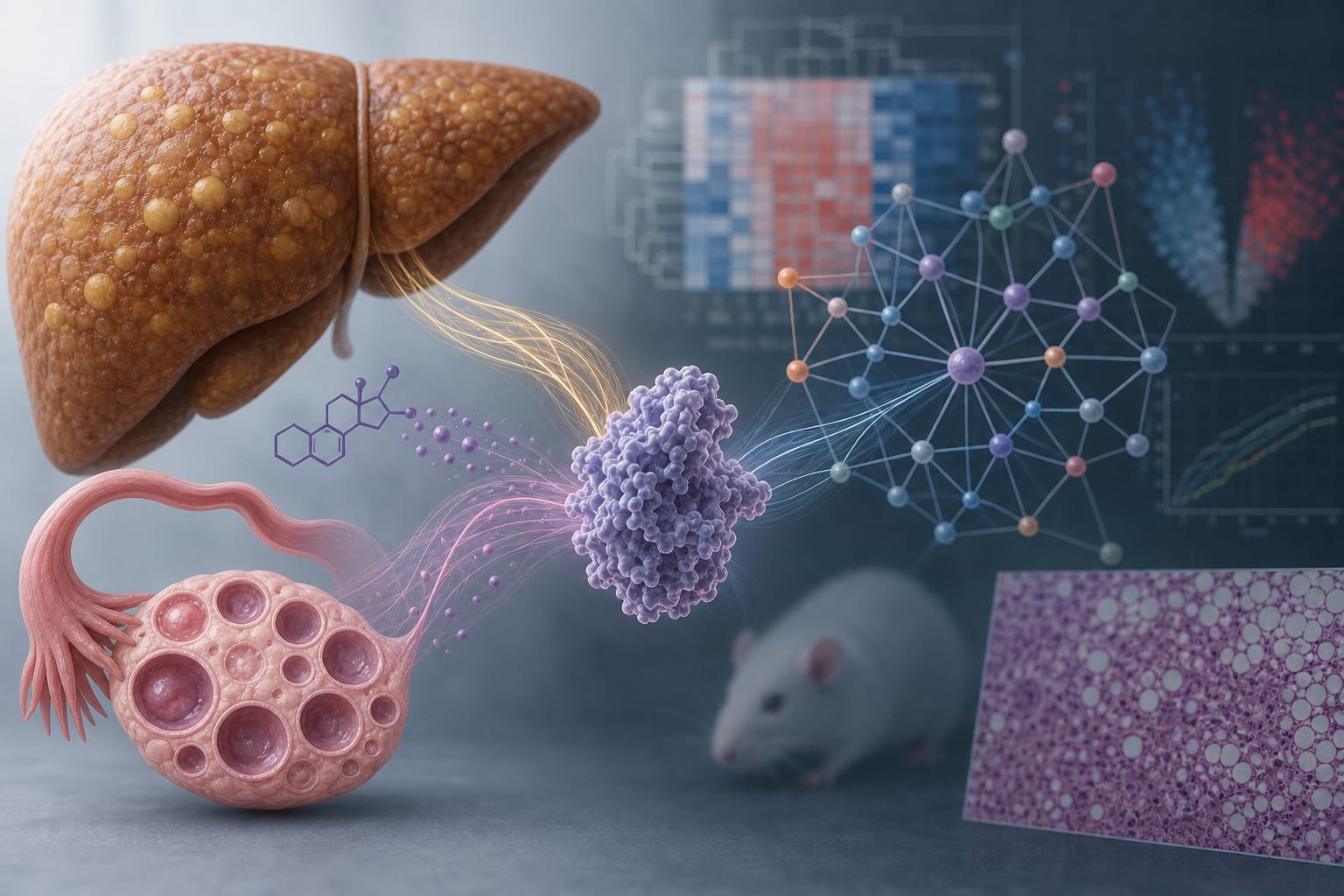
This study identifies FCGBP as a key gene linking hormonal dysregulation to hepatic steatosis in patients with comorbid PCOS and NAFLD. Elevated FCGBP expression was associated with metabolic dysfunctions and may serve as a potential therapeutic target.

Background

Polycystic ovary syndrome (PCOS) and nonalcoholic fatty liver disease (NAFLD) are common endocrine and metabolic disorders that frequently coexist, leading to significant health complications. Understanding the molecular mechanisms underlying their comorbidity is crucial for developing targeted interventions. This study explores the role of FCGBP in the pathophysiology of PCOS-NAFLD comorbidity.

Data Highlights

ModelFCGBP ExpressionP-Value
Rat ModelElevated in ovarian and hepatic tissues< 0.01
KGN CellsRestored E2 secretion with FCGBP knockdown< 0.001
HepG2 CellsReduced lipid accumulation with FCGBP silencing< 0.05

Key Findings

  • FCGBP expression is significantly elevated in both ovarian and hepatic tissues in a rat model of PCOS-NAFLD.
  • Knockdown of FCGBP in KGN cells restored estradiol secretion and upregulated key enzymes involved in estrogen synthesis.
  • Silencing FCGBP in HepG2 cells reduced lipid accumulation and corrected dysregulated lipid metabolism.
  • FCGBP re-expression partially reversed the metabolic effects observed with silencing, indicating its regulatory role.
  • FCGBP is implicated in both hormonal dysregulation and hepatic lipid metabolic abnormalities under hyperandrogenic conditions.

Clinical Implications

The identification of FCGBP as a potential molecular regulator in PCOS-NAFLD comorbidity suggests that targeting this gene may offer new therapeutic avenues for managing both reproductive and metabolic dysfunctions in affected patients. Clinicians should consider the implications of hormonal dysregulation in the management of patients with PCOS and NAFLD.

Conclusion

This study highlights the role of FCGBP in linking hormonal dysregulation to hepatic steatosis in the context of PCOS and NAFLD, suggesting its potential as a therapeutic target for improving patient outcomes.

Related Resources & Content

  1. The Journal of Clinical Endocrinology & Metabolism, 2023 -- Uncommon LMNA Variants Contribute to the Development of Polycystic Ovary Syndrome in Two Distinct Patient Groups
  2. The Journal of Clinical Endocrinology & Metabolism, 2023 -- Evaluating Patients: Navigating Diagnostic Obstacles in Polycystic Ovary Syndrome Assessment
  3. Journal of Gastroenterology, 2018 -- Association of Hepatic IRS1 and ß-catenin Levels with Histological Progression and Development of Diabetes in Patients with NAFLD
  4. The Journal of Clinical Endocrinology & Metabolism, 2023 -- Variations in the LMNA Gene and Their Role in Polycystic Ovary Syndrome: An Ongoing Genetic Insight
  5. POLYCYSTIC OVARY SYNDROME: ORIGINS AND IMPLICATIONS, 2024 -- The impact of androgen excess on metabolic health
  6. EASL–EASD–EASO Clinical Practice Guidelines, 2024 -- Executive Summary on the management of metabolic dysfunction-associated steatotic liver disease (MASLD)
  7. Clinical consensus on PCOS-NAFLD overlap as cardiometabolic syndrome
  8. EASL–EASD–EASO MASLD guideline recommendations
  9. GLP-1 receptor agonist treatment in women with polycystic ovary syndrome—a systematic review and meta-analysis | European Journal of Endocrinology | Oxford Academic

Original Source(s)

Related Content