Clinical Report: Selective Fusion Strategy for Degenerative Lumbar Scoliosis
Overview
Expand on the significance of the selective fusion strategy compared to traditional methods.
Background
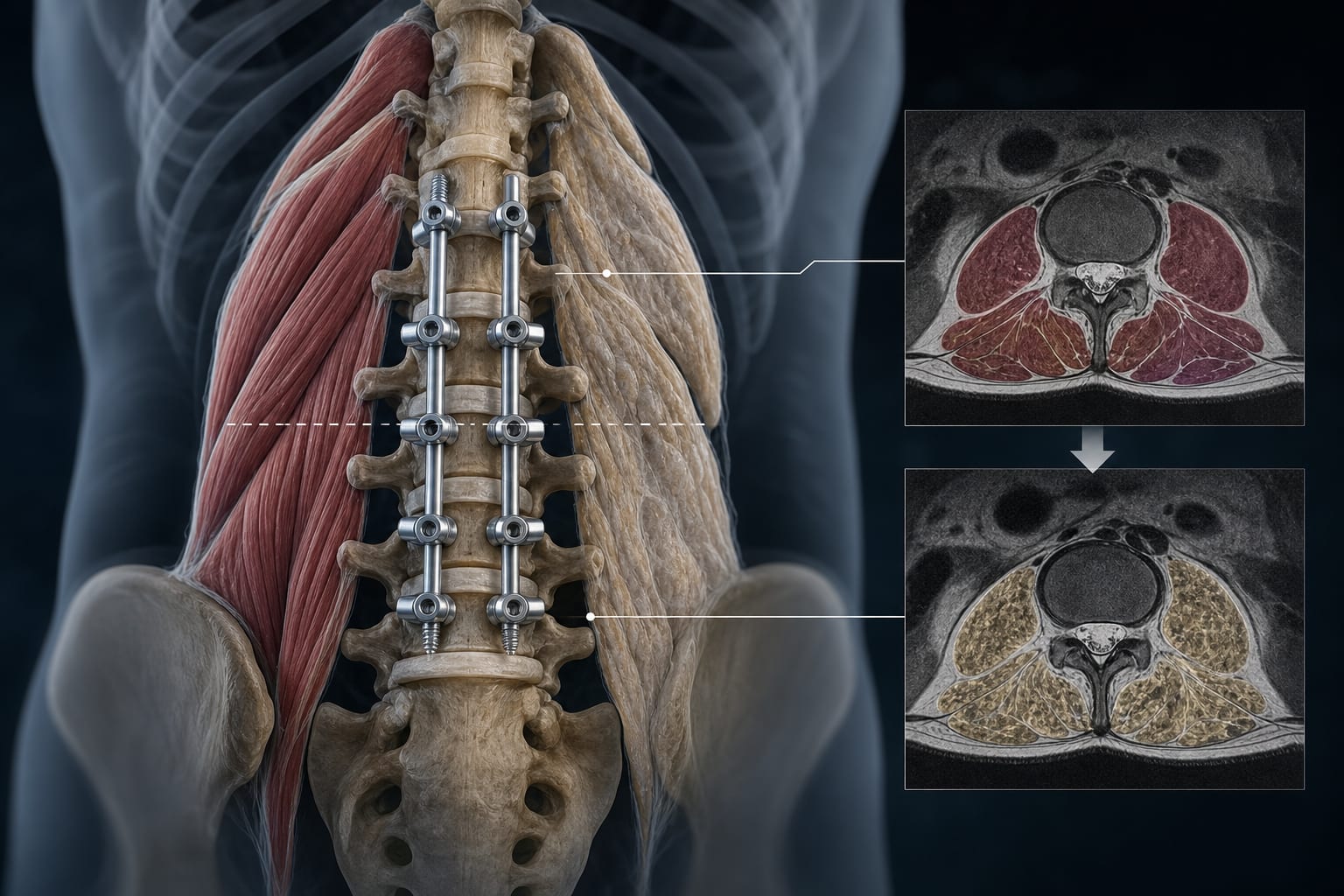
Degenerative lumbar scoliosis is a prevalent condition among aging populations, leading to chronic pain and functional impairment. Traditional surgical management often involves extensive fusion, which can result in significant complications such as proximal junctional kyphosis and failure. This study introduces a novel strategy that aligns surgical intervention with the biological status of paravertebral muscles, potentially reducing surgical invasiveness and improving outcomes.
Data Highlights
Outcome
Result
Incidence of PJK/PJF
0 cases
Mean fusion length
4.3 ± 1.1 segments
Fusion-degeneration concordance
86.4% (19/22 patients)
Correction loss at final follow-up
1.0 ± 1.2°
Radiographic correction maintenance rate
88.2 ± 7.3%
Key Findings
No cases of proximal junctional kyphosis (PJK) or failure (PJF) were observed in the cohort.
Mean fusion length was 4.3 segments, indicating a less invasive approach.
Fusion-degeneration concordance was achieved in 86.4% of patients.
Significant improvements in coronal and sagittal alignment were maintained at final follow-up (P < 0.001).
Greater number of degenerated paravertebral muscle segments was negatively associated with Oswestry Disability Index (ODI) improvement rate.
Concordance between fusion and degeneration positively correlated with ODI improvement.
Clinical Implications
The selective fusion strategy based on paravertebral muscle degeneration may reduce the extent of surgical intervention while maintaining effective clinical outcomes. This approach could minimize complications associated with traditional extensive fusions, particularly in older patients with degenerative lumbar scoliosis.
Conclusion
Highlight the importance of further research and its implications for clinical practice.