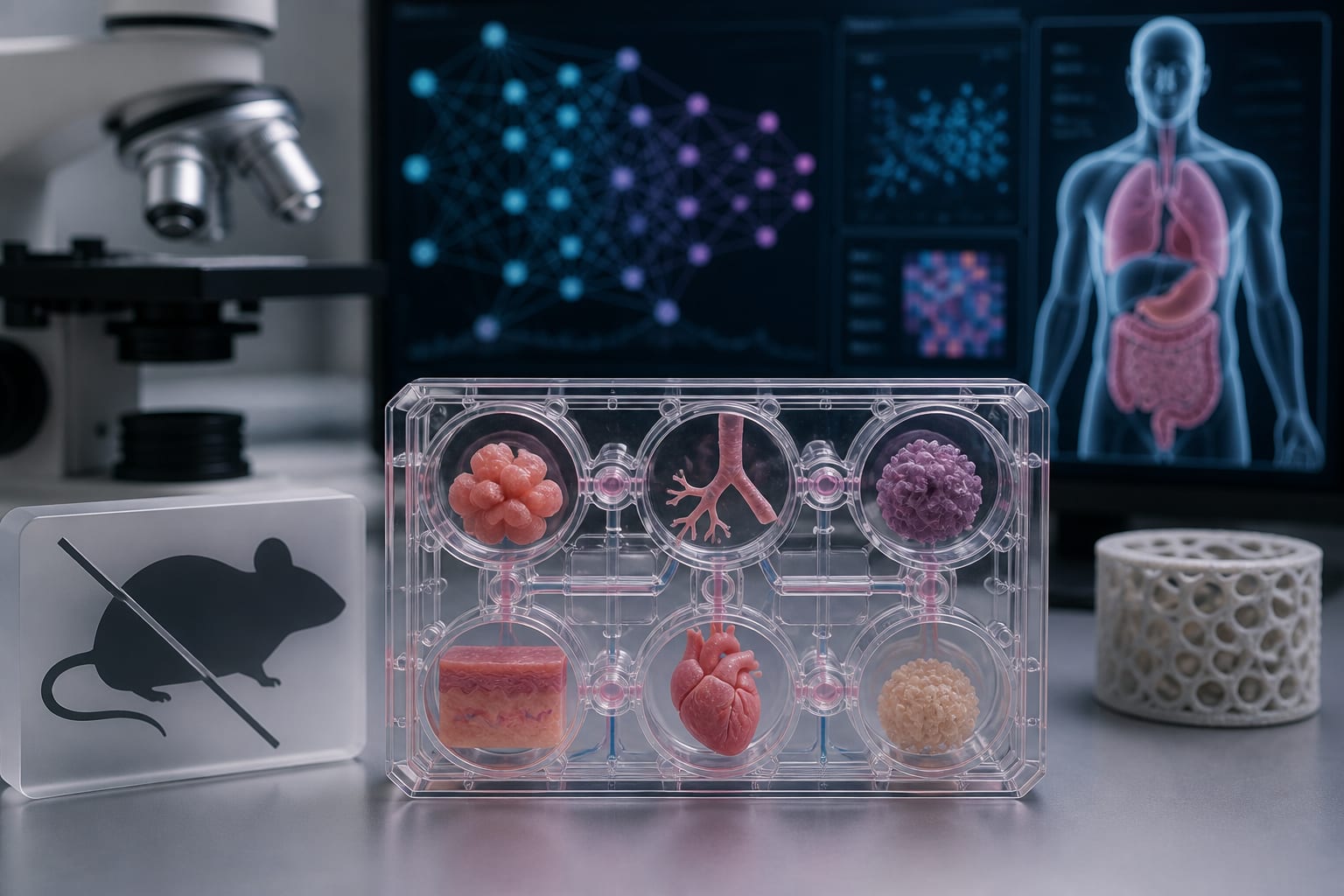
HHS Promotes Transition to Human-Centric Research Approaches, Minimizing Animal Testing
-
By
-
Assistant Secretary for Public Affairs (ASPA)
-
September 21, 2026
Clinical Report: HHS Promotes Transition to Human-Centric Research Approaches
Overview
The U.S. Department of Health and Human Services (HHS) has announced a comprehensive initiative to modernize biomedical research by prioritizing human-based methods and reducing unnecessary animal testing. This initiative includes significant funding for human organoid and tissue model research, as well as regulatory updates to facilitate the adoption of new approach methodologies (NAMs).
Background
The transition to human-centric research aims to enhance the relevance and predictability of biomedical research outcomes. This initiative aligns with efforts to improve drug development efficiency and safety.
Data Highlights
No specific numerical data or trial data was provided in the source material.
Key Findings
- HHS has initiated over 20 efforts to increase the use of human organoids and tissue models.
- NIH is investing more than $88 million in nationwide biomedical infrastructure projects.
- The FDA is modernizing its regulatory framework to reduce reliance on animal testing.
- NIH has closed its final intramural beagle laboratory and supports the rehoming of research animals.
- CDC is reducing its laboratory animal colony and relocating healthy non-human primates to sanctuaries.
Clinical Implications
Researchers and healthcare professionals should stay informed about these changes to align their practices with evolving regulatory standards and methodologies.
Conclusion
HHS's initiative marks a significant step towards modernizing biomedical research by emphasizing human-centric approaches and reducing animal testing.
Related Resources & Content
- National Institutes of Health (NIH), NIH, 2026 -- NIH launches new office to advance human-based research and reduce animal use
- the medicine maker, 2025 -- Shifting to Animal-Free Drug Development
- Stat News, 2026 -- Ending animal testing could set back xenotransplantation just as the field is poised for a breakthrough
- the medicine maker, 2025 -- FDA to Phase Out Animal Testing
- HHS Accelerates Shift to Human-Based Research, Reduces Reliance on Animal Testing | HHS.gov
- FDA Updates Regulations to Advance Innovative Alternatives to Animal Testing | FDA
- FDA Releases Draft Guidance on Alternatives to Animal Testing in Drug Development | FDA
- New Approach Methodologies (NAMs) | FDA
- Reducing Animal Testing | HHS.gov
- Innovative Science and Technology Approaches for New Drugs (ISTAND) Program | FDA
- HHS Accelerates Shift to Human-Based Research, Reduces Reliance on Animal Testing | HHS.gov
- FDA Updates Regulations to Advance Innovative Alternatives to Animal Testing | FDA
- FDA Releases Draft Guidance on Alternatives to Animal Testing in Drug Development | FDA
- New Approach Methodologies (NAMs) | FDA
- Reducing Animal Testing | HHS.gov
- Innovative Science and Technology Approaches for New Drugs (ISTAND) Program | FDA
- Guideline No. 497: Defined Approaches on Skin Sensitisation | OECD
- Guidelines for the Testing of Chemicals | OECD
- Defined Approaches to Identify Potential Skin Sensitizers
- A scalable human liver-on-a-chip platform for predictive safety assessment - ScienceDirect
- Frontiers Publishing Partnerships | Integration of microphysiological systems with computational and digital twin modeling for pharmaceutical development: a systematic review
- 5 perspectives on translating microphysiological systems from concept to application | Nature Communications
- DRIVe | ImmuneChip+ | Advancing multi-organ tissue chips
Based on findings from:
HHS Accelerates Shift to Human-Based Research, Reduces Reliance on Animal Testing
Assistant Secretary for Public Affairs (ASPA). United States Department Of Health And Human Services, 2026.
https://www.hhs.gov/press-room/hhs-accelerates-human-based-research-reduces-animal-testing.html
This content is an AI-generated, fully rewritten summary based on a published scholarly article. It does not reproduce the original text and is not a substitute for the original publication. Readers are encouraged to consult the source for full context, data, and methodology.