Conexiant’s news site is now MDSpire News. Learn more
Advertisement
Outcomes Following Curative Hepatectomy for Hepatocellular Carcinoma in Patients With and Without Metabolic-Associated Fatty Liver Disease: Insights from a Western Cohort Study
Outcomes Following Curative Hepatectomy for Hepatocellular Carcinoma
Overview
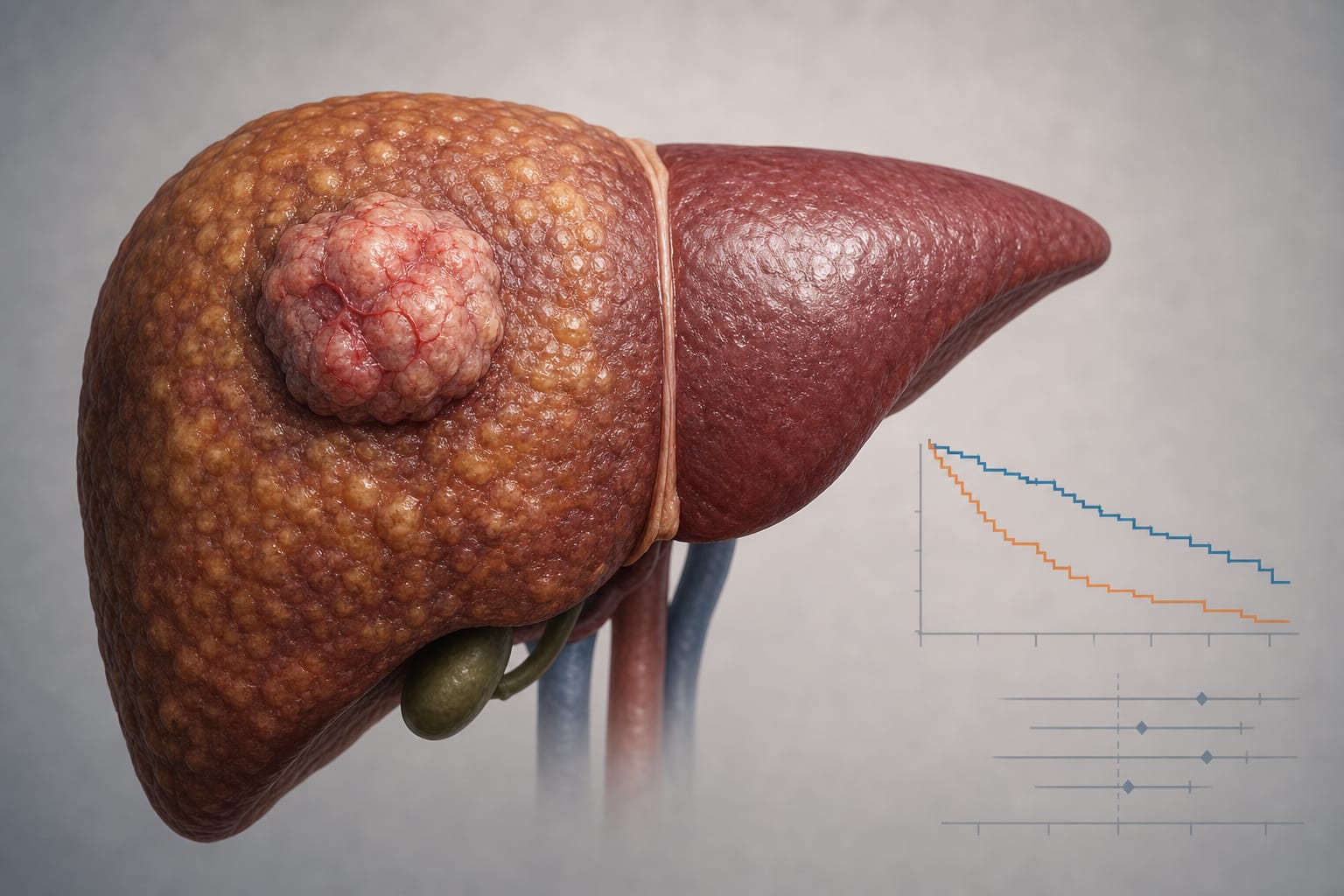
This study investigates the impact of metabolic-associated fatty liver disease (MAFLD) on survival outcomes in patients undergoing curative hepatectomy for hepatocellular carcinoma (HCC) in a Western cohort. The study design involved a retrospective analysis of patients who underwent surgery, with findings indicating that MAFLD was not independently associated with overall survival or disease-free survival after adjusting for liver disease severity and tumor burden.
Background
Hepatocellular carcinoma (HCC) is a leading cause of cancer-related mortality, with its incidence rising in Western populations due to metabolic-associated fatty liver disease (MAFLD). Previous studies suggested that MAFLD may confer better outcomes post-hepatectomy, but these findings were primarily based on non-Western cohorts and lacked adequate adjustment for confounding factors. Understanding the role of MAFLD in HCC outcomes is crucial for optimizing treatment strategies, as indicated by various studies in the literature.
Data Highlights
Characteristic
MAFLD-positive (n=89)
MAFLD-negative (n=67)
Age
Older
younger
Obesity
More frequent
Less frequent
Diabetes
More frequent
Less frequent
Cirrhosis
Less likely
More likely
Minimally invasive resection
32.6%
55.2%
Key Findings
MAFLD-positive patients were older, more frequently obese and diabetic, and less likely to have cirrhosis compared to MAFLD-negative patients.
Open or hybrid resection was more common in the MAFLD-positive group (67.4%) compared to the MAFLD-negative group (44.8%).
Unadjusted analyses showed MAFLD-positive status associated with longer disease-free survival (DFS) and a trend towards longer overall survival (OS).
After multivariable adjustment, MAFLD was not independently associated with OS (adjusted HR 0.91) or DFS (adjusted HR 0.58).
Principal predictors of postoperative outcomes included cirrhosis, impaired performance status, elevated alpha-fetoprotein, and greater tumor burden.
Clinical Implications
The findings suggest that clinicians should consider liver disease severity and tumor burden as primary factors influencing postoperative outcomes in HCC patients, rather than relying solely on metabolic etiology. This may inform preoperative assessments and surgical decision-making.
Conclusion
In this Western cohort, MAFLD did not independently influence survival outcomes following curative hepatectomy for HCC, emphasizing the importance of established hepatic and oncologic factors in prognosis.
The goal of this clinical trial is to find out if giving extra adaptive radiation therapy after standard chemoradiation treatment is safe and helpful for people with rectal cancer.