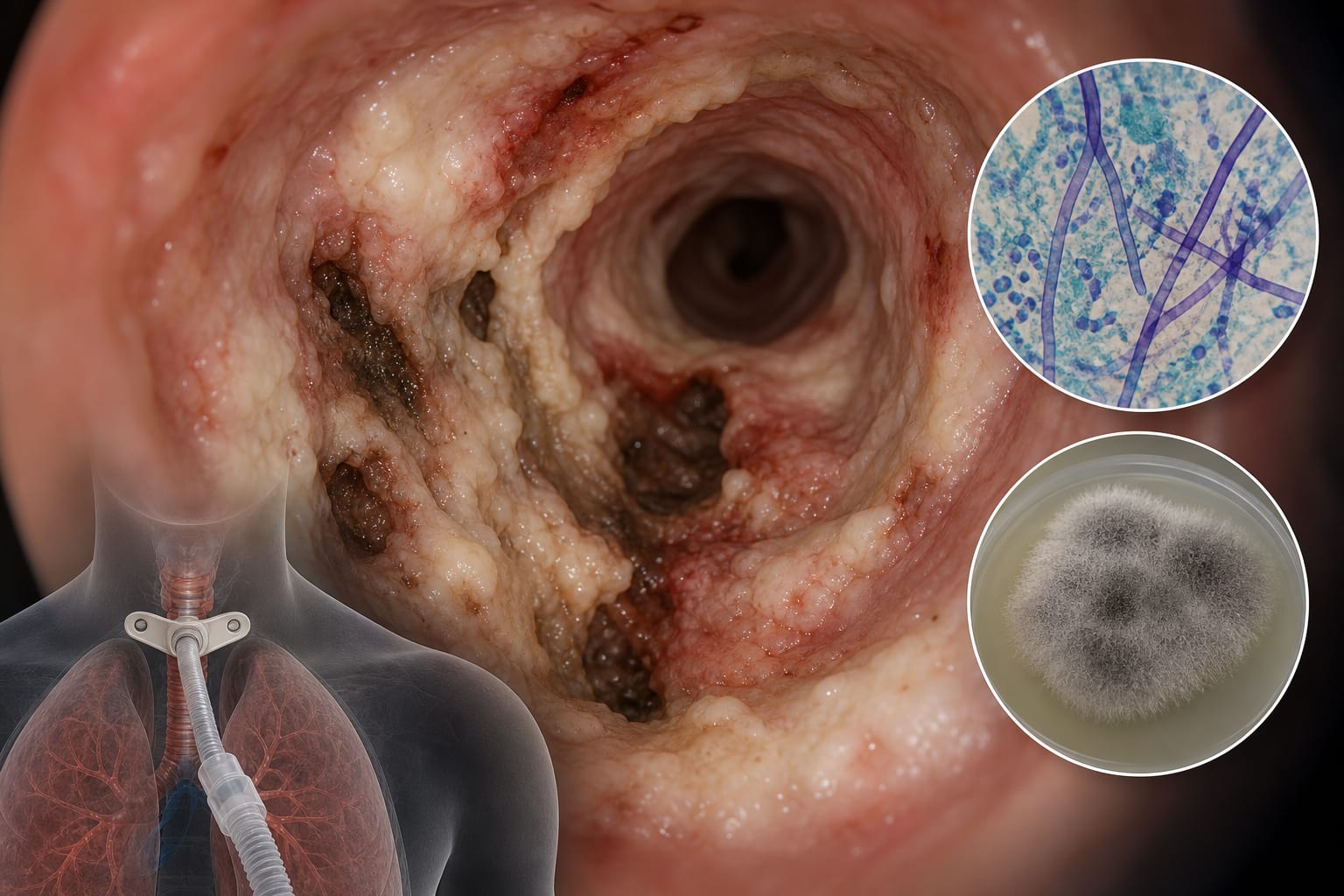
Clarification on Issues Raised Regarding the Causes of Ventilator-Associated Pneumonia
Overview
This report addresses the varying aetiology of ventilator-associated pneumonia (VAP) across different European cohorts, highlighting the predominance of Gram-negative pathogens, particularly Pseudomonas aeruginosa and Staphylococcus aureus.
Background
Ventilator-associated pneumonia (VAP) is a significant complication in critically ill patients requiring invasive mechanical ventilation, representing a common hospital-acquired infection in intensive care units (ICUs). The incidence of VAP can vary based on geographic location, patient demographics, and underlying health conditions.
Data Highlights
No numerical data available in the source material.
Key Findings
In the POS-VAP cohort, Gram-negative pathogens accounted for 66% of microbiologically evaluable VAP cases.
Staphylococcus aureus was identified as the most common pathogen at 26.2%, followed by Haemophilus influenzae (16.2%) and Pseudomonas aeruginosa (15.0%).
The proportion of MRSA and MSSA combined in the ENIRRI cohort was 13.9%, slightly lower than P. aeruginosa VAP at 18.9%.
Patient demographics showed a predominance of males (71-72%) with a median age of 58-62 years and high comorbidity rates.
Different admission diagnoses influenced pathogen distribution, with S. aureus more prevalent in cases of traumatic brain injury and stroke.
The distribution of pathogens varied between early and late VAP, with S. aureus being the most common in both groups.
Clinical Implications
Clinicians should consider the geographical and clinical context when diagnosing and treating VAP, as pathogen prevalence can differ significantly. Awareness of the common pathogens associated with specific patient demographics and admission diagnoses may guide more effective antibiotic therapy.
Conclusion
The findings underscore the complexity of VAP aetiology, necessitating a tailored approach to management based on regional and clinical factors.