Patterns of temporary mechanical circulatory support, escalation, de-escalation and outcomes in cardiogenic shock - Report - MDSpire

Patterns of temporary mechanical circulatory support, escalation, de-escalation and outcomes in cardiogenic shock

  • By

  • Ibrahim Mortada

  • Lovkesh Arora

  • Maria Aguilar Pescozo

  • Paulino Alvarez

  • Angelos Soranidis

  • Alexandros Briasoulis

  • Ernesto Ruiz Duque

  • July 8, 2026

  • 0 min

Share

Trends in Temporary Mechanical Circulatory Support in Cardiogenic Shock

Overview

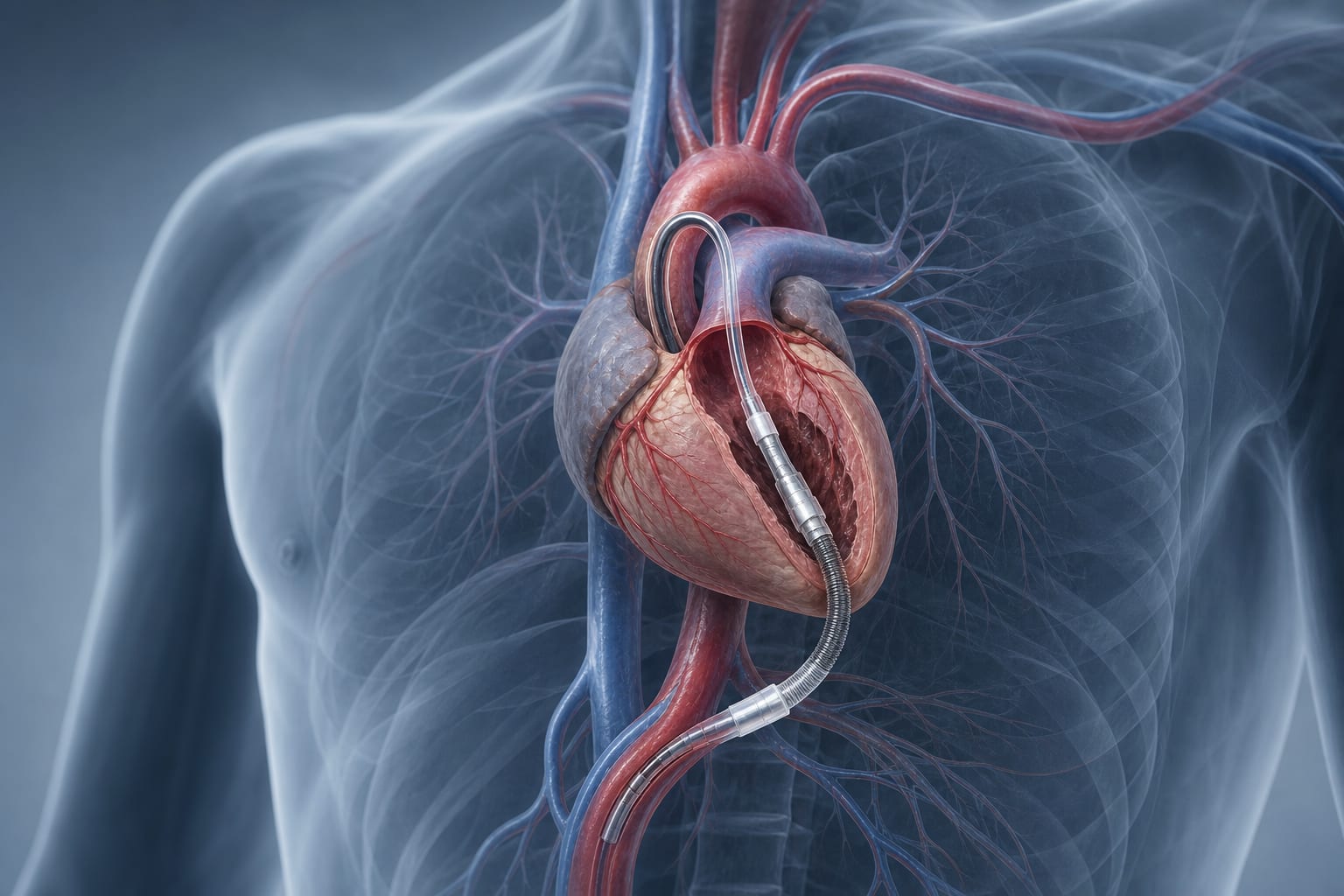
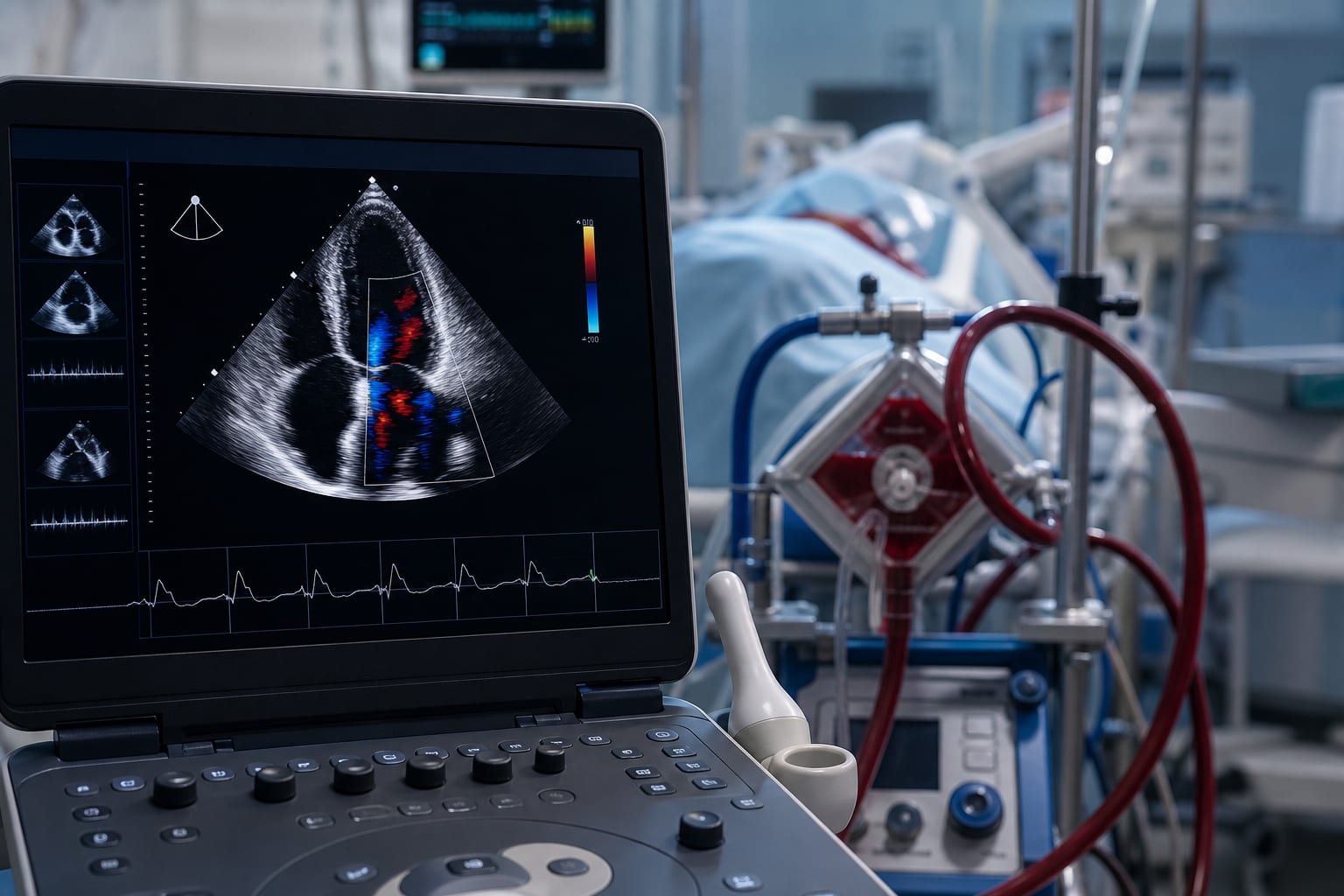
This study evaluates the patterns and outcomes of mechanical circulatory support in patients with cardiogenic shock.

Background

Cardiogenic shock is a critical condition that significantly impacts survival in patients with acute myocardial infarction and acute decompensated heart failure. Despite advancements in mechanical circulatory support, mortality rates remain high.

Data Highlights

ParameterSurvivorsNon-SurvivorsP-Value
Average Impella Power Level6.216.920.01
72h Cardiac Power Output1.15 watts0.69 watts<0.01

Key Findings

  • 110 patients were included in the analysis, with a survival rate of 48.18%.
  • Survivors had a significantly lower average Impella power level compared to non-survivors (6.21 vs. 6.92, p=0.01).
  • Cardiac power output at 72 hours was significantly better in survivors (1.15 watts vs. 0.69 watts, p<0.01).
  • Elevated cardiac power at 72 hours post-intervention was identified as an independent predictor of survival (OR 0.09; 95% CI 0.02-0.45; p=0.03).
  • Similar flow rates were observed between the two groups (3.16 L/min vs. 3.08 L/min, p=0.31).

Clinical Implications

The findings highlight the importance of hemodynamic parameters in the management of patients with mechanical circulatory support.

Conclusion

Further research is warranted to optimize treatment strategies.

Related Resources & Content

  1. Clinical Research in Cardiology, 2026 -- Timing of IABP initiation and its impact on outcomes in acute myocardial infarction with cardiogenic shock
  2. Clinical Research in Cardiology, 2020 -- Evaluation of Mechanical Circulatory Support: A Propensity-Matched Study of Venoarterial Extracorporeal Membrane Oxygenation versus Impella in Patients Experiencing Cardiogenic Shock
  3. Frontiers in Cardiovascular Medicine, 2026 -- Venoarterial extracorporeal membrane oxygenation in adults with cardiogenic shock
  4. 2025 ACC/AHA/ACEP/NAEMSP/SCAI Guideline for the Management of Patients With Acute Coronary Syndromes
  5. Frontiers in Cardiovascular Medicine — Percutaneous Extracorporeal Ventricular Assist Device as a Successful Bridge Strategy to Durable Left Ventricular Assist Device in Refractory Cardiogenic Shock: A Case Report
  6. 2025 ACC/AHA/ACEP/NAEMSP/SCAI Guideline for the Management of Patients With Acute Coronary Syndromes
  7. JAC31705_proof 1..24
  8. Microaxial Flow Pump or Standard Care in Infarct-Related Cardiogenic Shock | New England Journal of Medicine
  9. Extracorporeal Life Support in Infarct-Related Cardiogenic Shock | New England Journal of Medicine

Original Source(s)

Related Content