Clinical Report: Interdisciplinary Insights into Depression and Breast Cancer
Overview
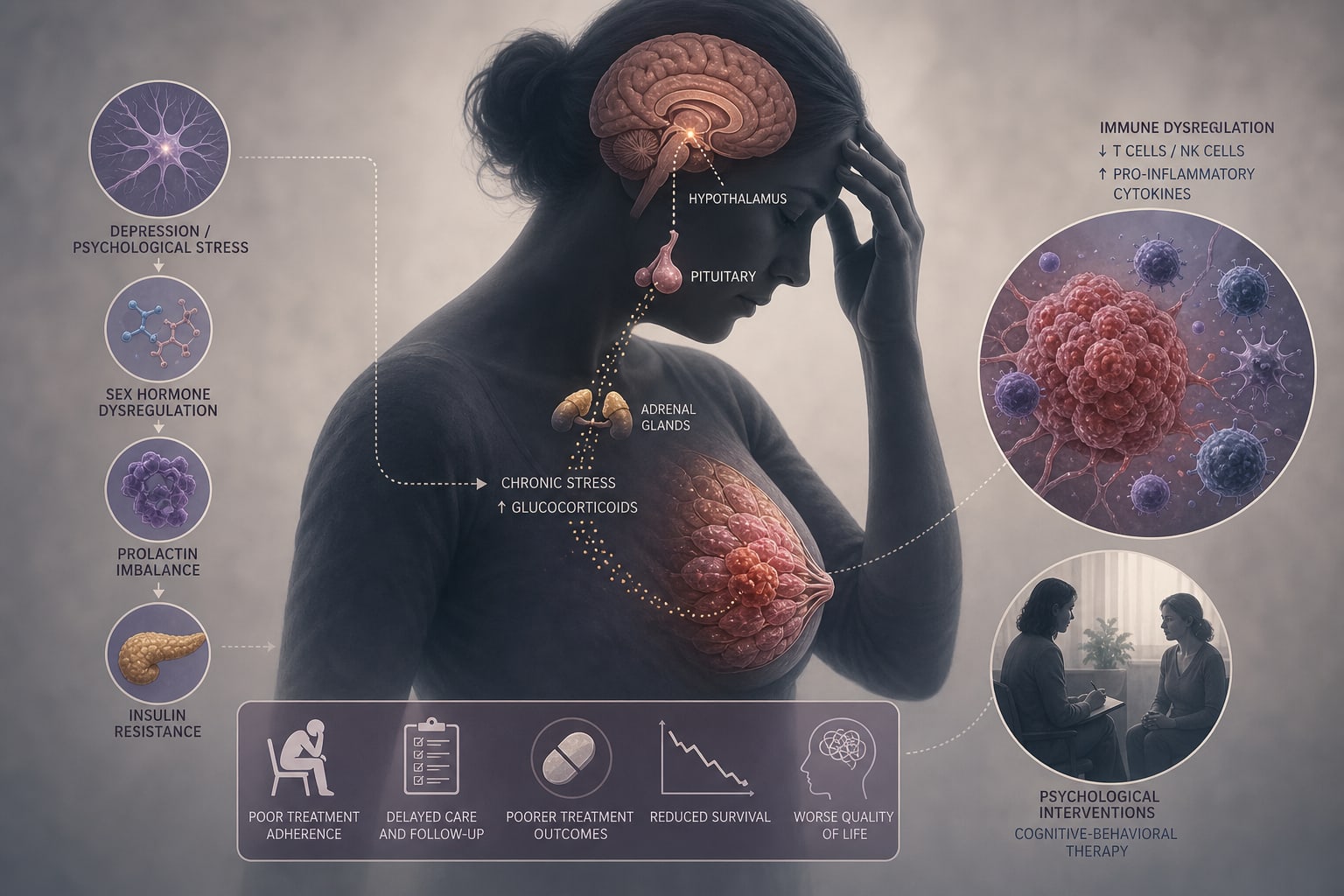
This review highlights the complex bidirectional relationship between depression and breast cancer, emphasizing how depression can exacerbate cancer progression and clinical outcomes. It also discusses the need for integrated treatment approaches that address both mental health and cancer care.
Background
Depression is a prevalent mental disorder that significantly impacts quality of life and is increasingly recognized as an independent risk factor for breast cancer. Breast cancer remains the most common cancer among women, contributing to high mortality rates. Understanding the interplay between these two conditions is crucial for improving patient outcomes and treatment adherence.
Data Highlights
No specific numerical data or trial data were provided in the source material.
Key Findings
Depression can lead to dysregulation of the hypothalamic-pituitary-adrenal (HPA) axis, resulting in elevated glucocorticoids that may promote breast cancer progression.
Patients with breast cancer have a depression prevalence rate as high as 32.2%, significantly higher than the general population rate of 6.4%.
Depression impairs immune function, reducing the effectiveness of immune cells like T cells and natural killer (NK) cells, which may facilitate tumor growth.
Integrated treatment approaches, including pharmacological and psychological interventions, are necessary for effectively managing the comorbidity of depression and breast cancer.
Emerging therapies such as traditional Chinese medicine and gut microbiota regulation show potential in addressing neuroimmune dysregulation.
Clinical Implications
Healthcare providers should consider the high comorbidity of depression in breast cancer patients and implement routine screening for depressive symptoms. An interdisciplinary approach that combines psychological and oncological care may enhance treatment adherence and overall patient outcomes.
Conclusion
The interplay between depression and breast cancer necessitates a comprehensive understanding and integrated management strategies to improve clinical outcomes for affected patients.
The research findings of experts from Roswell Park Comprehensive Cancer Center will be featured during the American Society of Clinical Oncology (ASCO) annual meeting May 29 to June 2 at McCormick Place in Chicago