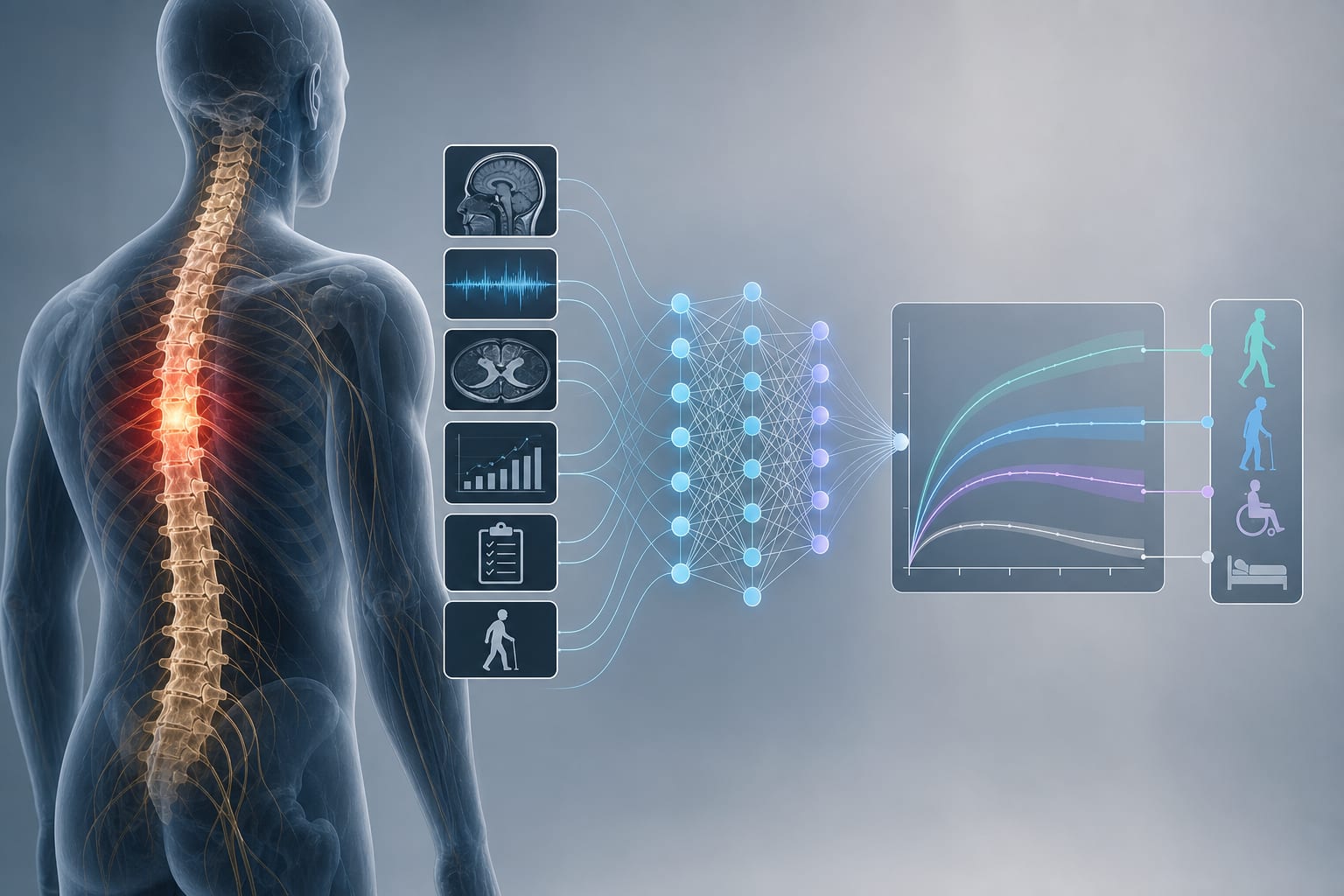
Clinical Report: Prognostic Models Utilizing Machine Learning for Assessing Functional Outcomes in Spinal Cord Injury
Overview
This systematic review evaluates machine learning-based prognostic models for spinal cord injury (SCI) outcomes, highlighting variability in model methodologies and challenges in comparing their clinical applicability.
Background
Spinal cord injury (SCI) results in significant motor and sensory impairments, affecting a substantial number of individuals globally. Accurate prognostic models are essential for individualized patient care and rehabilitation planning. The integration of machine learning in predicting functional outcomes represents a complex advancement in SCI management.
Data Highlights
No specific numerical data was provided in the source material.
Key Findings
Machine learning models have been developed to predict various outcomes in SCI, including neurological recovery and functional independence.
There is variability in outcome measures used across studies, such as AIS, SCIM, and FIM.
Methodological approaches vary widely, including logistic regression, support vector machines, and ensemble methods.
Challenges in model comparison arise from differences in patient characteristics and treatment approaches.
Standardized evaluation methods are lacking.
Clinical Implications
The findings suggest a need for standardized methodologies in developing machine learning models for SCI outcomes. Clinicians should be aware of the variability in model performance and the importance of individualized patient assessments.
Conclusion
This review highlights the need for improved reporting standards and methodological rigor in machine learning studies related to SCI prognosis.