Machine and deep learning based on magnetic resonance imaging to segment glioblastoma and predict the spread of recurrence: a multicenter retrospective protocol - Report - MDSpire
Advertisement
Machine and deep learning based on magnetic resonance imaging to segment glioblastoma and predict the spread of recurrence: a multicenter retrospective protocol
Clinical Report: Utilizing Machine Learning and Deep Learning Techniques on MRI for Glioblastoma Segmentation and Recurrence Prediction
Overview
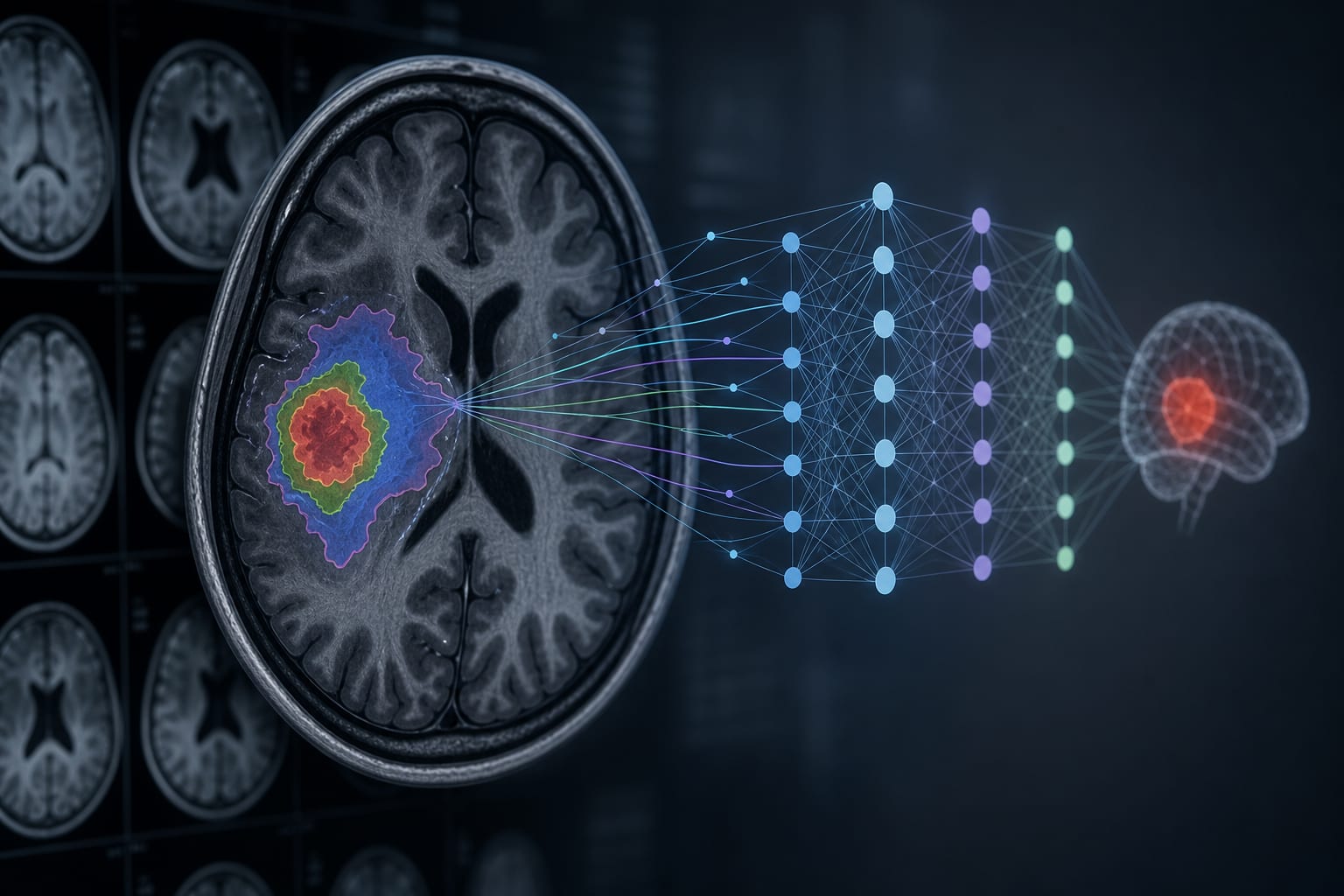
This study protocol outlines the use of machine learning and deep learning techniques on MRI data to predict glioblastoma recurrence and develop a semi-automatic segmentation tool.
Background
Glioblastoma (GB) is a highly aggressive brain tumor characterized by poor prognosis and high recurrence rates. Accurate prediction of recurrence patterns is essential for optimizing surgical interventions and subsequent treatments. This study seeks to leverage advanced imaging and machine learning techniques.
Data Highlights
No numerical data available in the provided source material.
Key Findings
The study proposes using machine learning and deep learning for MRI data analysis in GB patients.
Predictive models will be developed to forecast the extent of recurrence spread based on clinical and imaging data.
A semi-automatic segmentation tool for tumor delineation will be created to standardize volume measurement in neuroimaging.
Model performance will be evaluated using various metrics, including AUC and Dice score for segmentation.
Clinical Implications
The integration of machine learning and deep learning techniques in GB management may enhance the precision of recurrence predictions, thereby informing surgical strategies. This could lead to improved patient outcomes and more efficient use of healthcare resources.
Conclusion
The proposed study aims to investigate glioblastoma recurrence through innovative imaging techniques.
by Luana Conte, Erica Lo Turco, Rosaria V. Abbritti, Caterina Accettura, Giuseppe Raso, Edvige Iaboni, Ugo De Giorgi, Giorgio De Nunzio, Donato Cascio, Maria Caffo