Progress in research on the association between glucose metabolism disorders and intracranial and extracranial atherosclerotic stenosis - Report - MDSpire
Advertisement
Progress in research on the association between glucose metabolism disorders and intracranial and extracranial atherosclerotic stenosis
Clinical Report: Advancements in Understanding Glucose Metabolism Disorders and Atherosclerotic Stenosis
Overview
This review highlights the distinct pathological responses of intracranial and extracranial atherosclerotic stenosis to glucose metabolism disorders. It emphasizes the role of insulin resistance and hyperglycemia in accelerating atherosclerosis and identifies clinical biomarkers for risk assessment.
Background
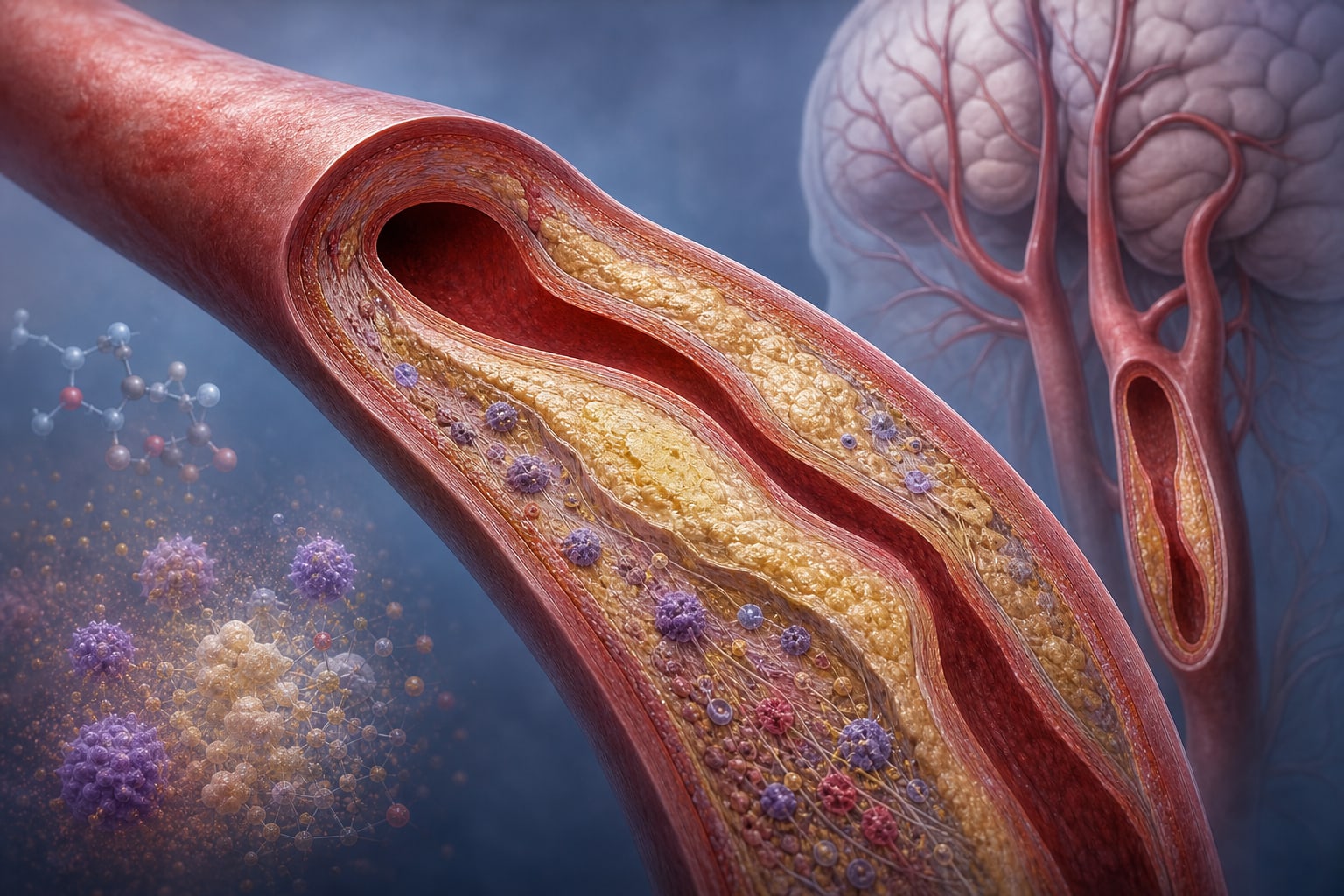
Intracranial atherosclerotic stenosis (ICAS) and extracranial atherosclerotic stenosis (ECAS) are significant contributors to ischemic stroke, which is a leading cause of disability and death. Understanding the relationship between glucose metabolism disorders and these conditions is crucial, as metabolic syndromes have been linked to increased stroke risk. This review aims to clarify the mechanisms by which glucose dysregulation affects ICAS and ECAS, providing insights for better prevention strategies.
Data Highlights
Finding
Value
HbA1c ≥ 6.5% correlation with anterior circulation ICAS
OR = 2.04, P < 0.05
TyG index correlation with asymptomatic ECAS
OR = 1.85
TyG index correlation with asymptomatic ICAS
OR = 1.34
Stroke risk reduction in non-diabetic individuals with impaired glucose tolerance
HR = 0.77, 95%CI 0.64–0.94
Key Findings
Hyperglycemia and insulin resistance accelerate atherosclerosis through multiple mechanisms.
HbA1c levels are positively correlated with ICAS, indicating a potential screening tool.
The TyG index is associated with both asymptomatic ICAS and ECAS.
Maintaining non-diabetic status in individuals with impaired glucose tolerance significantly reduces stroke risk.
Structural differences between ICAS and ECAS suggest different responses to glucose dysregulation.
Clinical Implications
Healthcare professionals should consider glucose metabolism disorders as significant risk factors for both ICAS and ECAS. Monitoring HbA1c and the TyG index can aid in early identification of at-risk patients, allowing for timely interventions to mitigate stroke risk.
Conclusion
The review underscores the importance of understanding the distinct effects of glucose dysregulation on ICAS and ECAS. Further research is needed to explore the differential impacts of various glucose metabolism disorders on these vascular conditions.