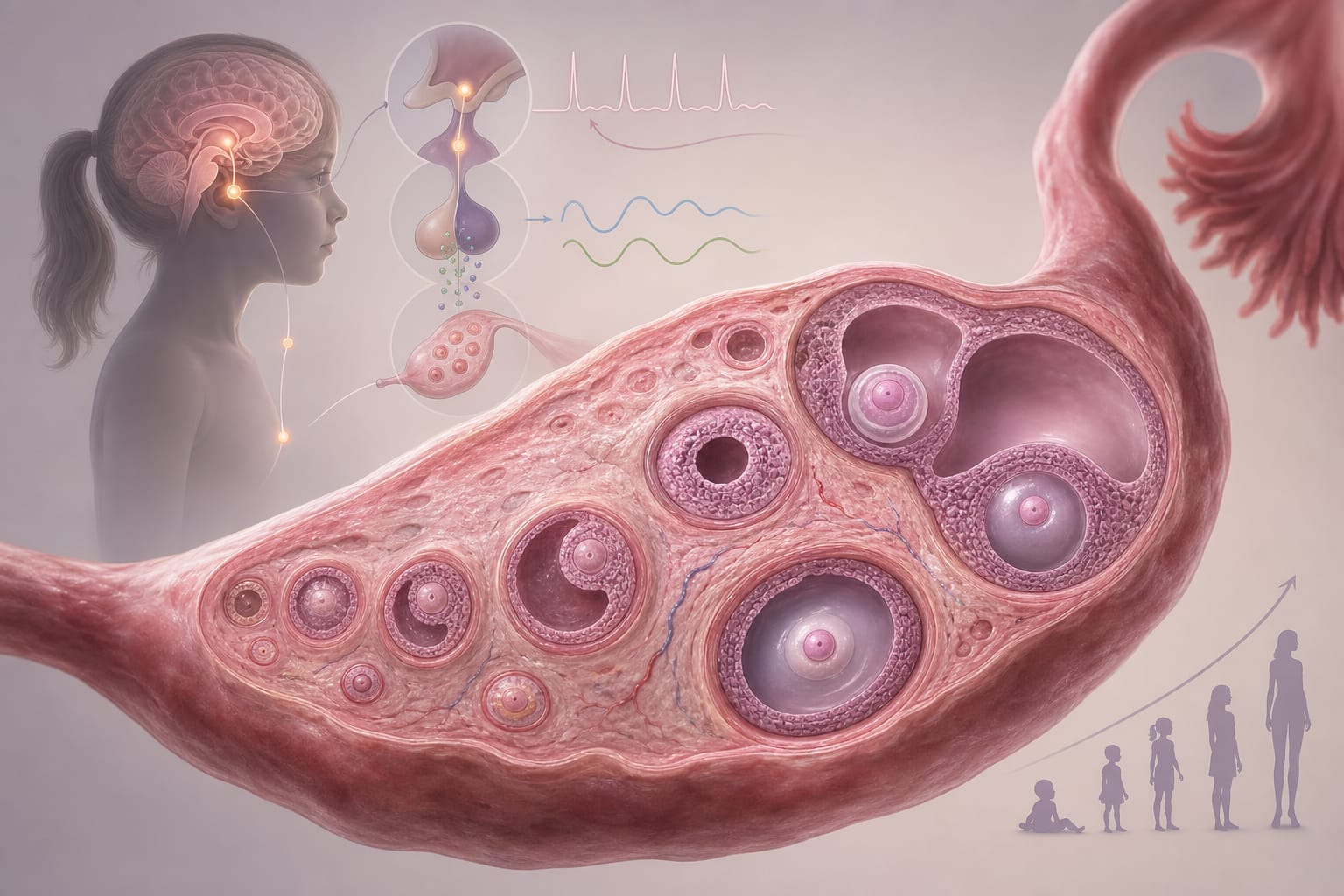
Clinical Report: Dynamics of Antral Follicles in Ovaries from Birth to Maturity
Overview
This review discusses the transition of the hypothalamic-pituitary-ovary axis from childhood to reproductive maturity, emphasizing the dynamics of antral follicle development. It highlights the importance of understanding these processes for optimal reproductive health and the implications of abnormal maturation.
Background
The maturation of the hypothalamic-pituitary-ovary (HPO) axis is critical for female reproductive health, influencing both ovulatory and anovulatory cycles. Understanding the dynamics of antral follicle development during this transition is essential, particularly given the increasing prevalence of abnormal reproductive maturation. Insights from both human and ruminant models provide valuable information on the endocrinology and morphology of follicle wave dynamics.
Data Highlights
No numerical data presented in the article.
Key Findings
The transition from childhood to reproductive maturity involves complex endocrine changes in the HPO axis.
Ruminant models exhibit similar follicle dynamics to those observed in adult women, aiding in understanding human physiology.
Follicle stimulating hormone (FSH) and luteinizing hormone (LH) peak during early calfhood, indicating early follicular development.
Maximal follicle diameter increases even with declining FSH and LH levels, suggesting enhanced follicle sensitivity.
Understanding these dynamics is crucial for addressing reproductive health issues in adolescents.
Clinical Implications
Clinicians should consider the normal physiological variations in antral follicle dynamics during adolescence to avoid overdiagnosis of reproductive disorders. Awareness of the endocrine changes during this maturation phase can guide clinical assessments and interventions.
Conclusion
The review underscores the significance of understanding antral follicle dynamics in the context of reproductive maturation, which is essential for optimizing female reproductive health and addressing potential abnormalities.