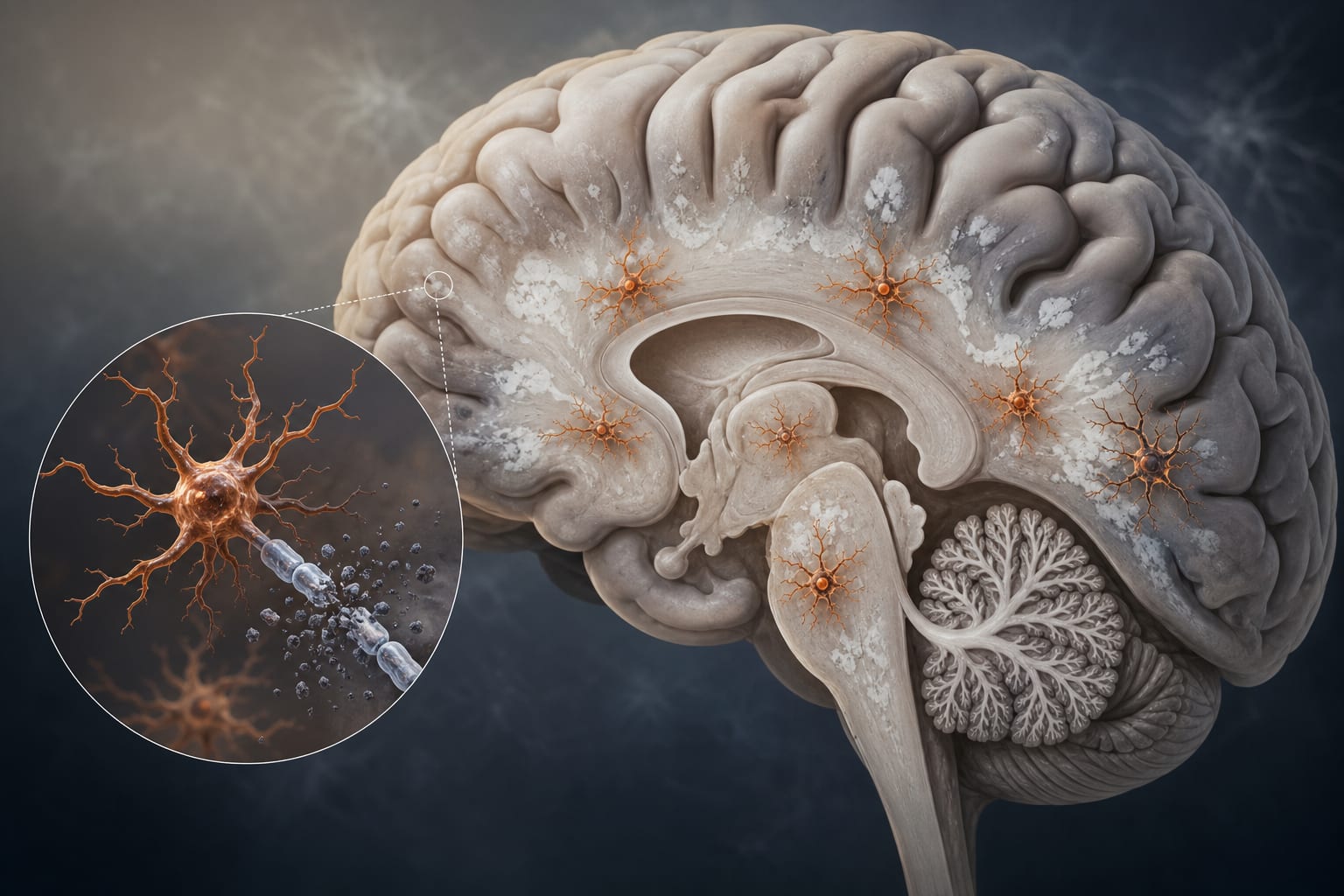
Clinical Report: Alterations in the Immune and Neuroinflammatory Landscape in Elderly Individuals with Multiple Sclerosis
Overview
This review highlights the shift in multiple sclerosis (MS) pathobiology in elderly patients, moving from relapse-driven inflammation to chronic neuroinflammation and neurodegeneration. It emphasizes the implications of aging on disease mechanisms, treatment strategies, and the need for personalized care in older individuals with MS.
Background
As life expectancy increases, a growing number of individuals with multiple sclerosis (pwMS) are aging, leading to changes in disease dynamics. Aging modifies MS pathobiology, with a transition from acute inflammatory episodes to chronic neuroinflammation and neurodegeneration. Understanding these changes is crucial for optimizing treatment and improving outcomes in older pwMS.
Data Highlights
No numerical data available in the source material.
Key Findings
Aging leads to immunosenescence and 'inflammaging', affecting both adaptive and innate immunity in pwMS.
Chronic neuroinflammation and neurodegeneration become dominant mechanisms in older pwMS, independent of relapse activity.
Age-related changes impact the safety and efficacy of disease-modifying therapies (DMTs), necessitating individualized treatment approaches.
Emerging therapies, including Bruton's tyrosine kinase inhibitors and neuroprotective agents, show potential for this population.
De-escalation or discontinuation of DMTs may be appropriate for stable older patients, with careful monitoring required.
Clinical Implications
Healthcare professionals should consider the unique challenges posed by aging in pwMS, including the need for tailored treatment strategies and vigilant monitoring of disease progression. Understanding the interplay between aging and MS can inform clinical decisions regarding therapy adjustments and patient management.
Conclusion
The evolving landscape of MS in older adults underscores the importance of personalized treatment approaches and highlights the need for further research to address knowledge gaps in this population.