Comparative effectiveness of non-pharmacological interventions on depression and anxiety in aging populations: a systematic review and network meta-analysis of randomized controlled trials - Report - MDSpire
Conexiant’s news site is now MDSpire News. Learn more
Advertisement
Efficacy Comparison of Non-Pharmacological Approaches for Depression and Anxiety in Older Adults: A Systematic Review and Network Meta-Analysis of Randomized Trials
Clinical Report: Efficacy Comparison of Non-Pharmacological Approaches for Depression and Anxiety
Overview
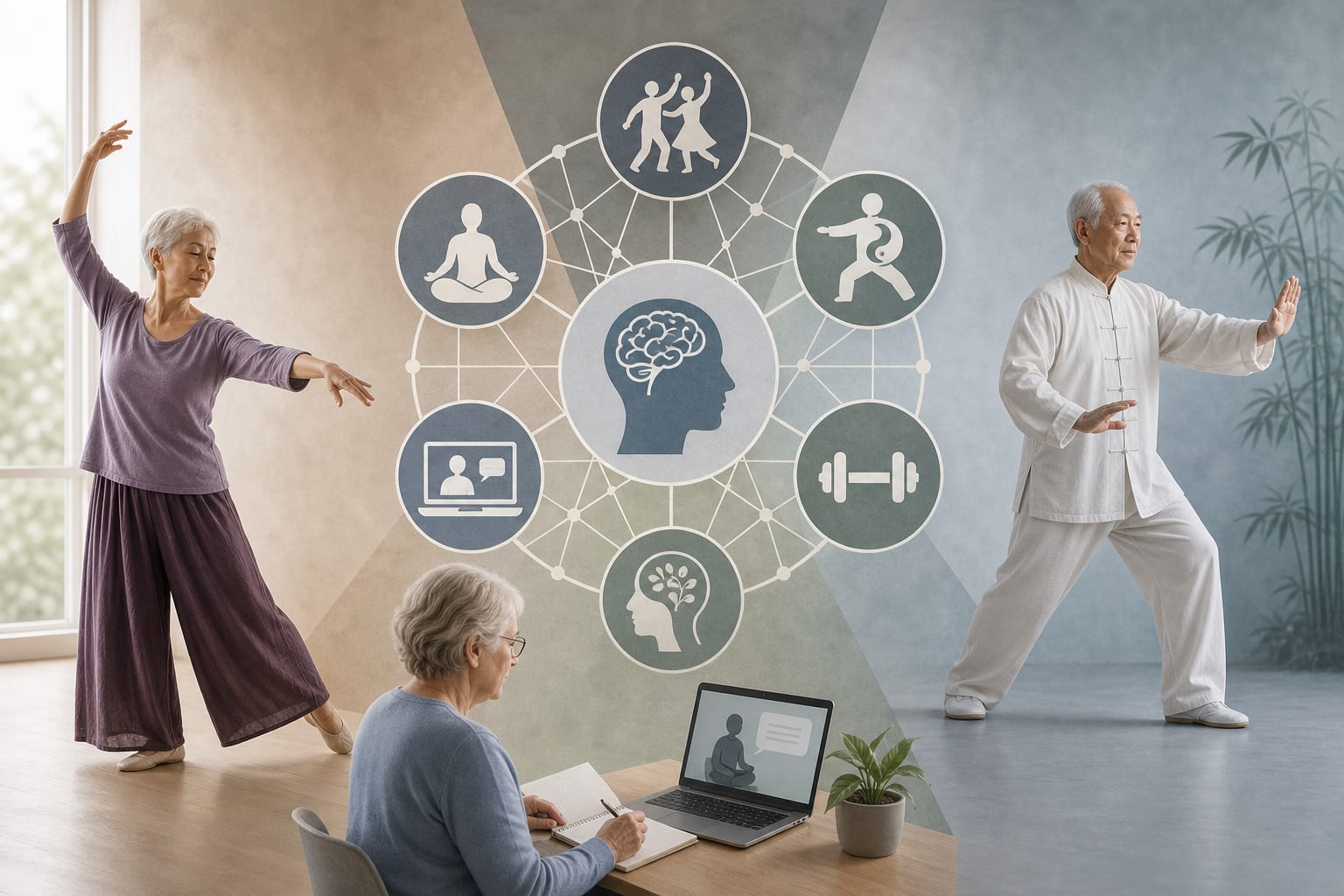
This systematic review and network meta-analysis evaluated the efficacy of non-pharmacological interventions for depression and anxiety in older adults. Dance and music/Tai Chi emerged as the most effective interventions, while MBSR and outdoor walking showed limited effectiveness.
Background
Depression and anxiety are prevalent among older adults, significantly impacting their quality of life. Non-pharmacological interventions are increasingly recognized as viable alternatives or complements to pharmacological treatments, which may have limited efficacy and side effects in this population. Understanding the comparative effectiveness of these interventions is essential for optimizing mental health management in aging populations.
Data Highlights
Intervention
SUCRA (Depression)
SUCRA (Anxiety)
Dance
98.5%
N/A
Resistance Training
67.5%
N/A
CBT
65.6%
Statistically significant
Music
N/A
78.9%
Tai Chi
N/A
77.1%
MBSR
Limited efficacy
Limited efficacy
Outdoor Walking
Least effective
N/A
Key Findings
Dance ranked highest for depression with a SUCRA of 98.5%.
Music and Tai Chi were the most effective for anxiety, with SUCRAs of 78.9% and 77.1%, respectively.
Resistance training and CBT also showed notable efficacy for depression.
MBSR demonstrated limited effectiveness for both depression and anxiety.
Outdoor walking was among the least effective interventions for depression.
Statistical significance was noted for Tai Chi and CBT over waitlist controls for anxiety.
Clinical Implications
Clinicians should consider incorporating dance and music/Tai Chi into treatment plans for older adults experiencing depression and anxiety. A personalized, stepped-care approach is recommended, taking into account individual preferences and the varying effectiveness of interventions.
Conclusion
The findings underscore the importance of non-pharmacological interventions in managing depression and anxiety among older adults, highlighting the need for tailored approaches in clinical practice.
The largest study of former National Football League players found excess persisted even after accounting for the lower overall mortality associated with elite athletic participation.