Ongoing Glucose Monitoring in Individuals With and Without Diabetes
-
By
-
Minna Johansson
-
Justin A. Dower
-
Kasia J. Lipska
-
September 1, 2026
Clinical Report: Ongoing Glucose Monitoring in Individuals With and Without Diabetes
Overview
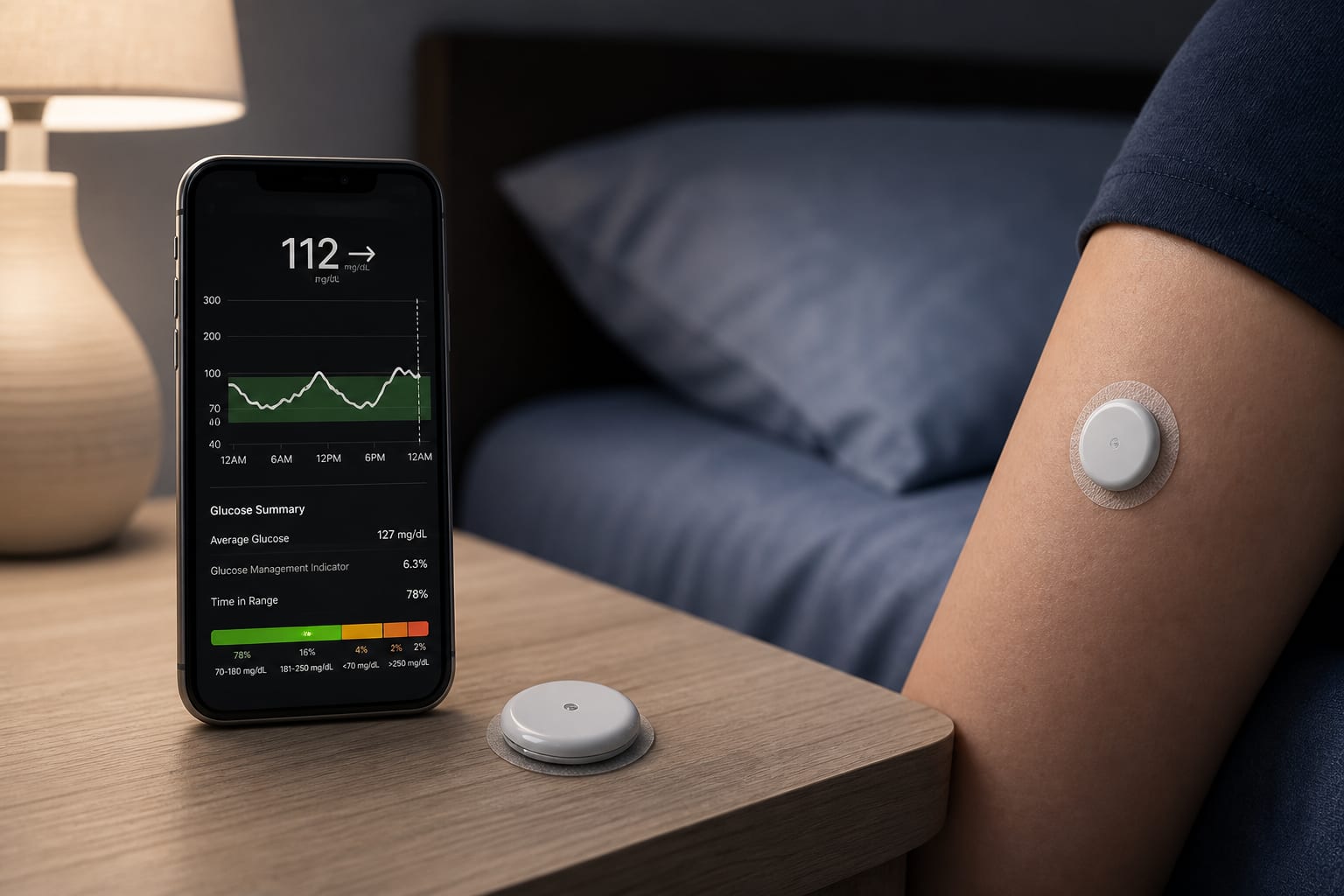
Continuous glucose monitors (CGMs) are increasingly used by individuals with and without diabetes to track blood glucose levels. While CGMs can assist in insulin management for those with diabetes, evidence supporting their use in non-diabetic populations remains limited according to recent studies.
Background
The use of CGMs has become common among individuals with diabetes, particularly for those on insulin therapy, as they provide real-time glucose data that can inform treatment decisions. However, their application in non-diabetic individuals raises questions about the benefits and potential drawbacks, including the risk of unnecessary dietary restrictions and stress from constant monitoring, as noted in recent literature.
Data Highlights
Recent studies indicate that CGM use in diabetic populations can lead to improved glycemic control. However, the impact of CGMs on non-diabetic individuals remains unclear, with some studies suggesting potential psychological effects and dietary changes that may not be beneficial.
Key Findings
CGMs provide continuous glucose data, which can assist in insulin dose adjustments for individuals with diabetes.
There is insufficient evidence that CGM use prevents complications or severe hypoglycemic reactions in diabetic patients compared to usual care.
In non-diabetic individuals, the health benefits of CGM use are not well established, and concerns exist regarding potential over-restriction of healthy foods.
CGMs may cause skin irritation and can malfunction, leading to interruptions in monitoring.
For insulin-treated individuals, CGMs may reduce the need for finger-stick testing, improving comfort and management.
Clinical Implications
Healthcare providers should consider the individual needs of patients when recommending CGMs, particularly for those with diabetes. For non-diabetic individuals, the potential psychological and behavioral impacts of CGM use warrant careful discussion, as highlighted in recent studies.
Conclusion
While CGMs can enhance diabetes management for some patients, their role in non-diabetic populations remains uncertain and requires further investigation, as indicated by current research.
Related Resources & Content
American Diabetes Association, Diabetes Care, 2026 -- Glycemic Goals, Hypoglycemia, and Hyperglycemic Crises: Standards of Care in Diabetes
American Diabetes Association, Diabetes Care, 2026 -- Diabetes Technology: Standards of Care in Diabetes
JAMA Network Open, 2023 -- Primary Care–Initiated Continuous Glucose Monitoring in Adults With Insulin-Treated Diabetes
JAMA Network Open, 2023 -- Implementing Continuous Glucose Monitoring Alerts in Clinical Settings—Moving Beyond Efficacy
European Journal of Medical Research, 2026 -- Continuous glucose monitoring in non-diabetic populations: a systematic review of observational and interventional studies with meta-analysis
Ophthalmology Management — Diabetes
MDSpire News — CGM in Early Gestational Diabetes Improved Outcomes
6. Glycemic Goals, Hypoglycemia, and Hyperglycemic Crises: Standards of Care in Diabetes—2026 | Diabetes Care | American Diabetes Association
7. Diabetes Technology: Standards of Care in Diabetes—2026 | Diabetes Care | American Diabetes Association
Continuous glucose monitoring in non-diabetic populations: a systematic review of observational and interventional studies with meta-analysis | European Journal of Medical Research | Springer Nature Link
Based on findings from:
Continuous Glucose Monitoring for Persons With and Without Diabetes
Minna Johansson, Justin A. Dower, Kasia J. Lipska. Jama Internal Medicine, 2026.
https://jamanetwork.com/journals/jamainternalmedicine/fullarticle/2851942
This content is an AI-generated, fully rewritten summary based on a published scholarly article. It does not reproduce the original text and is not a substitute for the original publication. Readers are encouraged to consult the source for full context, data, and methodology.