Heart Failure Increases Morbidity and Mortality After Bariatric Surgery: MBSAQIP Insights
Overview
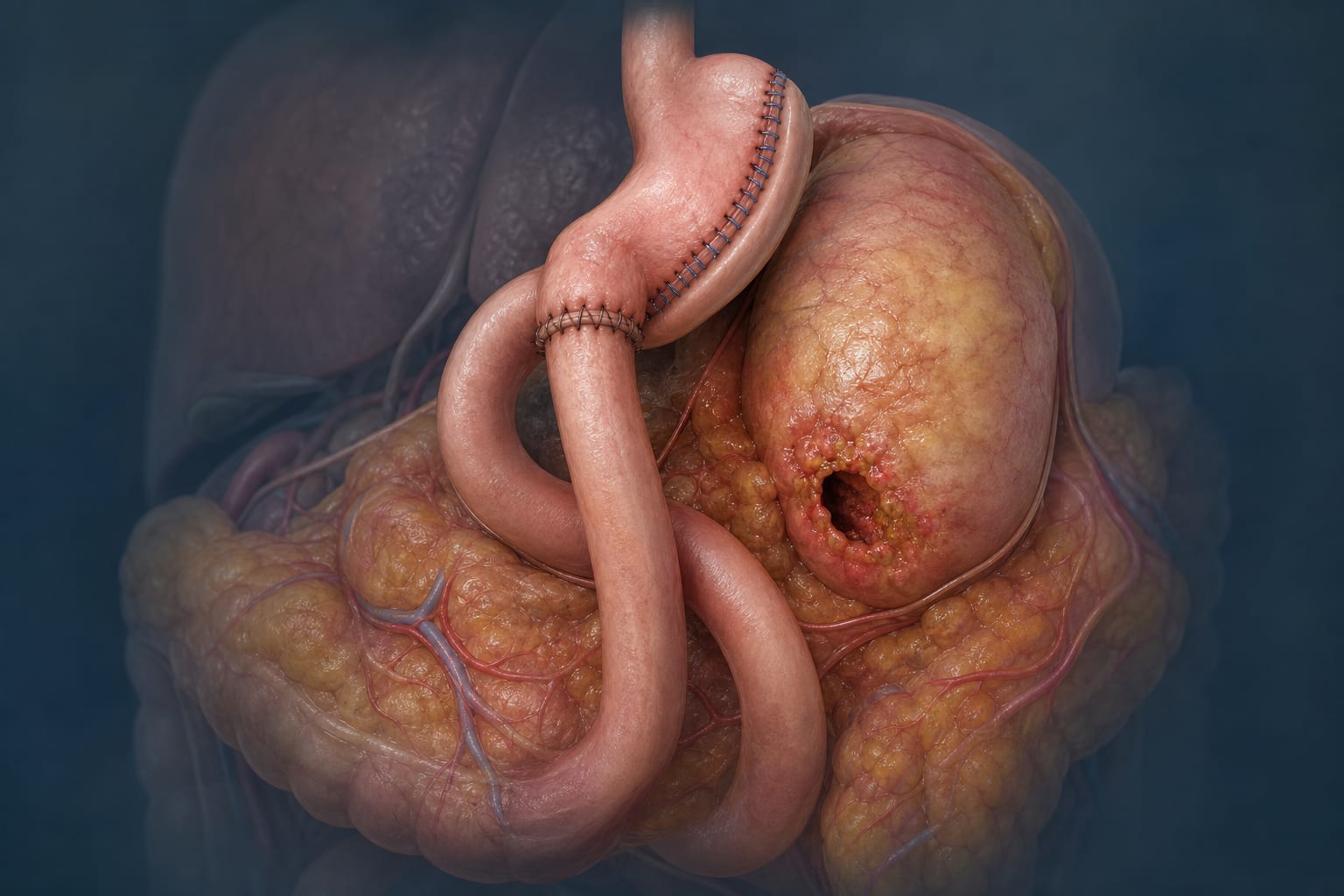
Analysis of 180,544 MBSAQIP cases reveals that heart failure (HF) is an independent risk factor for increased 30-day morbidity and mortality following primary bariatric surgery. HF patients undergoing sleeve gastrectomy or Roux-en-Y gastric bypass experience higher rates of serious complications and cardiac events compared to non-HF patients.
Background
Obesity and heart failure are prevalent and interrelated conditions with rising incidence and significant mortality. Bariatric surgery is the most effective treatment for severe obesity and may improve cardiac function in HF patients. However, HF patients present unique perioperative risks due to compromised cardiac reserve and comorbidities. Large-scale data on outcomes and risk stratification for HF patients undergoing bariatric surgery have been limited until now.
Data Highlights
Parameter
HF Patients (n)
Non-HF Patients (n)
30-day Mortality (%)
Serious Complications (%)
Total Cases
180,544
Not specified
Higher in HF cohort
Higher in HF cohort
Procedures
Sleeve Gastrectomy, Roux-en-Y Gastric Bypass
Same
Mortality Rate
Significantly elevated vs non-HF
Lower
Exact % not provided
Serious Complications
Includes bleeding, infection, cardiac arrest, etc.
Lower incidence
Composite outcome increased in HF
Key Findings
Heart failure is an independent predictor of increased 30-day mortality after bariatric surgery.
HF patients have significantly higher rates of serious postoperative complications including cardiac arrest, myocardial infarction, and pulmonary embolism.
Both sleeve gastrectomy and Roux-en-Y gastric bypass carry elevated risks in HF patients, necessitating careful procedure selection.
HF patients often present with multiple comorbidities such as hypertension, diabetes, and renal insufficiency, compounding surgical risk.
Functional status and ASA classification are important preoperative risk stratifiers in this population.
Large-scale MBSAQIP data provide robust evidence to guide perioperative management and risk stratification for HF patients undergoing bariatric surgery.
Clinical Implications
Clinicians should recognize heart failure as a significant independent risk factor for adverse outcomes following bariatric surgery. Preoperative evaluation must include thorough cardiac assessment and optimization of comorbidities. Procedure selection should be individualized, balancing the benefits of weight loss against elevated perioperative risks in HF patients.
Conclusion
This large-scale analysis confirms that heart failure substantially increases morbidity and mortality risk after bariatric surgery. Evidence-based risk stratification and tailored perioperative management are essential to improve outcomes in this high-risk population.
References
American College of Surgeons MBSAQIP Participant Use Data File User Guide 2023
Heart Failure Epidemiology and Mortality Data 2023
Bariatric Surgery Outcomes in Heart Failure Patients, Recent Studies
by Juan S. Barajas-Gamboa, Valentin Mocanu, Kayanne Khoury, Mélissa V. Wills, Pattharasai Kachornvitaya, Sol Lee, Thomas H. Shin, Matthew Allemang, Andrew T. Strong, Salvador Navarrete, Ricard Corcelles, John Rodriguez, Matthew Kroh, Jerry T. Dang