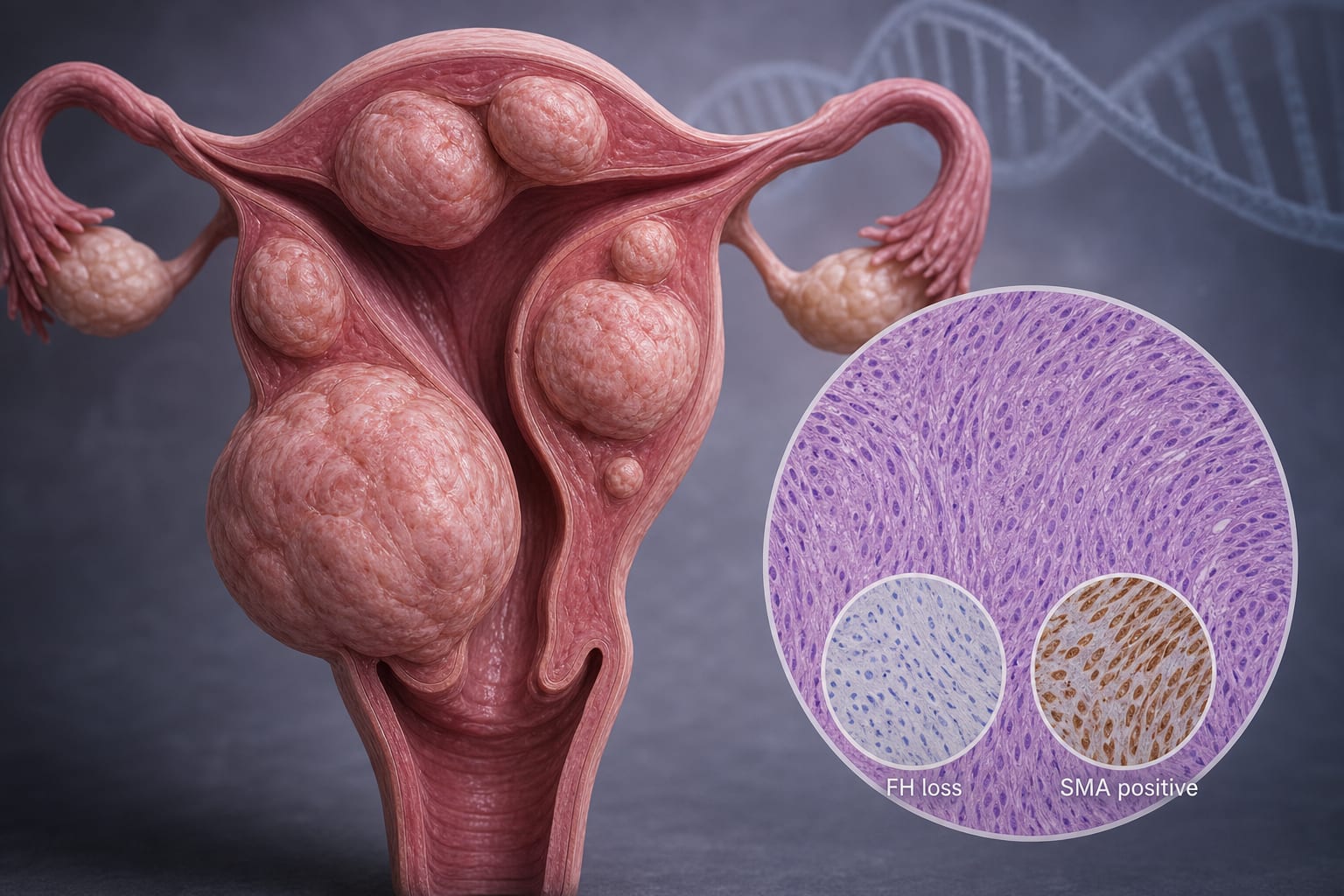
Clinical Report: Fumarate Hydratase-Deficient Uterine Leiomyoma Case Study
Background
Uterine leiomyomas are the most prevalent benign tumors in the female reproductive system, with fumarate hydratase (FH)-deficient leiomyomas representing a rare subtype. These tumors are associated with specific histopathological features and may indicate a hereditary risk for renal cell carcinoma.
Data Highlights
No numerical data provided in the article.
Key Findings
FH-deficient uterine leiomyomas account for approximately 1%-2% of all uterine leiomyomas.
Patients typically present with multiple, large, recurrent leiomyomas, often at a younger age.
Histopathological examination can reveal distinctive features such as increased cellularity and mitotic activity.
Immunohistochemistry is essential for confirming FH deficiency.
Familial clustering of uterine fibroids may indicate a hereditary syndrome.
Clinical Implications
Clinicians should consider FH-deficient uterine leiomyoma in young women with large, recurrent fibroids, especially in the context of family history.
Conclusion
The case illustrates the complexities of diagnosing and managing FH-deficient uterine leiomyomas.