Evaluation of the efficacy and safety of tegileridine at different doses in patients with postoperative pain: a meta-analysis of randomized controlled trials - Report - MDSpire
Advertisement
Evaluation of the efficacy and safety of tegileridine at different doses in patients with postoperative pain: a meta-analysis of randomized controlled trials
Clinical Report: Assessment of Tegileridine's Efficacy and Safety in Pain Management
Overview
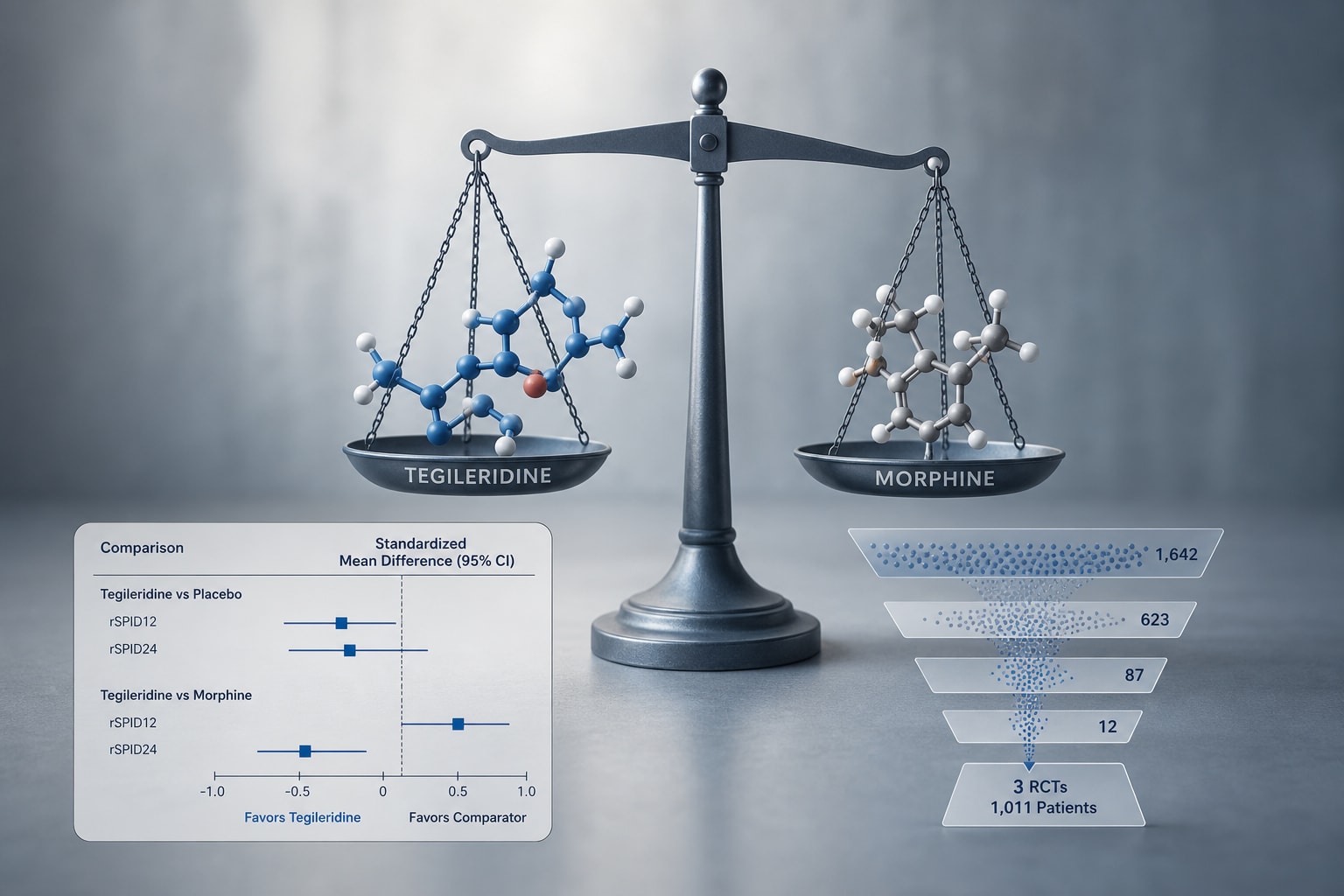
This meta-analysis evaluates the efficacy and safety of tegileridine in postoperative pain management, demonstrating significant analgesic efficacy compared to placebo and a favorable safety profile compared to morphine.
Background
Postoperative acute pain management is a critical issue, with many patients experiencing inadequate analgesia, which can lead to chronic pain and increased healthcare costs. Opioids are commonly used but are associated with significant adverse effects.
Data Highlights
Comparison
Outcome
Result
Tegileridine vs Placebo
rSPID24
Significantly reduced
Tegileridine vs Placebo
rSPID12
Significantly reduced
Tegileridine vs Morphine
rSPID12
No significant difference
Tegileridine vs Morphine
rSPID24
Significantly weaker efficacy
Tegileridine vs Morphine
Nausea and vomiting
Lower incidence
Tegileridine vs Morphine
Respiratory depression
No significant difference
Key Findings
Tegileridine significantly reduced rSPID24 and rSPID12 compared to placebo.
No significant difference in rSPID12 efficacy between tegileridine and morphine.
Tegileridine exhibited significantly weaker efficacy than morphine at rSPID24.
The incidence of nausea and vomiting with tegileridine was similar to placebo and lower than morphine.
No significant difference in respiratory depression was observed between tegileridine and morphine.
Clinical Implications
Tegileridine may serve as a viable alternative for postoperative acute pain management, particularly due to its favorable safety profile regarding nausea and vomiting compared to morphine. Clinicians should consider its use in multimodal analgesic strategies.
Conclusion
The findings from this meta-analysis support the efficacy of tegileridine over placebo.