Mycobacterium abscessus infection in a young man with cystic fibrosis: a case report and literature review - Report - MDSpire

Mycobacterium abscessus infection in a young man with cystic fibrosis: a case report and literature review

  • By

  • Ling Luo

  • Zhuoyao Guo

  • Weicheng Chen

  • Yanghong Zheng

  • Chen Chen

  • Qiang Li

  • Na Wang

  • Yingqun Ji

  • Jing Hua

  • May 26, 2026

  • 0 min

Share

Clinical Report: Infection with Mycobacterium abscessus in a Young Adult Diagnosed with Cystic Fibrosis

Overview

This case study presents a 21-year-old male with cystic fibrosis (CF) who developed a Mycobacterium abscessus infection. The patient achieved clinical stability through a tailored antimycobacterial regimen despite challenges in accessing CFTR modulator therapy.

Background

Cystic fibrosis is a genetic disorder that often leads to severe respiratory complications and increased susceptibility to infections, including those caused by multidrug-resistant organisms. In regions like China, where CF is less common, the diagnosis may be delayed, complicating treatment outcomes. Understanding the interplay between CF and infections like Mycobacterium abscessus is crucial for improving patient management.

Data Highlights

ParameterValue
Sweat Chloride Concentration88 mmol/L
Initial Anti-NTM TherapyIntravenous tigecycline, imipenem-cilastatin, amikacin, azithromycin
Follow-up TherapyLinezolid, moxifloxacin, azithromycin, minocycline
Vitamin D Level3.01 ng/mL
Testosterone Level1.320 ng/mL

Key Findings

  • The patient was diagnosed with cystic fibrosis confirmed by elevated sweat chloride and CFTR mutations.
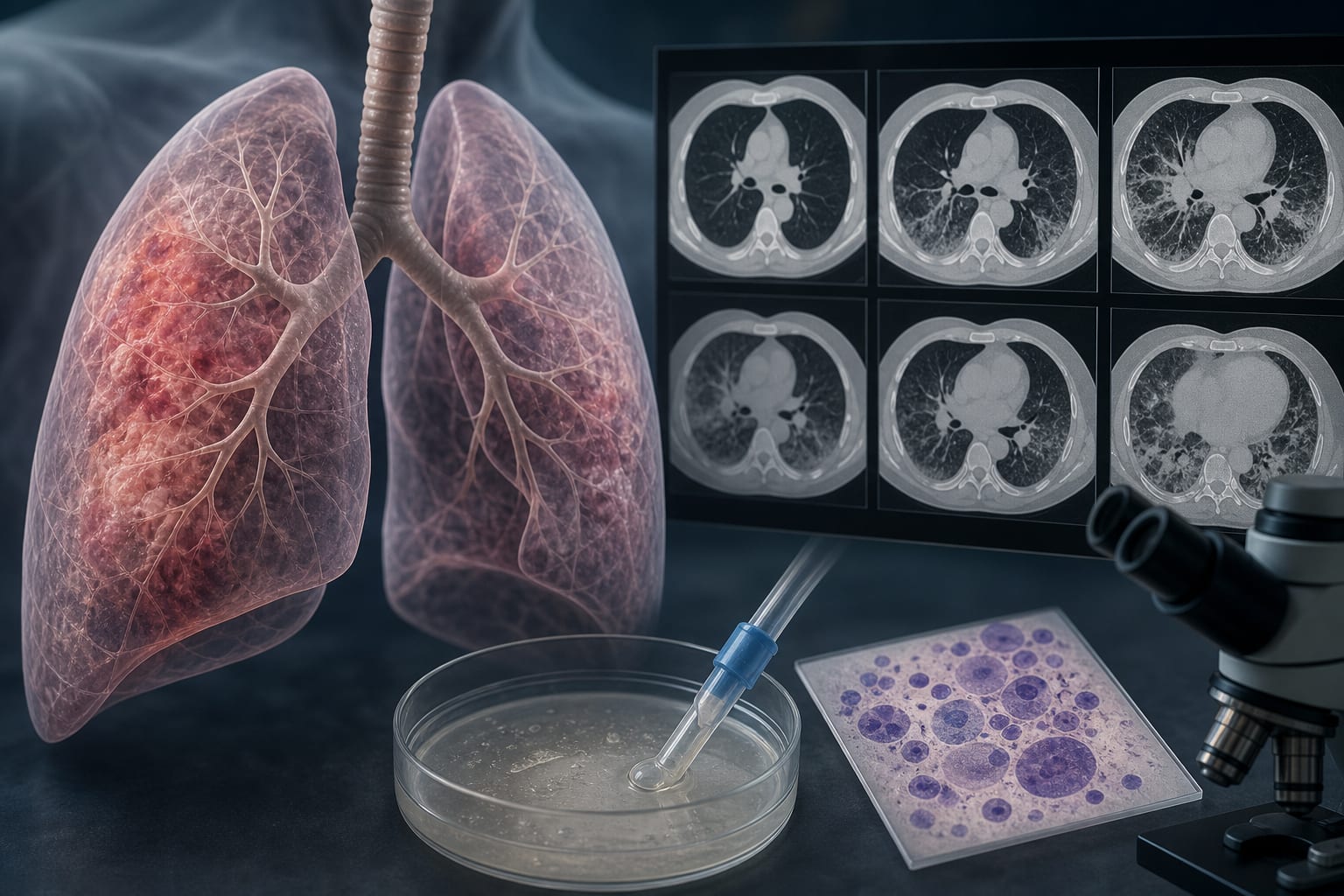
  • Mycobacterium abscessus was identified through metagenomic next-generation sequencing of bronchoalveolar lavage fluid.
  • Initial treatment included a combination of intravenous and oral antimycobacterial agents.
  • Clinical stability was achieved with a quadruple antimycobacterial regimen.
  • Challenges included limited access to CFTR modulator therapy due to financial constraints.

Clinical Implications

Healthcare providers should be vigilant for cystic fibrosis in patients presenting with respiratory symptoms, especially in regions where the disease is less common. Personalized antimicrobial strategies are essential for managing infections like Mycobacterium abscessus, particularly in the context of CF.

Conclusion

This case underscores the importance of early diagnosis and tailored treatment approaches in managing cystic fibrosis and its associated infections. Improved access to therapies is critical for optimizing patient outcomes.

Related Resources & Content

  1. Frontiers in Immunology, 2026 -- Mycobacterium abscessus bacteremia complicated by sepsis and septic shock in a patient with multiple comorbidities: a case report
  2. The Journal of Infectious Diseases, 2023 -- Phosphatidylinositol 5-Phosphate-Loaded Apoptotic Body-Like Liposomes for Mycobacterium abscessus Infection Management in Patients With Cystic Fibrosis
  3. The Journal of Infectious Diseases, 2023 -- Fecal and Sputum Microbiota and Treatment Response in Patients With Mycobacterium abscessus Pulmonary Disease
  4. Nontuberculous Mycobacteria Clinical Care Guidelines | Cystic Fibrosis Foundation
  5. The Journal of Infectious Diseases — The Role of Microbiota, Mucus, and Therapeutic Modulators in the Pathogenesis of Infections in Cystic Fibrosis During the Era of CFTR Modulator Treatments
  6. Mycobacterium abscessus treatment outcomes in cystic fibrosis: A single centre experience
  7. Eradication of Nontuberculous Mycobacteria in People with Cystic Fibrosis Treated with Elexacaftor/Tezacaftor/Ivacaftor: A Multicenter Cohort Study
  8. Nontuberculous Mycobacteria Clinical Care Guidelines | Cystic Fibrosis Foundation

Original Source(s)

Related Content