Intestinal subepithelial myofibroblasts in inflammatory bowel disease: fibroblast heterogeneity, fibrosis, and therapeutic targeting - Report - MDSpire

Intestinal subepithelial myofibroblasts in inflammatory bowel disease: fibroblast heterogeneity, fibrosis, and therapeutic targeting

  • By

  • Fang Li

  • Chao Xu

  • Jun Chen

  • Teng Lei

  • Xigui Tian

  • Yuanling Zhang

  • Guoqing Chen

  • June 24, 2026

  • 0 min

Share

Clinical Report: Subepithelial Myofibroblasts in Inflammatory Bowel Disease

Overview

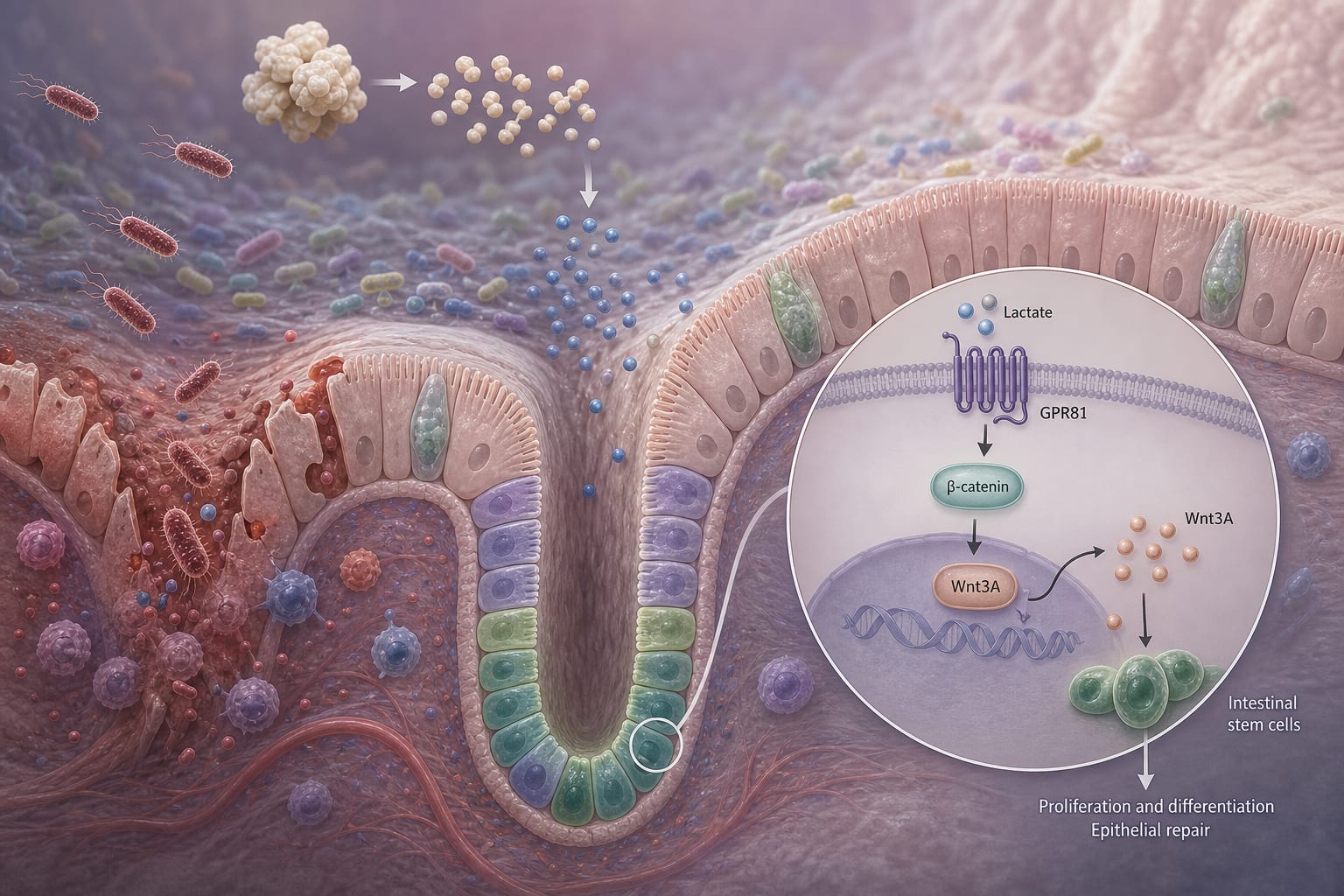
Intestinal subepithelial myofibroblasts (ISEMFs) play a role in the pathogenesis of intestinal fibrosis associated with inflammatory bowel disease (IBD). This review discusses their physiological functions and pathological activation mechanisms.

Background

Inflammatory bowel diseases (IBD) such as Crohn's disease and ulcerative colitis often lead to intestinal fibrosis, a complication that can result in bowel strictures and surgical interventions. Understanding the role of ISEMFs in fibrosis is essential.

Data Highlights

No numerical data or trial data provided in the source material.

Key Findings

  • ISEMFs are central regulators of epithelial homeostasis and mucosal repair in the intestine.
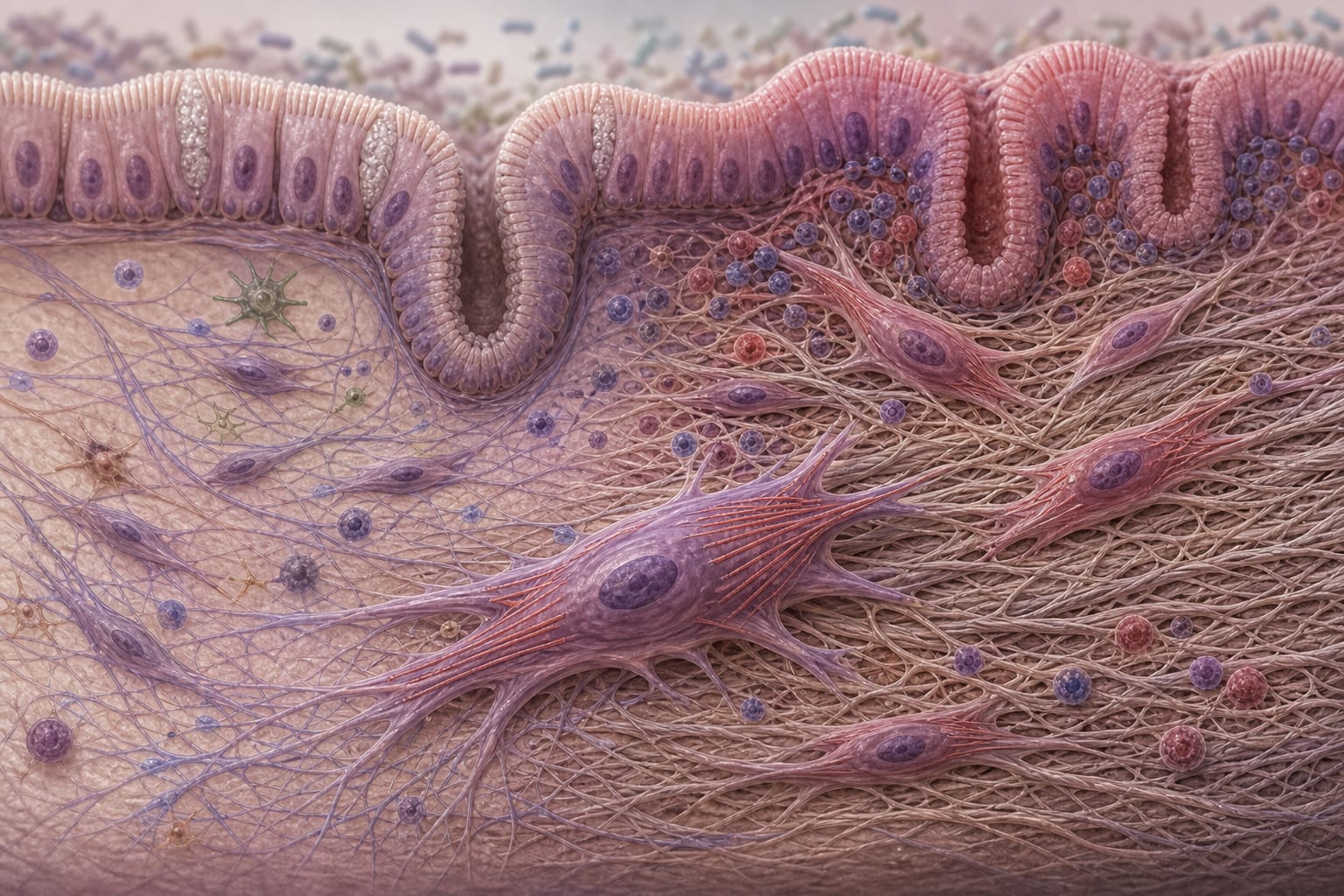
  • Pathological activation of ISEMFs during chronic inflammation leads to excessive extracellular matrix deposition and fibrosis.
  • Profibrotic cytokines such as TGF-β1 and connective tissue growth factor are key mediators of ISEMF activation.
  • Recent advances in single-cell and spatial transcriptomics have revealed fibroblast heterogeneity and pathogenic subsets associated with fibrosis.

Clinical Implications

Understanding the mechanisms of ISEMF activation can inform the development of therapies aimed at mitigating fibrosis.

Conclusion

ISEMFs are pivotal in the development of intestinal fibrosis in IBD.
Related Resources & Content

  1. Frontiers in Immunology, 2026 -- Epithelial–mesenchymal transition in cutaneous fibrosis disease: from mechanisms to therapy
  2. Journal of Crohn's and Colitis, 2023 -- Therapeutic potential of Janus kinase inhibitors for the management of fibrosis in inflammatory bowel disease
  3. Journal of Crohn's and Colitis, 2023 -- The Intestinal Mucin Isoform Landscape Reveals Region-Specific Biomarker Panels for Inflammatory Bowel Disease Patient Stratification
  4. Journal of Gastroenterology — Interactions Between Epithelial and Stromal Components in Eosinophilic Esophagitis-Related Fibrosis
  5. Pharmacological management of moderate-to-severe Crohn’s disease - American Gastroenterological Association
  6. A global consensus on the definitions, diagnosis and management of fibrostenosing small bowel Crohn’s disease in clinical practice - PMC
  7. Imaging in inflammatory bowel disease 2025: ECCO-ESGAR-ESP-IBUS diagnostic and monitoring recommendations with MRI and intestinal ultrasound in treat-to-target strategies | Insights into Imaging | Springer Nature Link
  8. Imaging endpoints in inflammatory bowel disease: current evidence and future directions for ultrasound and MRI - PubMed
  9. Efficacy and Safety of Endoscopic Strictureplasty and Stricturotomy for Crohn’s Disease-Associated Strictures: A Systematic Review and Current Perspective
  10. Endoscopic dilation of small-intestine strictures in Crohn’s disease by balloon-assisted enteroscopy: a systematic review and meta-analysis - PMC
  11. Management of ileocolic anastomotic strictures in Crohn's disease: endoscopic or surgical intervention? A systematic review and meta-analysis - PubMed
  12. Single-cell and spatial transcriptomics of stricturing Crohn’s disease highlights a fibrosis-associated network | Nature Genetics
  13. Spatial fibroblast niches define Crohn’s fistulae | Nature
  14. Different fibroblast subtypes propel spatially defined ileal inflammation through TNFR1 signalling in murine ileitis | Nature Communications
  15. Frontiers | Intestinal Subepithelial Myofibroblasts in Inflammatory Bowel Disease: Fibroblast Heterogeneity, Fibrosis, and Therapeutic Targeting
  16. Anti-TL1A antibody, afimkibart, in moderately-to-severely active ulcerative colitis (TUSCANY-2): a multicentre, double-blind, treat-through, multi-dose, randomised, placebo-controlled, phase 2b trial - PubMed
  17. TL1A as a Target in Inflammatory Bowel Disease: Exploring Mechanisms and Therapeutic Potential - PMC

Original Source(s)

Related Content