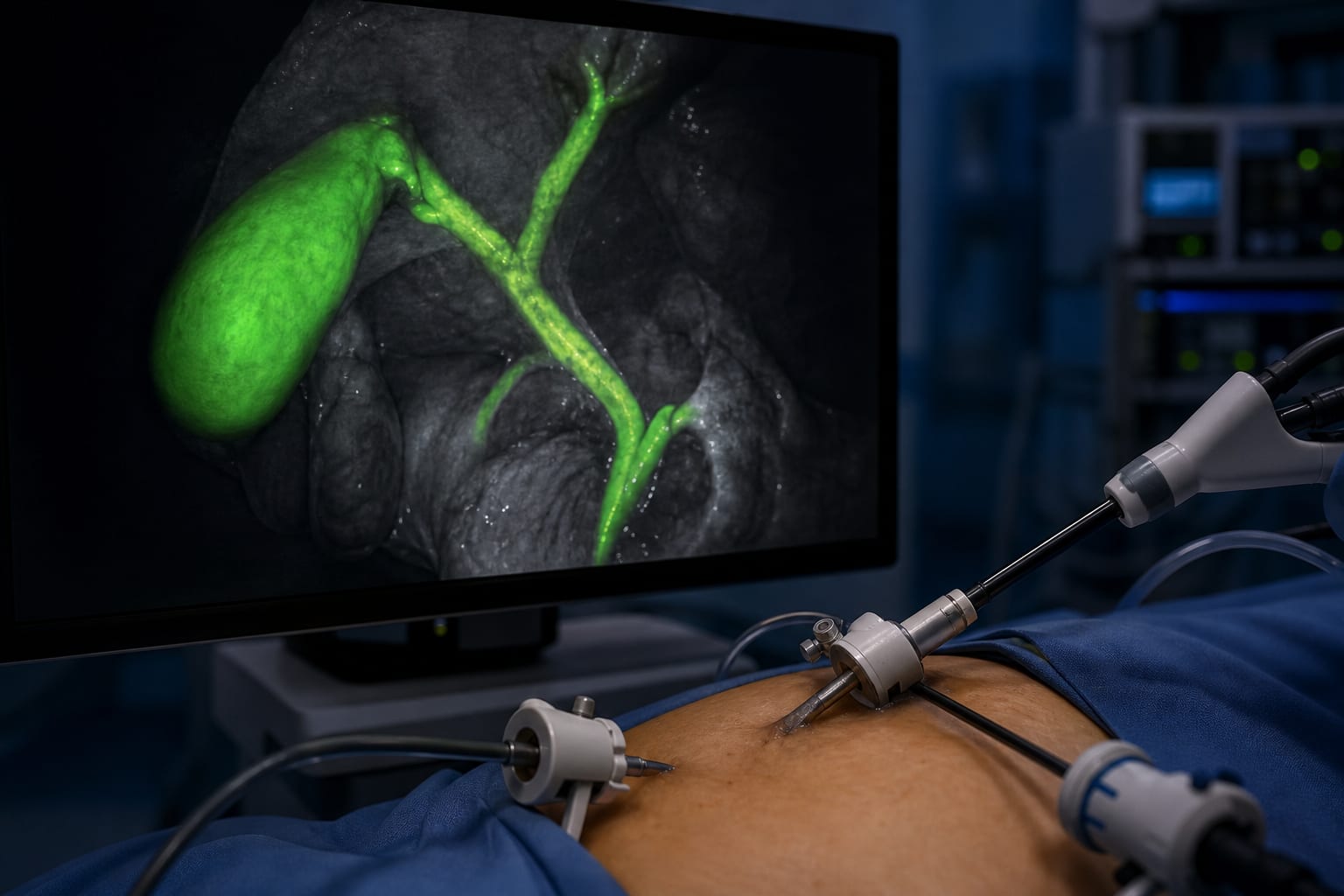
Surgical outcomes of indocyanine green fluorescent cholangiography in emergency laparoscopic cholecystectomy performed by junior surgeons for acute cholecystitis - Report - MDSpire
Advertisement
Surgical outcomes of indocyanine green fluorescent cholangiography in emergency laparoscopic cholecystectomy performed by junior surgeons for acute cholecystitis
Clinical Report: Outcomes of Emergency Laparoscopic Cholecystectomy with ICG
Overview
This study evaluates the outcomes of emergency laparoscopic cholecystectomy (LC) using indocyanine green (ICG) fluorescent cholangiography performed by junior surgeons.
Background
Emergency laparoscopic cholecystectomy is the preferred treatment for acute cholecystitis, a common surgical emergency. Complications, particularly bile duct injury, are a significant concern, especially when procedures are performed by less experienced surgeons. The introduction of ICG fluorescent cholangiography aims to enhance visualization of biliary structures, potentially improving surgical outcomes.
Data Highlights
Group
Operative Time (min)
BDI Incidence
Conversion to Open Surgery
Postoperative Complications
ICG Group
65
No significant difference
No significant difference
No significant difference
Non-ICG Group
72.5
No significant difference
No significant difference
No significant difference
Key Findings
ICG group had a significantly shorter operative time (65 min) compared to non-ICG group (72.5 min, P = 0.007).
No significant differences in bile duct injury incidence between ICG and non-ICG groups.
Conversion to open surgery rates were similar in both groups.
Postoperative complications were not significantly different between the two groups.
ICG use was identified as an independent factor associated with decreased operative time.
Clinical Implications
The use of ICG fluorescent cholangiography does not appear to increase the risk of complications.
Conclusion
Incorporating ICG fluorescent cholangiography in emergency laparoscopic cholecystectomy performed by junior surgeons can lead to reduced operative times.