Penetrating keratoplasty combined with intrascleral fixation of a four-haptic intraocular lens in aphakic eyes with corneal pathology - Report - MDSpire
Advertisement
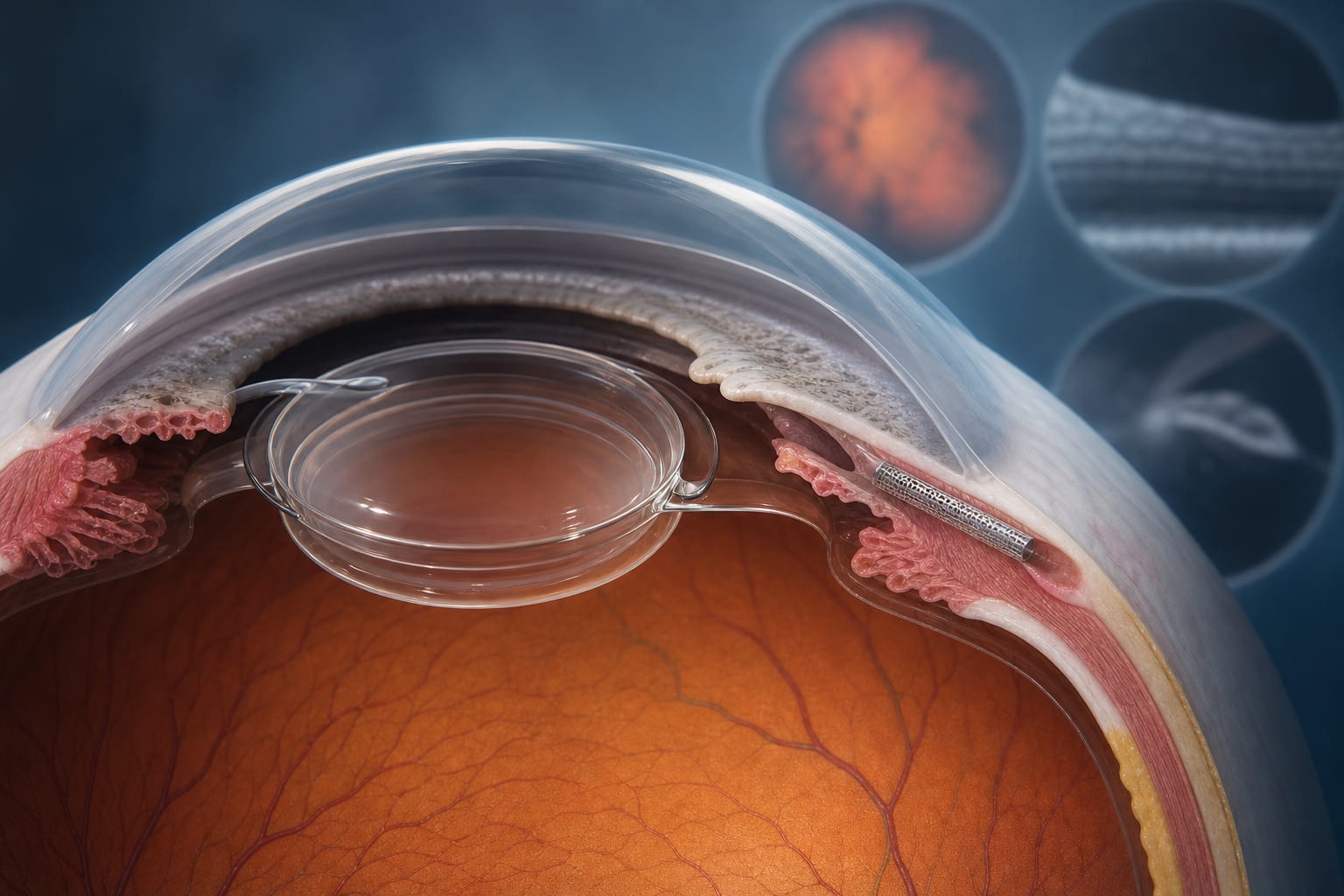
Penetrating keratoplasty combined with intrascleral fixation of a four-haptic intraocular lens in aphakic eyes with corneal pathology
Clinical Report: Combined Penetrating Keratoplasty and Intrascleral Fixation
Background
Corneal blindness is a significant cause of visual impairment globally, and penetrating keratoplasty remains essential for complex corneal pathologies. Aphakic patients with insufficient capsular support pose unique challenges for visual rehabilitation, necessitating innovative surgical approaches that address both corneal transparency and stable IOL fixation.
Data Highlights
Parameter
Preoperative
6 Months Postoperative
Mean BCVA (logMAR)
3.00 ± 0.00
1.04 ± 0.14
Mean IOP (mmHg)
15.66 ± 1.98
16.48 ± 0.64
Mean ECD (cells/mm²)
-
2,445 ± 193.5
Key Findings
Mean BCVA improved significantly from 3.00 to 1.04 logMAR (p < 0.001).
Mean IOP remained stable with no significant difference (p = 0.661).
Four out of five grafts remained clear at the 6-month follow-up.
All IOLs were centered and stable postoperatively.
Mean endothelial cell density at 6 months was 2,445 ± 193.5 cells/mm².
Clinical Implications
The combined technique of PKP and intrascleral fixation of a four-haptic IOL may provide a viable option for managing aphakic patients with corneal disorders.
Conclusion
The preliminary outcomes indicate that this combined surgical approach is feasible and may lead to improved visual and anatomical results in selected aphakic patients.