Case Report: Discordant diffuse large B-cell lymphoma and splenic peripheral T-cell lymphoma revealed by persistent splenomegaly and cytopenia - Report - MDSpire
Advertisement
Case Study: Coexisting Diffuse Large B-Cell Lymphoma and Splenic Peripheral T-Cell Lymphoma Identified Through Ongoing Splenomegaly and Blood Cell Deficiencies
Clinical Report: Coexisting Diffuse Large B-Cell Lymphoma and Splenic PTCL
Overview
This case study presents a 71-year-old man with coexisting diffuse large B-cell lymphoma (DLBCL) and peripheral T-cell lymphoma (PTCL), highlighting the diagnostic challenges posed by atypical clinical manifestations such as persistent splenomegaly and cytopenia, which led to the discovery of the second lymphoma after splenectomy.
Background
Composite and discordant lymphomas, particularly those involving B-cell and T-cell lineages, are rare but clinically significant due to their potential to alter diagnostic interpretation and treatment planning. Persistent splenomegaly and cytopenia in patients with DLBCL may mask the presence of a second lymphoma, complicating management.
Data Highlights
No numerical data or trial data available in the source material.
Key Findings
A 71-year-old man presented with symptoms including fever, splenomegaly, and cytopenia.
Initial diagnosis was stage IVB DLBCL, confirmed by bone marrow and immunohistochemistry.
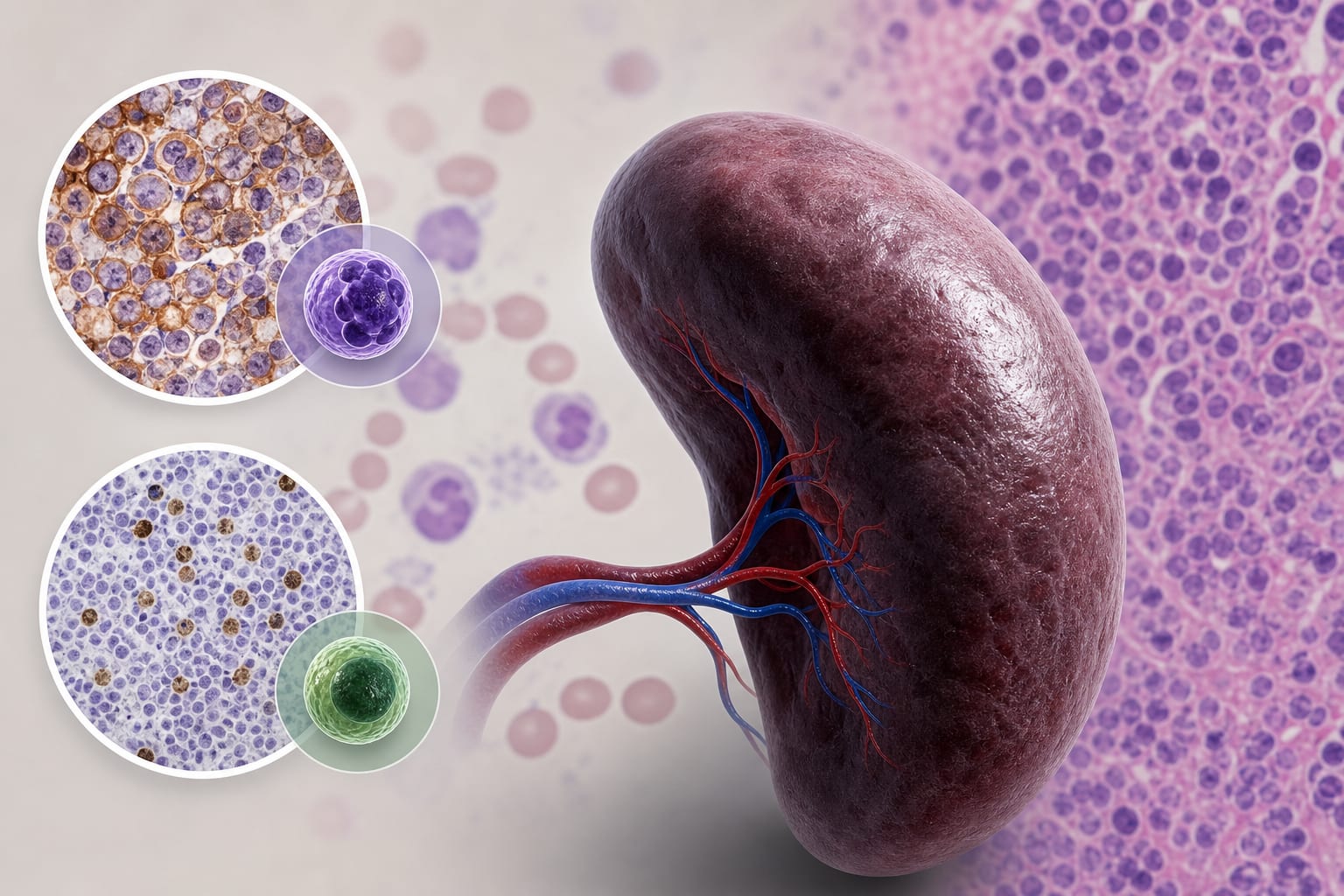
Persistent thrombocytopenia and splenomegaly led to a splenectomy, revealing peripheral T-cell lymphoma.
Subsequent treatment included R-GemOx and R-ICE with zanubrutinib, but the patient experienced multiple relapses.
The case illustrates the importance of repeat tissue sampling when atypical symptoms arise during lymphoma treatment.
Clinical Implications
Healthcare professionals should consider the possibility of coexisting lymphomas in patients with atypical presentations, particularly when persistent splenomegaly and cytopenia are present.
Conclusion
This case highlights the necessity of integrated pathological reassessment in patients with discordant lymphoma presentations to ensure accurate diagnosis.