Association between the C-reactive protein-triglyceride-glucose index and the presence and prognosis of coronary microvascular dysfunction in patients with chronic coronary syndrome - Report - MDSpire
Advertisement
Association between the C-reactive protein-triglyceride-glucose index and the presence and prognosis of coronary microvascular dysfunction in patients with chronic coronary syndrome
Clinical Report: Link Between C-Reactive Protein-Triglyceride-Glucose Index and Coronary Microvascular Dysfunction Prognosis in Chronic Coronary Syndrome Patients
Overview
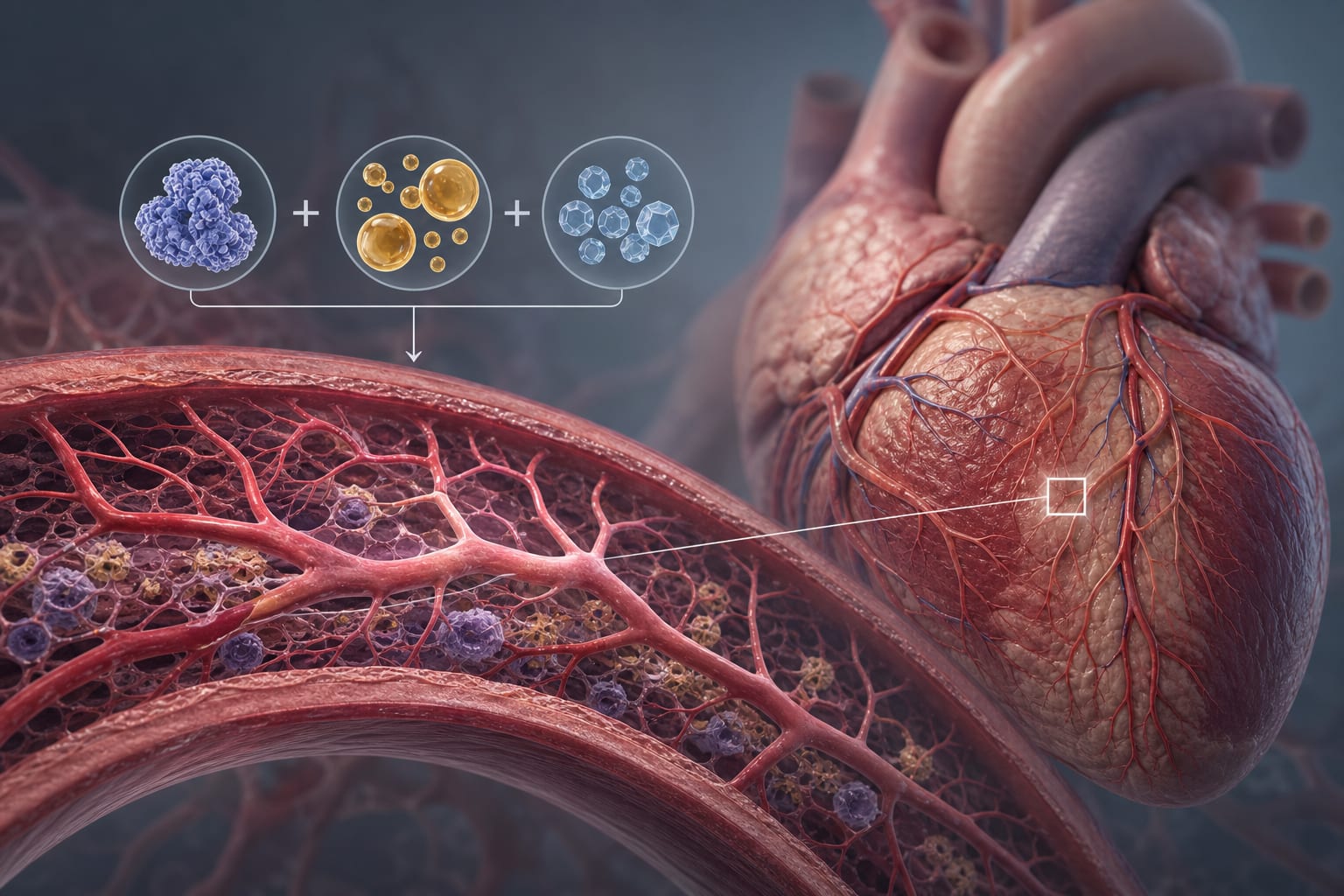
The C-reactive protein-triglyceride-glucose index (CTI) is identified as a predictor of coronary microvascular dysfunction (CMD) and major adverse cardiovascular events (MACE) in patients with chronic coronary syndrome (CCS). Higher CTI levels correlate with increased risk of MACE, particularly in CMD patients.
Background
Coronary microvascular dysfunction (CMD) is a significant contributor to adverse outcomes in chronic coronary syndromes (CCS), affecting patient morbidity and mortality. Early identification and risk stratification for CMD are crucial for improving patient management. The CTI integrates inflammation and insulin resistance metrics.
Data Highlights
Metric
Result
CTI and CMD association (Q4 vs. Q1)
OR: 2.28, 95% CI: 1.16–4.49, p = 0.017
CTI and MACE risk (Q4)
HR: 2.62, 95% CI: 1.25–5.51, p = 0.011
CTI and MACE risk in CMD patients
HR: 2.84, 95% CI: 1.06–7.62, p = 0.039
CTI predictive accuracy vs. TyG
DeLong test p = 0.020
Key Findings
CTI is independently associated with CMD in CCS patients.
Higher CTI levels predict increased risk of MACE over a median follow-up of 35 months.
CTI outperforms TyG and CRP in predicting CMD-related MACE.
CMD is linked to worse prognosis across various cardiovascular conditions.
Insulin resistance and inflammation are key factors in CMD development.
Clinical Implications
The CTI can serve as a biomarker for risk stratification in patients with chronic coronary syndrome.
Conclusion
CTI is a predictor of CMD and MACE in CCS patients.