Modulating CAR-T cell exhaustion and fitness in acute myeloid leukemia: mechanistic metabolic and microenvironmental strategies - Report - MDSpire

Modulating CAR-T cell exhaustion and fitness in acute myeloid leukemia: mechanistic metabolic and microenvironmental strategies

  • By

  • Erden Atilla

  • June 22, 2026

  • 0 min

Share

Clinical Report: Strategies for Enhancing CAR-T Cell Function in AML

Overview

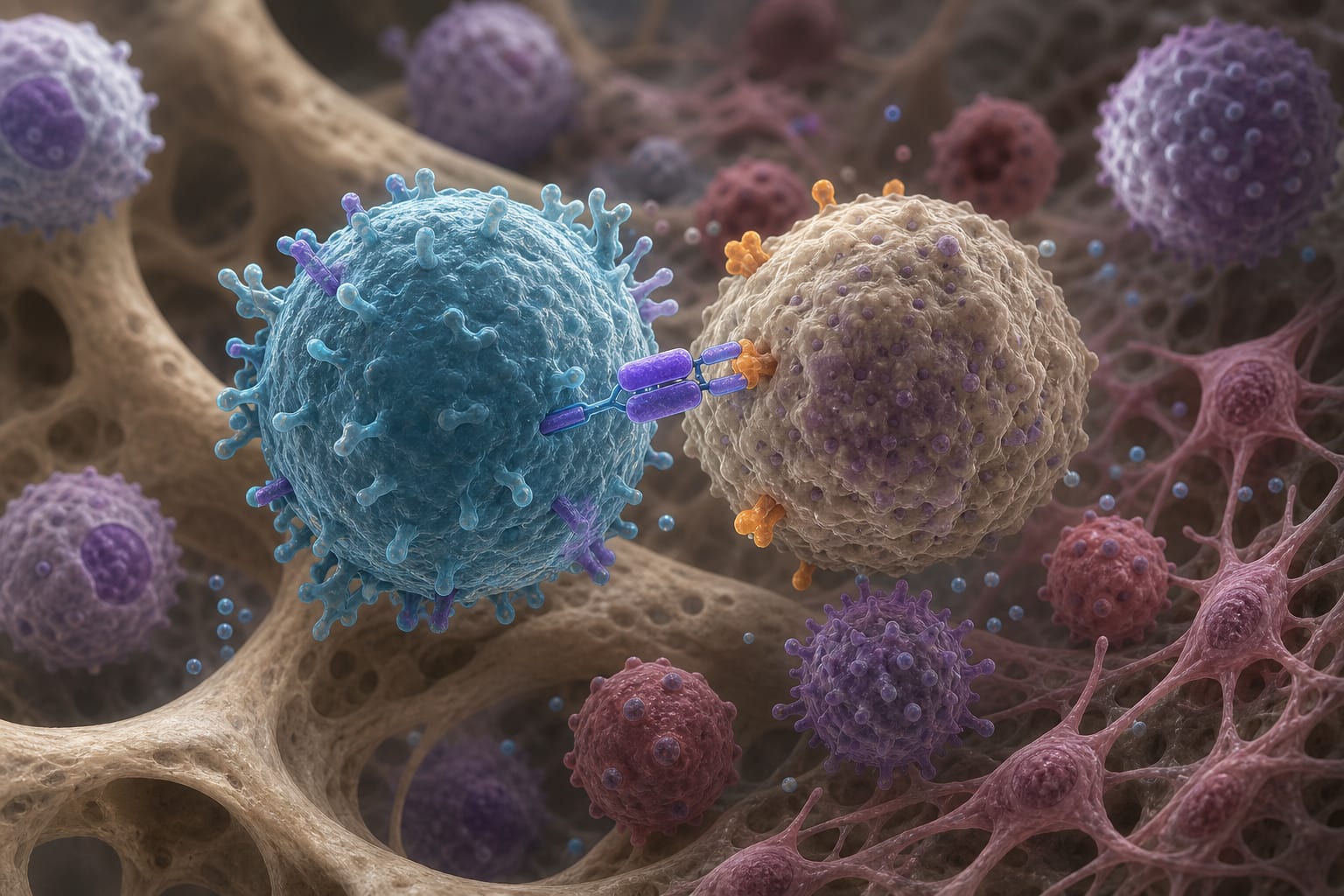
This review discusses the challenges faced by CAR-T cell therapy in acute myeloid leukemia (AML), including antigenic heterogeneity and a suppressive microenvironment.

Background

CAR-T cell therapy has revolutionized treatment for B-cell malignancies but is less effective in AML due to unique challenges such as antigen escape and a suppressive tumor microenvironment. Understanding the mechanisms of CAR-T cell exhaustion and the role of the AML microenvironment is crucial.

Data Highlights

No numerical data or trial data provided in the source material.

Key Findings

  • CAR-T cell therapy faces limitations in AML due to antigenic heterogeneity and a suppressive microenvironment.
  • Exhaustion in CAR-T cells is driven by a combination of transcriptional, epigenetic, and metabolic dysfunction.
  • CD33, CD123, CLL-1, and FLT3 are explored as potential targets for CAR-T therapy in AML.
  • Preclinical studies indicate that CLL-1/CD371 CAR-T cells show anti-leukemic activity.
  • Strategies to improve CAR-T cell fitness include optimized manufacturing and modulation of the microenvironment.

Clinical Implications

Enhancing CAR-T cell function in AML requires addressing the unique challenges posed by the disease's microenvironment and antigen landscape.

Conclusion

The review emphasizes the importance of addressing both intrinsic and extrinsic factors affecting T cell performance.
Related Resources & Content

  1. Blood Cancer Journal, 2024 -- Influence of T cell Features on the Efficacy of CAR-T Cell Therapy for Blood Cancers
  2. Frontiers in Immunology, 2026 -- Advanced strategies to enhance the safety, persistence, and efficacy of CAR-T cells in solid tumors
  3. Frontiers in Immunology, 2026 -- Resistance mechanisms and overcoming strategies for CAR T-cell therapy in B-cell hematologic malignancies
  4. The ASCO Post, 2021 -- Study Examines a Potential Approach to Mitigate CAR T-Cell Therapy Toxicity
  5. American Society of Hematology, 2025 -- AML Pocket Guide
  6. International consensus guidelines for the conduct and reporting of CAR T-cell clinical trials in AML - PMC, 2025
  7. Journal of Hematology & Oncology, 2025 -- Updated data of CLL1 CAR-T cell therapy in adult patients with relapsed/refractory acute myeloid leukemia
  8. https://www.hematology.org/-/media/hematology/files/clinicians/guidelines/ash-guidelines-update-2025/aml-pocket-guide.pdf
  9. International consensus guidelines for the conduct and reporting of CAR T-cell clinical trials in AML - PMC
  10. Updated data of CLL1 CAR-T cell therapy in adult patients with relapsed/refractory acute myeloid leukemia | Journal of Hematology & Oncology | Springer Nature Link

Original Source(s)

Related Content