Donor-specific pathological features associate with genetic background, lesion type distribution, and clinical heterogeneity in multiple sclerosis - Report - MDSpire

Donor-specific pathological features associate with genetic background, lesion type distribution, and clinical heterogeneity in multiple sclerosis

  • By

  • Lukas Lütje

  • J. Q. Alida Chen

  • Jörg Hamann

  • Joost Smolders

  • Inge Huitinga

  • Aletta M. R. van den Bosch

  • June 25, 2026

  • 0 min

Share

Clinical Report: Pathological Characteristics Linked to Donor Genetics in MS

Overview

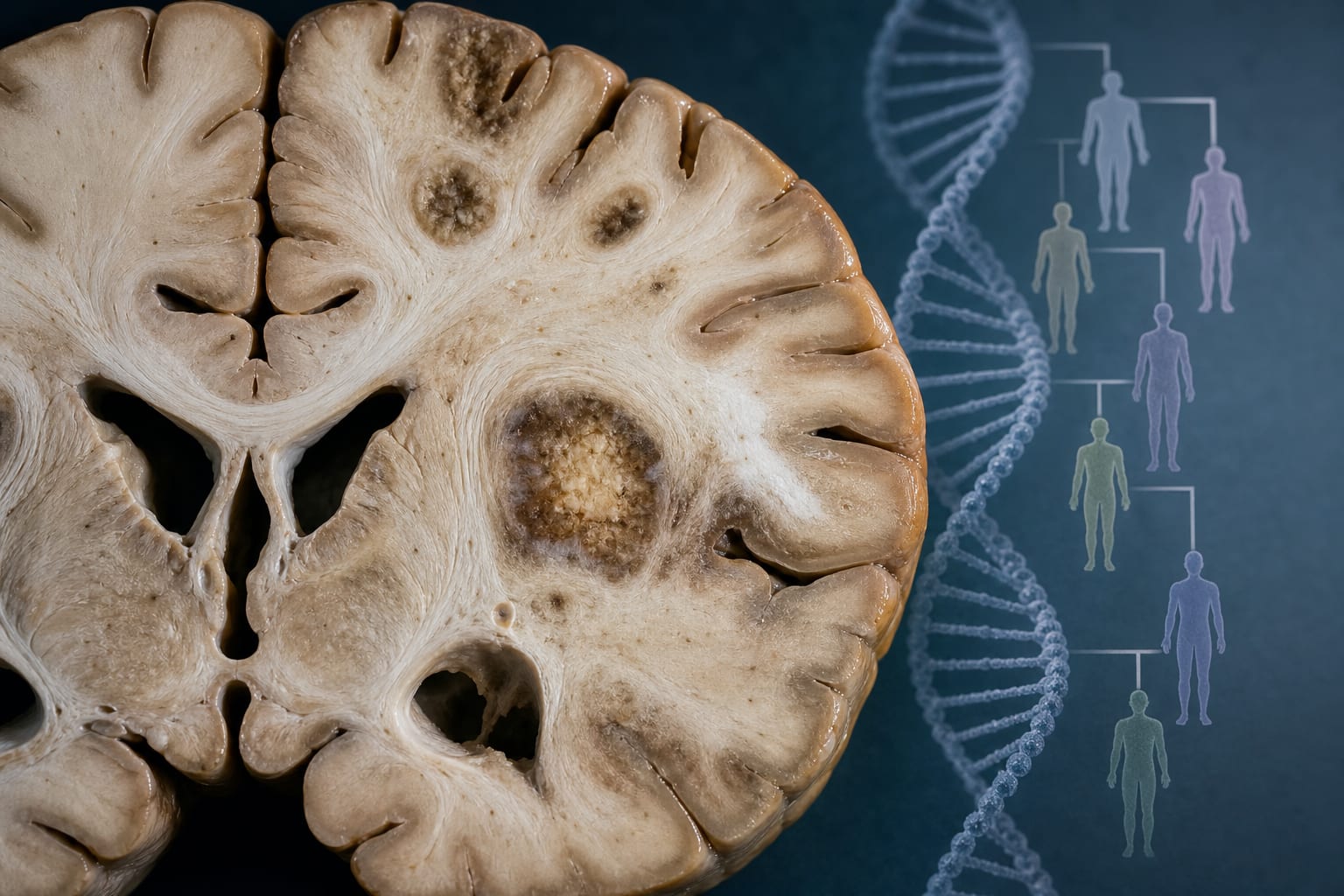
This study investigates inter-individual heterogeneity in multiple sclerosis (MS) by examining donor-specific pathological features such as perivascular cuffs, microglial nodules, and remyelination efficiency.

Background

Multiple sclerosis (MS) is characterized by significant variability in clinical presentation and pathological features among individuals. Understanding the biological processes that contribute to this heterogeneity is important for interpreting disease progression. This study utilizes a well-characterized autopsy cohort to explore the impact of donor genetics on MS pathology.

Data Highlights

This study included 287 donors with MS from the Netherlands Brain Bank autopsy cohort, focusing on specific pathological features and their association with clinical variability.

Key Findings

  • Substantial inter-individual biological heterogeneity exists in MS, influenced by donor-specific pathological features.
  • Pathological features such as perivascular cuffs and microglial nodules reflect inflammatory and reparative processes.
  • A higher lesion load and mixed lesion types correlate with faster disability accumulation.
  • Remyelination efficiency varies significantly among donors.
  • Standardized autopsy procedures enable quantitative assessment of lesion burden and type distributions.

Clinical Implications

Understanding the pathological characteristics linked to donor genetics may aid in elucidating the clinical courses of MS.

Conclusion

The study highlights the role of donor-specific pathological features in understanding the heterogeneity of MS.

Related Resources & Content

  1. Acta Neuropathologica, 2024 -- Examining the Unaffected White and Gray Matter in Multiple Sclerosis: Connections to Chronic Progression
  2. Acta Neuropathologica, 2018 -- Lesion Activity in Progressive Multiple Sclerosis Correlates with Clinical Severity and Gender: A Retrospective Analysis of Autopsy Cohorts
  3. Acta Neuropathologica, 2024 -- Exploring the Diverse Neuropathological Aspects of Multiple Sclerosis Through Independent Dimension Identification
  4. ECTRIMS -- Diagnosis of MS: 2024 Revisions of the McDonald Criteria
  5. PMC -- Imaging chronic active lesions in multiple sclerosis: a consensus statement
  6. Acta Neuropathologica — Characterization of T Cell Phenotypes and Functions in White Matter Lesions of Patients with Multiple Sclerosis
  7. Diagnosis of MS: 2024 Revisions of the McDonald Criteria | ECTRIMS
  8. Imaging chronic active lesions in multiple sclerosis: a consensus statement - PMC
  9. Unlocking Multiple Sclerosis Genetics: From Susceptibility to Severity - PubMed

Original Source(s)

Related Content