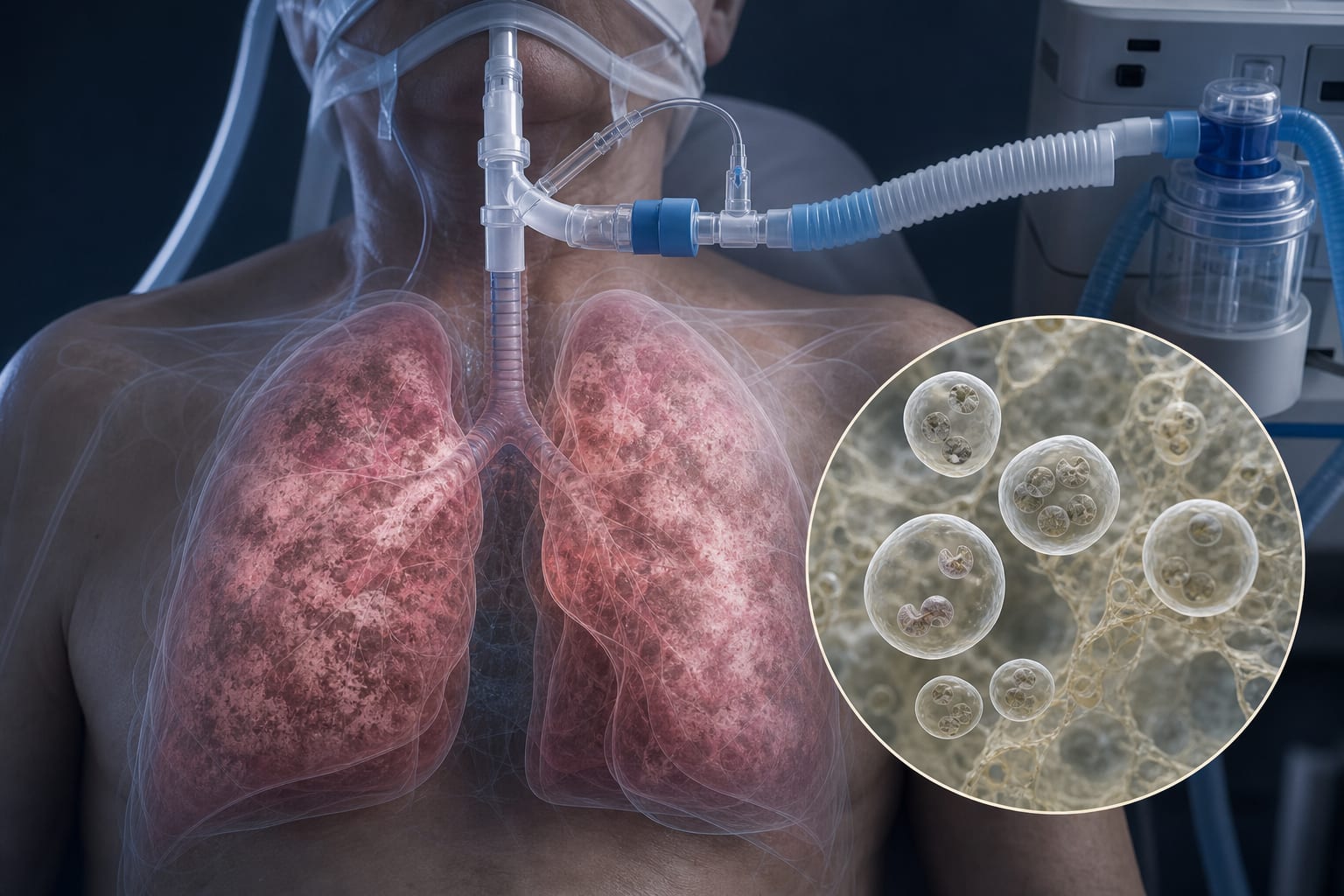
Successful management of severe Pneumocystis jirovecii pneumonia with inhaled nitric oxide and individualized ventilatory strategies in an immunosuppressed patient: a case report - Report - MDSpire
Advertisement
Successful management of severe Pneumocystis jirovecii pneumonia with inhaled nitric oxide and individualized ventilatory strategies in an immunosuppressed patient: a case report
Clinical Report: Effective Treatment of Severe Pneumocystis jirovecii Pneumonia
Overview
This case study presents a 69-year-old immunocompromised patient with severe Pneumocystis jirovecii pneumonia (PJP) successfully treated using inhaled nitric oxide and tailored ventilation strategies. Rapid diagnosis via metagenomic next-generation sequencing facilitated targeted therapy and comprehensive respiratory support.
Background
Pneumocystis jirovecii pneumonia (PJP) is a critical opportunistic infection that poses a significant risk to immunocompromised patients, particularly those receiving corticosteroids for immune-related adverse events. The mortality rate for non-HIV patients with PJP is notably higher than that for HIV patients, underscoring the need for prompt diagnosis and effective management strategies. This case highlights the importance of advanced diagnostic techniques and tailored respiratory interventions in improving patient outcomes.
Data Highlights
Parameter
Value
PaO₂/FiO₂
185 mmHg
Serum 1,3-β-D-glucan
3327.99 pg/mL
White Blood Cell Count
4.31 × 10^9/L
Neutrophils
94.5%
Hemoglobin
98 g/L
Platelets
141 × 10^9/L
Key Findings
Severe PJP can occur in non-HIV patients receiving high-dose corticosteroids for immune checkpoint inhibitor pneumonitis.
Metagenomic next-generation sequencing (mNGS) provides rapid and accurate pathogen identification, facilitating timely treatment.
Comprehensive respiratory support, including tailored mechanical ventilation and inhaled nitric oxide, can significantly improve oxygenation in severe cases.
Mortality rates for non-HIV PJP patients are higher than those for HIV patients, emphasizing the need for early diagnosis and intervention.
Standard management of checkpoint inhibitor pneumonitis often leads to increased risk of opportunistic infections like PJP.
Clinical Implications
Healthcare providers should maintain a high index of suspicion for PJP in immunocompromised patients, particularly those on prolonged corticosteroid therapy. Utilizing advanced diagnostic tools like mNGS can enhance pathogen detection and guide effective treatment strategies. Tailored respiratory interventions may improve outcomes in patients with severe respiratory failure due to opportunistic infections.
Conclusion
This case underscores the critical need for early diagnosis and comprehensive management of PJP in immunocompromised patients. The successful use of inhaled nitric oxide and tailored ventilation strategies highlights potential avenues for improving patient care in similar clinical scenarios.