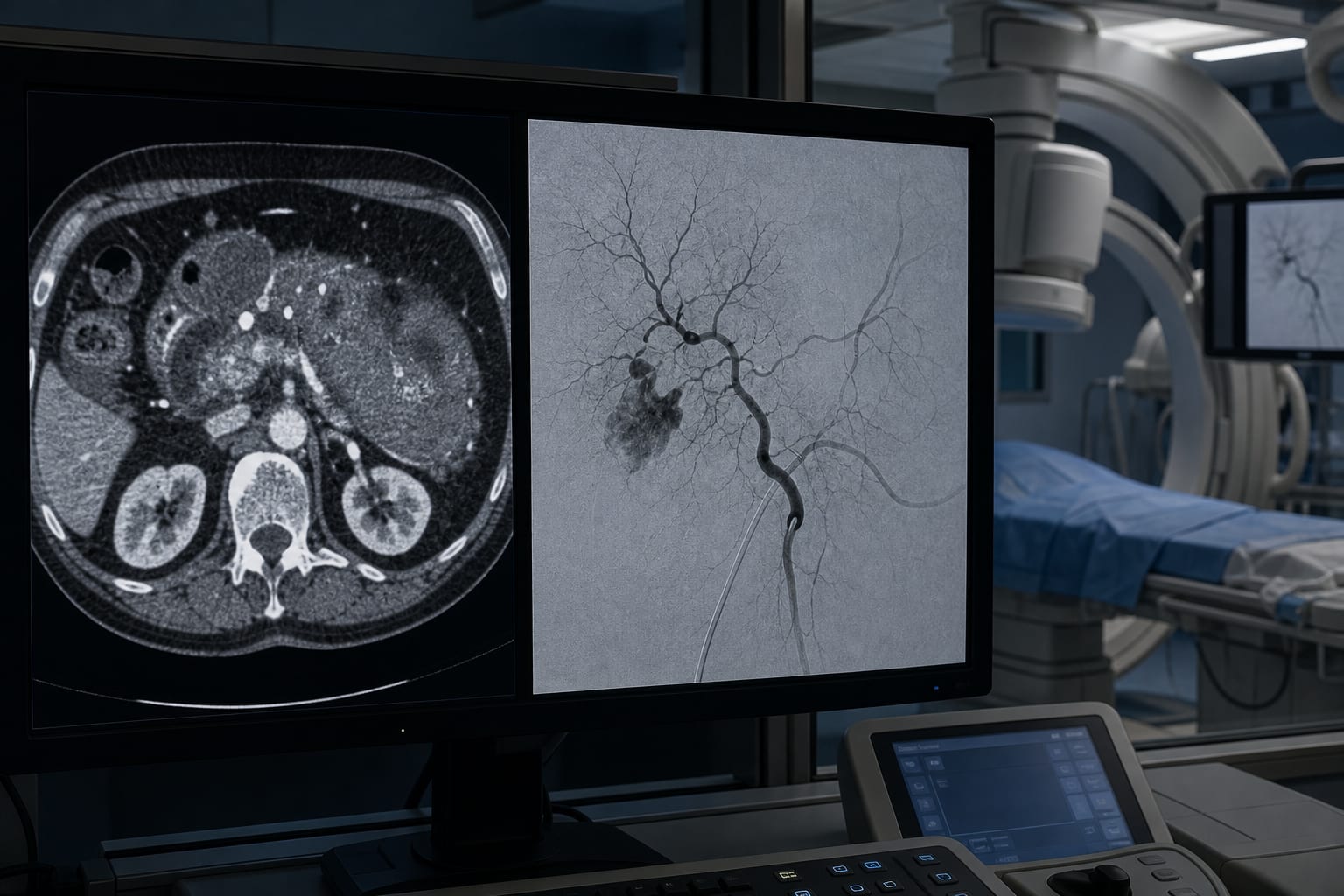
Discordance between CECT and angiographic findings in severe acute pancreatitis-related hemorrhage: implications for interventional management - Report - MDSpire
Advertisement
Discordance between CECT and angiographic findings in severe acute pancreatitis-related hemorrhage: implications for interventional management
Clinical Report: Discrepancies Between CECT and Angiography in SAP Hemorrhage
Overview
This study evaluates the diagnostic performance of contrast-enhanced computed tomography (CECT) compared to digital subtraction angiography (DSA) in patients with severe acute pancreatitis (SAP) and suspected hemorrhage. Findings indicate limited concordance between CECT and DSA, with significant implications for clinical decision-making.
Background
Severe acute pancreatitis (SAP) is associated with high mortality rates, particularly due to hemorrhagic complications. Accurate and timely diagnosis is crucial, as major hemorrhage can lead to rapid deterioration and increased mortality. CECT is commonly used for initial evaluation, but its reliability in detecting active hemorrhage is under scrutiny.
Data Highlights
Finding
Value
Intermodality agreement (weighted κ)
0.29
Negative CECT requiring embolization
69.2% (18/26)
Positive predictive value of CECT Grade 2
94.1%
Episodes requiring surgical rescue
9
Key Findings
Intermodality agreement between CECT and DSA was fair (weighted κ = 0.29).
69.2% of episodes with negative CECT findings required therapeutic embolization.
CECT Grade 2 findings had a high positive predictive value (94.1%) but were linked to all instances of rebleeding.
Negative or non-definitive CECT findings should be interpreted cautiously in the context of clinical suspicion for ongoing hemorrhage.
Angiographic evaluation is recommended as part of a clinically driven diagnostic pathway in high-risk SAP patients.
Clinical Implications
Clinicians should be aware of the limitations of CECT in detecting active hemorrhage in SAP patients. A negative CECT does not exclude the need for angiographic evaluation, especially when clinical suspicion remains high. Timely intervention is critical to improve patient outcomes.
Conclusion
The study highlights the diagnostic gap between CECT and DSA in managing hemorrhage associated with severe acute pancreatitis, underscoring the need for careful interpretation of imaging results and consideration of angiography in high-risk cases.